
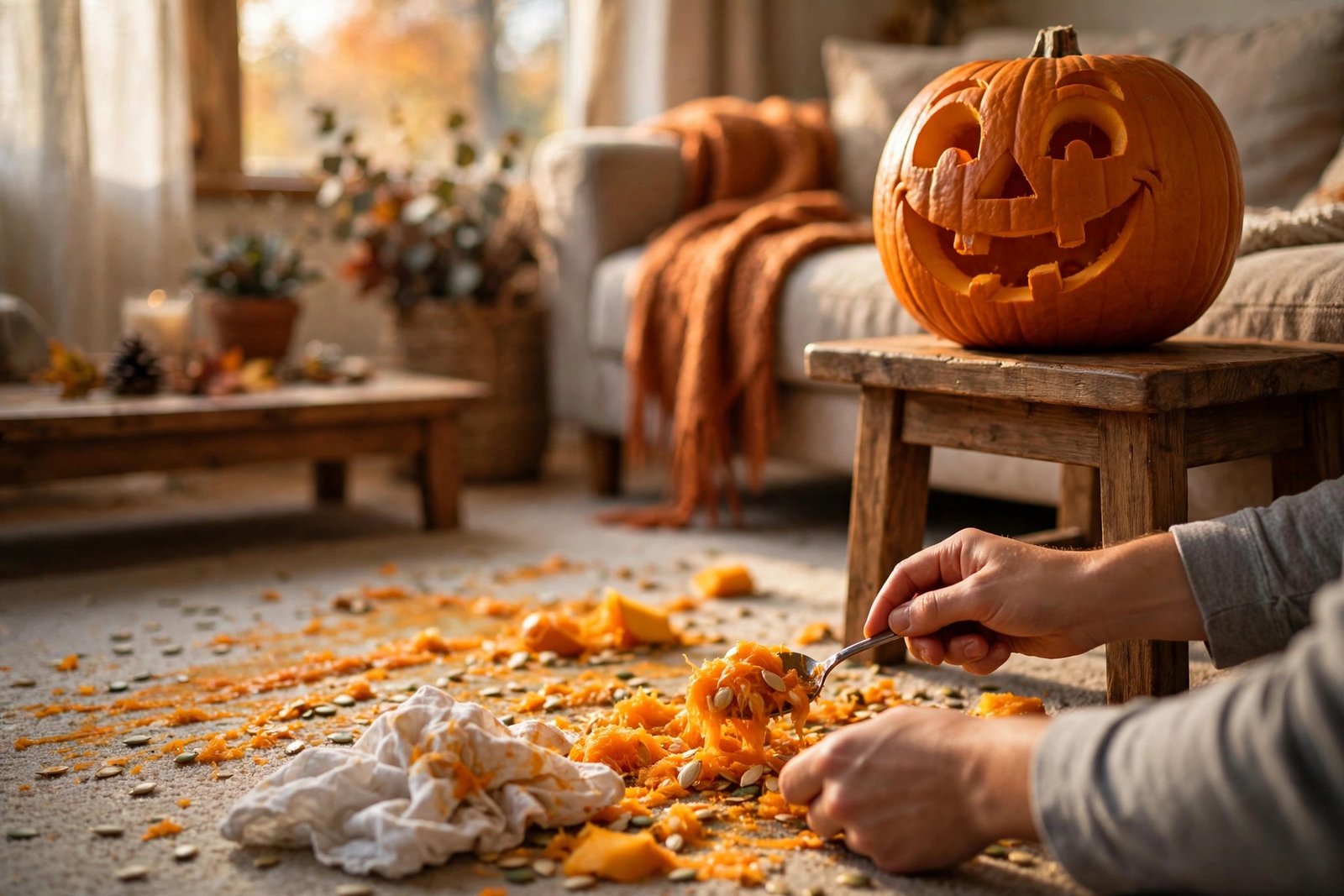

Last October, my nephew carved his jack-o’-lantern at our kitchen table with the focus of a surgeon and the technique of a tornado. By the time the candle went in, there was pumpkin pulp on his shirt, pumpkin strings on the floor, and one perfect orange handprint on the living room carpet — his, pressed down proudly so I wouldn’t miss it.
Here’s the good news: of all the fall messes, this is one of the friendlier ones. Pumpkin is mostly water and pigment, and it gives up easily if you catch it before it dries. This guide shows you how to get pumpkin stains out of carpet first (that’s where most carving accidents end up), then the clothes version, then the fix for a stain you only find the morning after.
Quick Answer
Scrape up every bit of pulp and seed first — never rub it in. For carpet, blot the spot with a mix of 1 tablespoon dish soap, 1 tablespoon white vinegar, and 2 cups of cool water, working from the outside in, then rinse by blotting with plain water. For clothes, flush the stain from the back with cold water, soak it in a detergent-and-vinegar solution for 15–30 minutes, and wash cold. Dried pumpkin needs softening first: soak it, then treat it exactly like a fresh stain. Keep heat away until the orange is gone — heat sets this pigment.
Table of Contents
What You’ll Need
- A spoon or dull knife
- Clean white cloths or paper towels
- Clear dish soap
- White vinegar
- A small bowl and a spray bottle (optional)
- Baking soda
- Enzyme laundry detergent or an enzyme stain pretreater (for clothes)
- Oxygen bleach (optional, only if the care label allows it)
- A vacuum
The Steps: Fresh Pumpkin on Carpet
- Scoop up the solids. Work the spoon under the pulp and lift. Pumpkin strings love to smear, so scrape gently in one direction instead of sawing back and forth. Get the seeds too — they’re slippery and will grind in under the next footstep.
- Blot, don’t scrub. Press a dry white cloth straight down onto the spot to pick up moisture. Scrubbing a fresh pumpkin stain does two bad things at once: it pushes pigment deeper and frays the pile so the spot looks worn even after the color is gone.
- Mix the solution. One tablespoon of clear dish soap and one tablespoon of white vinegar in two cups of cool water. The soap matters more than people think — pumpkin’s orange color comes from beta-carotene, an oily pigment, and dish soap is what cuts through the oily part.
- Blot the stain with the solution. Dampen a cloth (don’t flood the carpet), then blot from the outside edge toward the center so the stain doesn’t spread. Rotate the cloth as it picks up orange. Re-wet and keep going; a fresh stain usually fades within five to ten minutes of patient blotting.
- Rinse by blotting. Go over the spot with a cloth dampened in plain cool water, several times. Soap left in carpet is a dirt magnet — the spot will look clean today and grey next month if you skip this.
- Dry and vacuum. Press a dry towel into the spot, weight it down for an hour if you like, then vacuum once it’s fully dry to lift the pile back up.
Pumpkin on Clothes
Clothing is actually the easier job, because you can soak the whole stain instead of blotting at it.
- Scrape and shake. Lift off the pulp with a spoon, then shake the garment out over a bin. Check the back of the fabric too — pumpkin soaks through fast.
- Flush from the back with cold water. Hold the stain face-down under a cold tap so the water pushes the pigment out the way it came in. Cold is not a suggestion here: hot water cooks the pigment into the fibers and turns an easy stain into a permanent souvenir.
- Soak it. The University of Georgia Extension’s textile guidance for vegetable stains uses a soak of one quart of warm water, half a teaspoon of liquid dish detergent, and one tablespoon of white vinegar for about 15 minutes — that base works well for pumpkin. For a stronger soak, use your enzyme laundry detergent in cool water for 30 minutes; enzymes digest the starchy, sugary part of the pulp that water alone leaves behind.
- Wash cold, then check before drying. Run the normal cycle with cold water. Before the dryer, hold the garment up to the light: if an orange shadow remains, repeat the soak rather than drying. A dryer cycle will set what’s left almost permanently.
- Still orange? On whites and colorfast fabrics, an oxygen-bleach soak is the next step. Keep chlorine bleach for plain whites only, and never mix bleach with vinegar or ammonia — rinse one product out completely before another touches the fabric.
The Morning-After Stain: Dried Pumpkin
Dried pumpkin looks worse than it is. The pulp dries into a stiff orange crust, but the pigment underneath hasn’t bonded any deeper — it just needs rehydrating.
For carpet: lay a cloth soaked in the dish soap and vinegar solution over the spot for 15 minutes to soften it, then scrape up what loosens and follow the fresh-stain steps above. For a stubborn orange shadow after the crust is gone, sprinkle baking soda over the damp spot, leave it for a few hours or overnight, and vacuum it up — it’s a gentle finisher, not the main event.
For clothes: soak the garment in cool water with enzyme detergent for a full hour before washing. Dried pumpkin on a Halloween costume that sat in the laundry basket all week usually comes out on the second soak, not the first — that’s normal, not failure.
Mistakes to Avoid
- Reaching for hot water. It sets the beta-carotene pigment and makes everything after it harder. Cold or cool, always, until the color is out.
- Rubbing the fresh stain. You spread it, deepen it, and rough up the fibers in one motion. Blot straight up and down.
- Drying the garment before checking. Heat from a dryer is the point of no return for this stain.
- Skipping the rinse on carpet. Leftover soap residue attracts dirt, and the “stain” that reappears in a few weeks is usually soap, not pumpkin.
- Using colored cloths or newspaper. Damp fibers can pick up dye from a colored towel. White cloths only, so you can also see the orange transferring.
For Further Reading
- Wax dripped while you were lighting the jack-o’-lantern? Here’s the freeze-and-iron method: How to Get Candle Wax Out of Carpet
- Orange is forgiving; red is not: How to Get Red Wine Out of Carpet
- The master reference for every spill in the house: The Complete Stain Removal Guide
- The University of Georgia Extension’s textile-care guidance on vegetable stains, including the detergent-and-vinegar soak used above: Remove Stains From Vegetables — UGA Extension
FAQ
Does pumpkin stain permanently?
Not usually. Fresh pumpkin is one of the easier fall stains because the pigment sits on the fibers rather than bonding to them. It only becomes stubborn when it’s been through a hot wash or a dryer cycle, or left dried for weeks.
What takes the orange color out if soap alone isn’t working?
Time and enzymes. An enzyme detergent soak breaks down the starch and sugar holding the pigment, and an oxygen-bleach soak (on fabrics that allow it) lifts the last orange shadow. On carpet, a baking soda rest after the main clean helps with faint residue.
Can I use hydrogen peroxide on pumpkin stains?
On white or very light fabrics, 3% hydrogen peroxide can help with the last of the color. Keep it off dark and colored carpet and clothing unless you’ve spot-tested a hidden area first — it can lift the fabric’s own dye along with the stain.
How do I get pumpkin smell out of carpet after cleaning?
Once the spot is clean and dry, sprinkle baking soda generously over the area, leave it overnight, and vacuum. That handles the sweet, earthy smell pumpkin leaves behind. If the pulp soaked through to the pad, the smell may need a second night.
The stain is on a costume that says “do not wash.” What now?
Scrape off the solids, blot gently with the soap-and-vinegar solution on a cloth (barely damp), and stop there. For anything dry-clean-only or delicate, a cleaner can spot-treat it properly — dried pumpkin waits patiently, so there’s no rush that justifies risking the costume.
Carving night is supposed to be a little chaotic — that’s half the fun. Scoop what you can, keep the water cold, and deal with the orange after the candles are lit and the photos are taken. It’ll come out.
— Daniel