
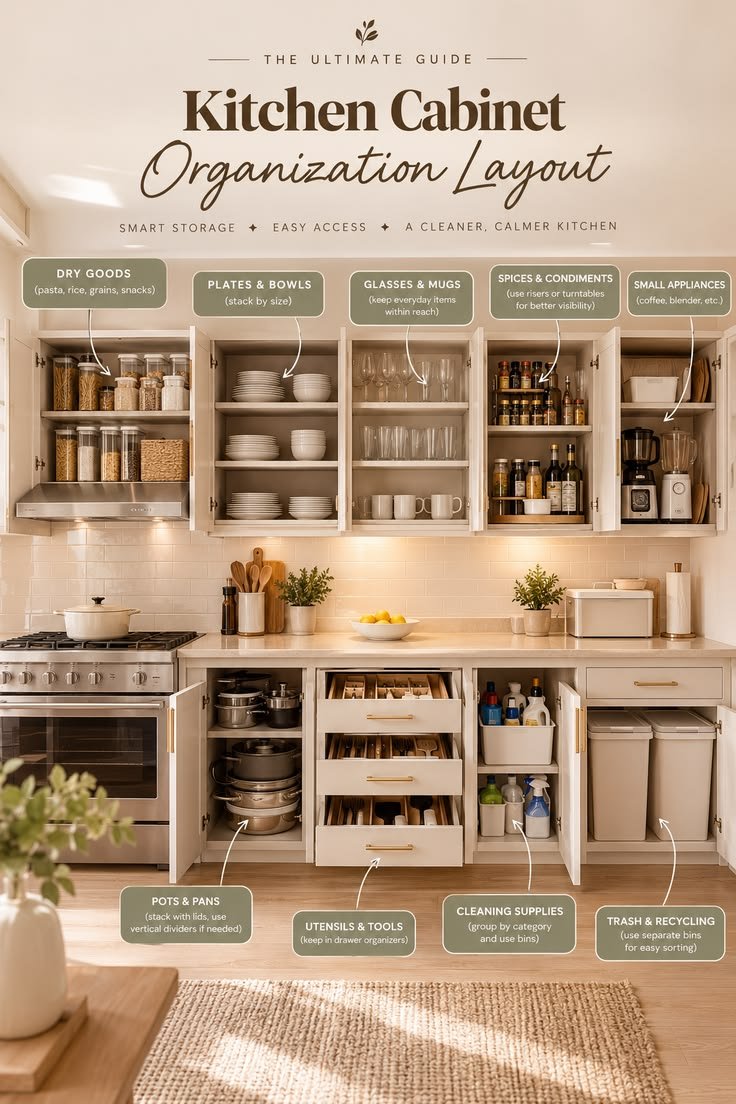

A well-organised kitchen is more than just a beautiful space. It makes cooking easier, saves time, reduces waste, and creates a clean and comfortable environment. Whether you have a large kitchen or a small one, you can organise it like a professional by arranging everything properly, making good use of available space, and keeping frequently used items within easy reach.
Professional kitchen organisation is all about creating a functional space where everything has a purpose and a designated place.
Here are 25 practical ways to organise your kitchen like a professional.
1. Start by Decluttering Your Kitchen
Before organising your kitchen, remove everything you no longer need. Check your cupboards, drawers, countertops, and pantry. Get rid of expired food, broken utensils, duplicate kitchen tools, and unused containers.
Decluttering gives you more space and makes it easier to organise the things you actually use.
2. Empty and Clean Your Kitchen Cabinets
Take everything out of your cabinets and clean the shelves thoroughly. Remove crumbs, grease, dust, and stains before returning your kitchen items.
This is also an excellent opportunity to check which items belong together and decide where everything should go.
3. Arrange Items According to Their Categories
One professional organisation trick is to group similar items together.
For example:
- Keep plates and bowls together.
- Store cups and glasses in one section.
- Arrange pots and pans separately.
- Group cooking utensils together.
- Keep food storage containers in another section.
Categorising items makes everything easier to find.
4. Keep Frequently Used Items Within Reach
Store everyday essentials in easily accessible places. Your favourite cooking pot, plates, drinking glasses, knives, and cooking spoons should be within convenient reach.
Items you rarely use, such as special occasion dishes and large serving bowls, can be stored on higher shelves.
5. Organise Your Kitchen Pantry
A well-organised pantry gives your kitchen a professional appearance. Arrange food items according to their categories, such as grains, cereals, spices, canned foods, baking ingredients, and snacks.
Use airtight containers for suitable dry foods to keep them fresh and protected from pests.
6. Use Clear Storage Containers
Clear containers make it easy to identify what you have without opening every package. They are particularly useful for storing rice, beans, pasta, flour, sugar, and other dry ingredients.
Label each container with its contents and, where useful, the purchase or expiry date.
7. Label Your Storage Containers
Labels help everyone in the household identify where items belong. Use simple labels such as rice, flour, sugar, salt, pasta, and cereal.
You can also label shelves and baskets to maintain a consistent organisation system.
8. Create a Dedicated Spice Section
Spices are essential in everyday cooking, so they should be properly arranged. Store frequently used spices together in labelled jars or containers.
Arrange them alphabetically or according to how often you use them. Keep them away from heat, moisture, and direct sunlight to preserve their quality.
9. Organise Your Pots and Pans
Pots and pans can take up considerable cabinet space. Stack compatible pots carefully, placing protective separators between them to prevent scratches.
Keep their lids together in a lid organiser or a designated cabinet section.
10. Arrange Your Plates and Bowls Properly
Store plates and bowls in neat stacks according to their sizes. Keep everyday dishes on shelves that are easy to reach.
Avoid creating excessively high stacks that could fall or cause accidents.
11. Make Good Use of Drawer Organisers
Kitchen drawers can quickly become messy without proper organisation.
Use drawer dividers to separate:
- Spoons and forks.
- Knives and other utensils.
- Measuring spoons.
- Cooking tools.
- Small kitchen accessories.
This makes it easier to find what you need without searching through a crowded drawer.
12. Create a Dedicated Cooking Zone
Keep your cooking essentials close to the stove. Arrange cooking spoons, spatulas, frequently used spices, and suitable cooking utensils in one convenient area.
This reduces unnecessary movement when preparing meals.
13. Keep Your Kitchen Countertops Clutter-Free
A professional-looking kitchen usually has clean, uncluttered countertops.
Keep only essential appliances and frequently used items on the counter. Store unnecessary decorations, empty containers, and rarely used appliances inside cabinets.
A clear countertop makes your kitchen look spacious and attractive.
14. Organise Your Refrigerator
Arrange your refrigerator according to food categories. Keep leftovers in covered containers, separate raw foods from ready-to-eat foods, and store items according to the manufacturer’s recommended temperature zones.
Check expiry dates regularly and remove spoiled food immediately.
15. Use Baskets to Maximise Storage Space
Storage baskets are excellent for grouping small items. You can use them for snacks, packaged foods, baking supplies, cleaning cloths, and other kitchen essentials.
Choose baskets that fit your cabinets and shelves properly.
16. Create a Dedicated Baking Section
If you enjoy baking, keep your baking essentials together. Store flour, baking powder, measuring cups, mixing bowls, cake decorations, and baking tools in one designated area.
This prevents baking equipment from mixing with everyday cooking utensils.
17. Organise Your Kitchen Cleaning Supplies
Keep dishwashing liquid, sponges, brushes, cleaning cloths, and other cleaning products in a designated area, preferably away from food and cooking utensils.
Use a small caddy or organiser to keep everything together. Store chemicals securely away from children.
18. Make Use of Vertical Space
Do not overlook your kitchen walls and vertical spaces. Install suitable shelves, hooks, or racks to store lightweight utensils, mugs, and other frequently used items.
Vertical storage is particularly useful in small kitchens where cabinet space is limited.
19. Store Food Storage Containers Properly
Keep food containers and their matching lids together. Nest containers of similar shapes and sizes to save space.
Discard damaged containers and lids that no longer fit.
20. Organise Your Kitchen Sink Area
Keep your sink area clean and simple. Store dishwashing products in a small organiser and avoid allowing dirty dishes to pile up.
Wipe the sink after washing dishes and keep the surrounding countertop dry.
21. Arrange Your Kitchen Appliances Strategically
Place appliances according to how frequently you use them.
For example:
- Keep your kettle in a convenient position.
- Store your blender where it is easy to access.
- Keep your toaster on the counter if you use it daily.
- Store rarely used appliances in cabinets.
Always leave sufficient ventilation space around appliances and follow their safety instructions.
22. Create a Food Inventory System
Keep track of the food items in your kitchen. Make a simple shopping list and update it whenever you run out of something.
Arrange older food items towards the front and newer ones behind them, where appropriate, so older products are used first.
This reduces food waste and prevents unnecessary shopping.
23. Organise Your Kitchen Towels and Napkins
Fold kitchen towels neatly and store them in a dedicated drawer or basket. Keep clean towels separate from used ones.
Wash kitchen towels regularly to maintain proper hygiene.
24. Establish a Daily Kitchen Cleaning Routine
A professional-looking kitchen requires regular maintenance.
Develop simple daily habits such as:
- Washing dishes after meals.
- Wiping countertops.
- Cleaning the cooking area.
- Sweeping the floor.
- Emptying the kitchen bin when necessary.
- Returning items to their designated places.
These small tasks prevent dirt and clutter from accumulating.
25. Maintain Your Organisation System
Organising your kitchen is not a one-time activity. Check your cabinets, drawers, pantry, and refrigerator regularly.
Return items to their proper places after use, replace empty containers, and remove things you no longer need.
Consistency is what keeps a professionally organised kitchen looking beautiful.
Professional Kitchen Organisation: 5 Golden Rules
To achieve a neat and professional-looking kitchen, remember these five important principles:
- Everything should have a home: Give every kitchen item a specific storage location.
- Keep similar items together: Group items according to their purpose and category.
- Prioritise accessibility: Store frequently used items where they are easy to reach.
- Avoid unnecessary clutter: Keep only useful and necessary items.
- Maintain cleanliness: Clean as you cook and return everything to its proper place.
Conclusion
Organising your kitchen like a professional does not require an expensive renovation or luxurious kitchen accessories. It starts with decluttering, creating designated storage areas, using practical organisers, and developing good cleaning habits.
Whether your kitchen is large or small, the secret is to make every available space useful while keeping your cooking essentials accessible.
With these simple ideas, you can transform your kitchen into a clean, beautiful, functional, and well-organised space that makes everyday cooking more enjoyable.


