
Keeping your home clean, fresh, and organized is important for maintaining a healthy and comfortable living environment. However, even when you clean regularly, certain mistakes can make your efforts less effective. Some cleaning habits can spread germs, damage household surfaces, waste time, or even create health and safety risks.
Many people unknowingly make these mistakes because they are used to cleaning their homes in a particular way. The good news is that avoiding them is simple once you understand what to do differently.
Whether you are cleaning your kitchen, bathroom, bedroom, or living room, knowing the right cleaning methods can help you achieve better results.
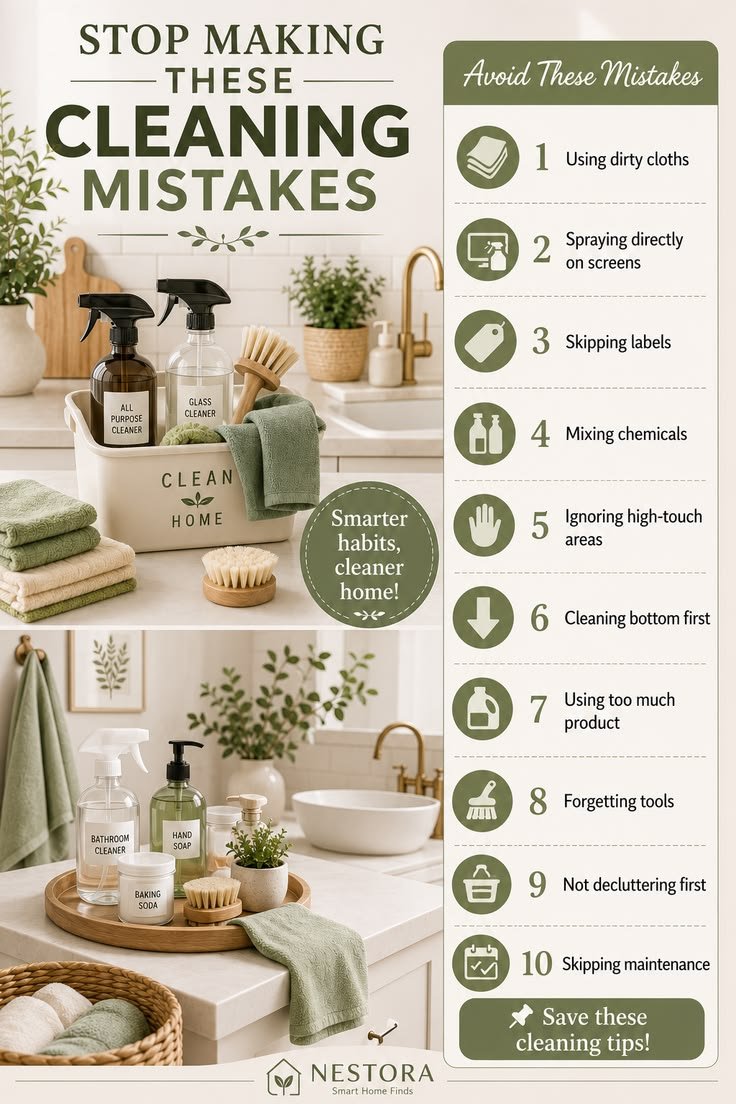
Here are 10 common cleaning mistakes you should avoid to keep your home spotless and hygienic.
1. Using One Cleaning Cloth for Everything
One of the most common cleaning mistakes is using the same cloth to clean different areas of the home.
For example, using one cloth to wipe the kitchen countertop, bathroom sink, toilet, and dining table can spread dirt and harmful microorganisms from one surface to another.
How to avoid it:
- Use separate cleaning cloths for the kitchen, bathroom, and other living spaces.
- Choose different colours to identify each cloth easily.
- Wash reusable cleaning cloths regularly.
- Allow cloths to dry completely before storing them.
Using separate cleaning materials helps prevent cross-contamination and improves household hygiene.
2. Cleaning Without Removing Clutter First
Trying to clean around scattered clothes, shoes, toys, kitchen utensils, and other household items can make the process unnecessarily difficult.
Clutter prevents you from reaching certain surfaces and makes your home look untidy even after cleaning.
How to avoid it:
Before you begin cleaning, take a few minutes to organize the room.
- Put clothes in the wardrobe or laundry basket.
- Return kitchen utensils to their proper places.
- Arrange shoes on a shoe rack.
- Remove unnecessary items from tables and countertops.
Clearing clutter first makes cleaning faster, easier, and more effective.
3. Using Too Much Cleaning Product
Many people believe that using more cleaning detergent or disinfectant will produce better results. Unfortunately, this is not always true.
Excessive cleaning products can leave sticky residues on surfaces, damage certain materials, cause unpleasant smells, and increase unnecessary chemical exposure.
How to avoid it:
Always follow the instructions on the cleaning product label. Use the recommended quantity and dilute products only when the manufacturer advises it.
Remember that effective cleaning depends on the correct product, proper application, and sufficient cleaning time, not simply the amount of detergent used.
4. Forgetting to Clean Frequently Touched Surfaces
Some people focus on visible dirt while ignoring surfaces that are touched regularly throughout the day.
Door handles, light switches, remote controls, refrigerator handles, taps, and cupboard handles can collect dirt and microorganisms.
How to avoid it:
Make frequently touched surfaces part of your regular cleaning routine.
- Wipe door handles and light switches.
- Clean refrigerator handles.
- Disinfect suitable high-touch surfaces when necessary.
- Follow product instructions regarding contact time and surface compatibility.
Paying attention to these small details helps maintain a cleaner and more hygienic home.
5. Cleaning the Floor Before Dusting Furniture
Another common mistake is cleaning the floor before dusting shelves, tables, cupboards, and other furniture.
When you dust furniture afterward, particles can fall onto the freshly cleaned floor, forcing you to clean it again.
How to avoid it:
Always work from top to bottom.
A better cleaning order is:
- Dust ceiling fans and high shelves.
- Wipe cupboards and furniture.
- Clean countertops and other surfaces.
- Sweep or vacuum the floor.
- Mop the floor last.
Following this order saves time and prevents unnecessary repetition.
6. Neglecting Sponges, Mops, and Cleaning Tools
Cleaning tools are designed to remove dirt, but they can become dirty themselves when they are not maintained properly.
Wet sponges, dirty mops, and unwashed cleaning cloths can develop unpleasant smells and harbour microorganisms.
Using these tools without cleaning them can spread contamination around your home.
How to avoid it:
- Rinse cleaning tools thoroughly after use.
- Wash reusable mop heads and cloths regularly.
- Replace damaged or heavily worn sponges.
- Allow cleaning tools to dry completely.
- Store them in a clean, well-ventilated area.
Remember that clean tools are essential for achieving a properly cleaned home.
7. Ignoring Hidden and Hard-to-Reach Areas
It is easy to concentrate on visible surfaces while forgetting places that are not immediately noticeable.
Areas beneath furniture, behind refrigerators, inside cupboards, window tracks, corners, and spaces behind doors can accumulate dust and dirt over time.
How to avoid it:
Include hidden areas in your weekly or monthly cleaning schedule.
Move lightweight furniture when necessary, clean accessible corners, and use suitable brushes or vacuum attachments to reach difficult spaces.
You do not need to clean every hidden area daily, but regular attention prevents dirt from accumulating.
8. Mixing Different Cleaning Chemicals
This is one of the most dangerous household cleaning mistakes.
Some people combine different cleaning products because they believe mixing them will make cleaning more powerful. However, certain chemical combinations can release toxic gases.
For example:
- Mixing bleach with vinegar can release chlorine gas.
- Mixing bleach with ammonia can produce dangerous chloramine gases.
- Mixing bleach with acidic toilet cleaners can also release toxic gases.
Exposure can cause coughing, breathing difficulties, eye irritation, and other serious health problems.
How to avoid it:
Never mix cleaning chemicals unless the product manufacturer explicitly states that they are compatible.
Use one cleaning product at a time, follow label instructions, and maintain good ventilation.
Store chemicals safely and keep them away from children and pets.
If you accidentally mix chemicals and notice strong fumes, leave the area immediately and seek appropriate emergency or poison-control advice.
9. Leaving Wet Surfaces Without Drying Them
Many people finish cleaning but forget to dry surfaces properly.
Leaving water on bathroom floors, kitchen countertops, sinks, and other surfaces can encourage moisture buildup. In poorly ventilated areas, persistent moisture can contribute to mould growth.
Wet floors can also become slippery and increase the risk of accidents.
How to avoid it:
- Wipe excess water from countertops.
- Dry bathroom surfaces where practical.
- Use a squeegee to remove water from shower walls.
- Improve ventilation in damp areas.
- Allow cleaned surfaces and cleaning tools to dry properly.
Keeping your home dry is just as important as keeping it clean.
10. Waiting Until Your Home Becomes Extremely Dirty
One of the biggest cleaning mistakes is postponing household cleaning until dirt, clutter, and unpleasant smells become overwhelming.
When you allow mess to accumulate, cleaning takes longer and becomes more stressful.
How to avoid it:
Develop simple daily cleaning habits that prevent dirt from building up.
For example:
- Make your bed every morning.
- Wash dishes after meals.
- Wipe kitchen countertops after cooking.
- Put household items back in their proper places.
- Sweep high-traffic areas regularly.
- Empty rubbish bins when necessary.
- Clean bathroom surfaces frequently.
You can also assign specific deep-cleaning tasks to different days of the week.
Consistency is the secret to maintaining a clean home without spending your entire day doing housework.
Bonus: Simple Cleaning Habits That Make a Big Difference
Apart from avoiding the mistakes above, these additional habits can help improve your cleaning routine:
- Read product labels: Understand how to use cleaning products safely and effectively.
- Use the right cleaning tools: Different surfaces require different cleaning materials.
- Wear protective gloves: Protect your hands when handling cleaning products.
- Keep cleaning supplies organized: Store everything in an accessible but safe location.
- Follow a cleaning schedule: Assign daily, weekly, and monthly cleaning responsibilities.
- Clean as you go: Deal with spills and messes immediately instead of allowing them to accumulate.
Conclusion
Keeping your home clean is not just about how often you sweep, mop, or wash your belongings. It is also about using the right techniques and avoiding habits that make cleaning ineffective or unsafe.
From using separate cleaning cloths and avoiding excessive detergents to cleaning from top to bottom and never mixing household chemicals, small changes can make a significant difference.
Remember that a clean home does not require perfection. What matters most is developing consistent habits, using cleaning products correctly, and paying attention to areas that are often neglected.
Avoid these 10 common cleaning mistakes, improve your daily cleaning routine, and enjoy a fresher, healthier, and more comfortable home every day!


