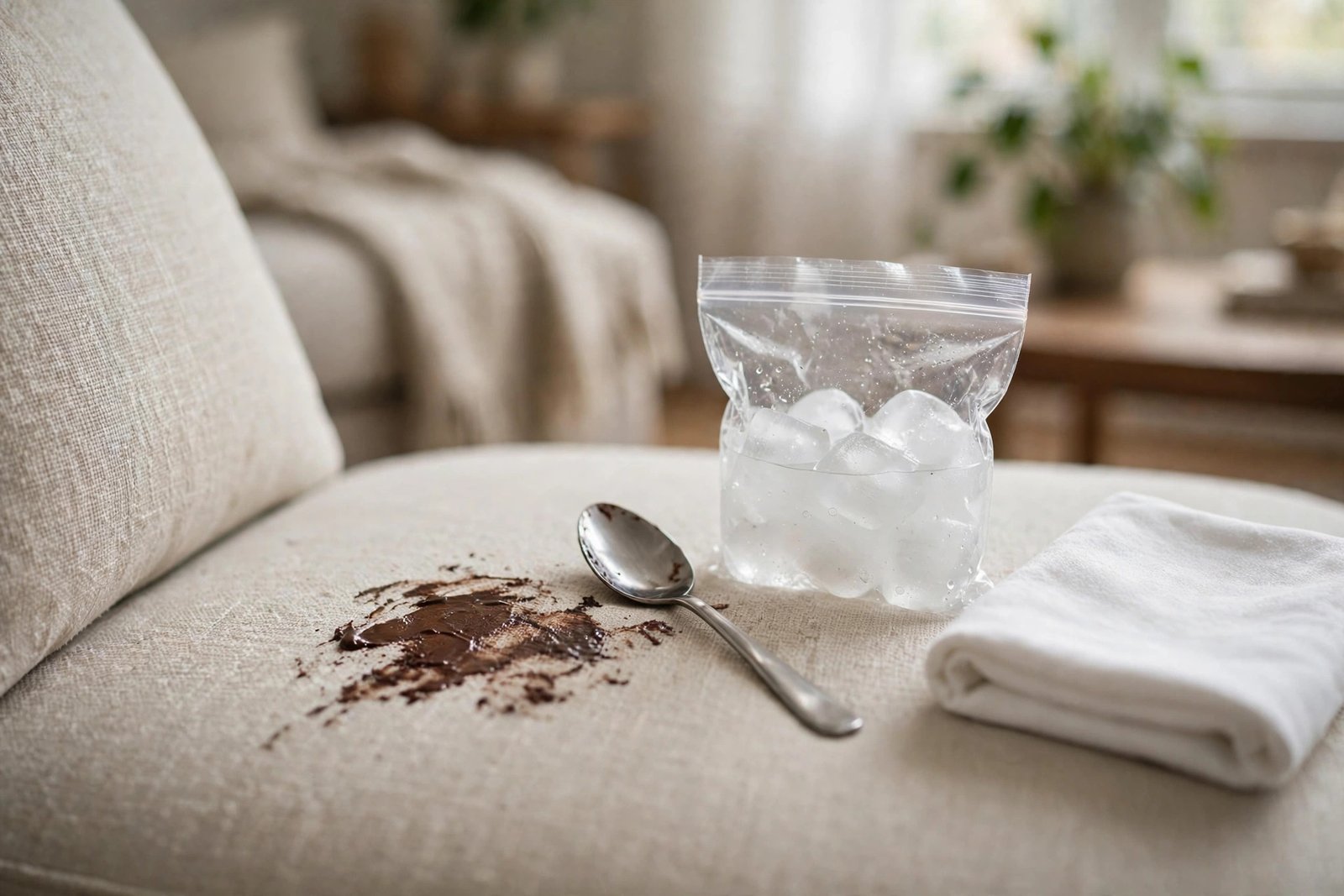
It happened during movie night at my house, which is probably when it happens at yours too. A bowl of chocolate pieces on the coffee table, a dark room, and one square that slipped off a cushion and quietly melted into the sofa before anyone noticed. By the time I found it, there was a brown smear worked right into the weave — and my first instinct, I’ll be honest, was to grab a wet cloth and scrub.
Don’t do that. Scrubbing is how a small, fixable chocolate spot becomes a big, permanent one.
Chocolate looks simple, but it’s really three stains in one: cocoa butter (a grease), cocoa solids (a dark pigment), and usually some milk and sugar. Treat it like a grease stain and the brown color stays behind. Treat it like a dirt stain and the grease stays behind. The method below handles all three parts in the right order, and it’s the same one I walk through in my complete stain removal guide — lift the solid first, then the grease, then the color. Whether your chocolate landed five minutes ago or melted in yesterday, this works on most fabric sofas, and I’ll cover leather separately further down.
Quick Answer
Freeze or chill the chocolate until it’s firm, then lift and scrape off every solid bit with a spoon or dull knife. Check your sofa’s cleaning code tag before using any liquid. Then blot — never rub — with a cloth dipped in cold water mixed with a few drops of clear dish soap, working from the outside of the stain inward. Rinse by blotting with plain cold water, and let it air dry. Cold is the whole secret: heat melts cocoa butter deeper into the fibers and helps set the stain.
Table of Contents
First, Check Your Sofa’s Cleaning Code
Before any water touches that cushion, flip a seat cushion over or look along the bottom frame for the manufacturer’s tag. You’ll find one of four codes, and it decides what you’re allowed to use:
- W — Water-based cleaners are fine. The dish soap method below is safe.
- S — Solvent only. No water at all. Skip to the note under the steps.
- WS — Either water-based or solvent cleaners are fine. The method below is safe.
- X — Vacuum or brush only. No liquid of any kind; this one is a professional’s job.
Can’t find a tag? Manufacturers explain these codes on their care pages — Revolution Performance Fabrics has a clear breakdown here. And whatever code you have, do a patch test first: dab your cleaning solution on a hidden spot — the back of the sofa or under a cushion — wait ten minutes, and check for color lifting onto your cloth or any change in the fabric’s texture. Two minutes of patience here has saved more sofas than any product I know.
What You’ll Need
- A spoon, dull butter knife, or old credit card (for scraping)
- Ice cubes in a zip-top bag, or a bag of frozen peas
- Clear dish soap (clear matters — colored soap can leave its own tint on pale fabric)
- Cold water in a small bowl
- Two or three clean white cloths or white paper towels (white so no dye transfers)
- A dry towel for blotting
- Optional: an enzyme-based upholstery stain remover for older stains
The Steps
1. Chill the chocolate until it’s hard. If the chocolate is soft or melted, lay your bag of ice over it for 10–15 minutes. Cold chocolate turns brittle and releases its grip on the fibers. Warm chocolate just smears. This one step does more than any cleaner will.
2. Scrape and lift off the solids. Work the edge of your spoon or card under the chocolate and lift upward, away from the fabric. Wipe the spoon clean after every pass so you’re not redepositing what you just removed. Get up everything that will come — patience here means less work later.
3. Mix your solution. A few drops of clear dish soap in a bowl of cold water. That’s it. You want it barely sudsy, not a bubble bath — too much soap leaves a residue that attracts dirt, and you’ll be cleaning this same cushion again in a month.
4. Blot from the outside in. Dip your white cloth in the solution, wring it so it’s damp, not dripping, and press it onto the stain. Work from the outer edges toward the center so you don’t spread the stain wider. Lift, check the cloth — you should see brown transferring — then move to a clean section of cloth and repeat. Press and lift. Never rub back and forth; rubbing frays the fibers and pushes cocoa butter down where you can’t reach it.
5. Repeat until the cloth comes away clean. Fresh stains usually give up in a few rounds. Keep the fabric damp, not soaked — a soggy cushion takes forever to dry and can end up with a water ring that’s harder to look at than the stain was.
6. Rinse with plain cold water. Dampen a fresh cloth in clean cold water and blot the whole area to pull the soap back out. Skip this and the spot will quietly collect dust and look dingy within weeks.
7. Blot dry and let it air. Press a dry towel into the cushion to wick up moisture, then leave it to air dry completely before anyone sits on it. A fan pointed at the spot speeds things along. Once it’s dry, run your hand over it — if you can still see a faint shadow, one more round of steps 4–6 usually finishes it.
If your code is S: stop after step 2. Use a solvent-based upholstery cleaner made for S-coded fabric, follow its label exactly, patch test first, and keep the room ventilated. No water, not even a little.
Melted or Dried-On Chocolate
Found it hours later, already soaked in and dried? It’s still fixable. Start the same way — ice first. Dried chocolate softens at the surface but stays smeary; chilling re-hardens the cocoa butter so you can scrape off far more than you’d expect. Then follow the steps above, but give the dish soap solution more time: lay the damp cloth over the stain and let it sit for five minutes to loosen what’s left before you start blotting. Expect two or three full rounds instead of one.
For a stain that’s been through all that and still shows, an enzyme-based upholstery cleaner is a reasonable next move — enzymes go after the milk proteins in chocolate that dish soap handles slowly. OxiClean’s own guidance on chocolate stains follows the same scrape-blot-rinse order here, which should tell you something: the order matters more than the brand. Whatever product you use, keep it cold, keep it code-safe, and patch test.
Chocolate on a Leather Sofa
Leather is actually the forgiving case here, because chocolate mostly sits on the surface instead of soaking in. Let it firm up (a cool room does it; skip the ice bag directly on leather for long stretches), then lift the solids with a soft plastic scraper or the edge of a card. Wipe what remains with a cloth barely dampened with water and a trace of mild soap, then immediately wipe again with a clean damp cloth, and buff dry with a soft towel. Finish with your usual leather conditioner if the area feels dry. Two warnings: never soak leather, and never use the scrubbing brushes or harsh degreasers that fabric can tolerate — leather shows every mistake. On suede or nubuck, stop at the scraping stage and call a professional; those finishes mark if you look at them wrong.
Mistakes That Make Chocolate Stains Permanent
- Using hot water. The single worst move. Heat melts cocoa butter straight down into the fibers and sets the color. Cold water, every time.
- Rubbing or scrubbing. It spreads the stain sideways and drives it deeper at the same time. Blot, lift, repeat.
- Skipping the scrape. Soap and water on a lump of chocolate just makes chocolate soup. Solids off first, always.
- Ignoring the cleaning code. Water on an S or X sofa can leave shrinkage, water rings, or a faded patch that no one can fix.
- Reaching for the hair dryer. Same problem as hot water. Air dry, or use a fan on its cool setting.
For Further Reading
- The Complete Stain Removal Guide — my full system for sorting any stain by type before you touch it.
- How to Get Stains Out of Clothes — chocolate on the shirt you were wearing, too? Same cold-water logic, laundry version.
- How to Remove Stains from Carpet — because movie night chocolate rarely stops at the sofa.
- OxiClean: How to Remove Chocolate Stains — the manufacturer’s own step-by-step for washable upholstery.
- Revolution Performance Fabrics: Cleaning Sofa Fabric — a fabric maker explains the W, S, WS and X codes in plain language.
FAQ
Can I use hot water if the chocolate has already dried?
No — dried or fresh, heat is the enemy. Hot water melts the cocoa butter so it sinks deeper and helps bond the color to the fibers. Ice and cold water are what get chocolate out; heat is what keeps it in.
Will dish soap damage my sofa?
On W and WS fabrics, a few drops of clear dish soap in cold water is one of the gentlest options there is. Patch test a hidden spot first, use it sparingly, and rinse well — leftover soap residue is the only real risk, and it just attracts dirt.
The stain is gone but there’s still a greasy shadow. What now?
That’s cocoa butter that the color left behind. Blot again with the dish soap solution — soap is there precisely because it cuts grease — and give it a couple of extra rounds. A light sprinkle of baking soda left for 15 minutes and vacuumed up can also pull residual oil from the surface.
My sofa is code S. Can I just use a tiny bit of water?
Please don’t. S means the fabric, its backing, or its dyes can’t take water, and even a small amount can leave a ring or shrinkage you can’t undo. Use a solvent-based upholstery cleaner made for S fabrics, or call a professional.
When should I just call a professional cleaner?
If your code is X, if the sofa is silk, suede, vintage, or genuinely valuable, or if you’ve done two careful rounds and the stain hasn’t budged — at that point more attempts do more harm than good. A pro with an extractor will finish in minutes what could take you an afternoon of making it worse.
Chocolate on the sofa feels like a disaster at midnight and a minor story by morning — as long as you freeze first and keep the water cold. If you’ve rescued a cushion this way (or have a stain that beat you), tell me about it in the comments. I read every one, and the stubborn cases are honestly my favorite puzzles.
— Daniel