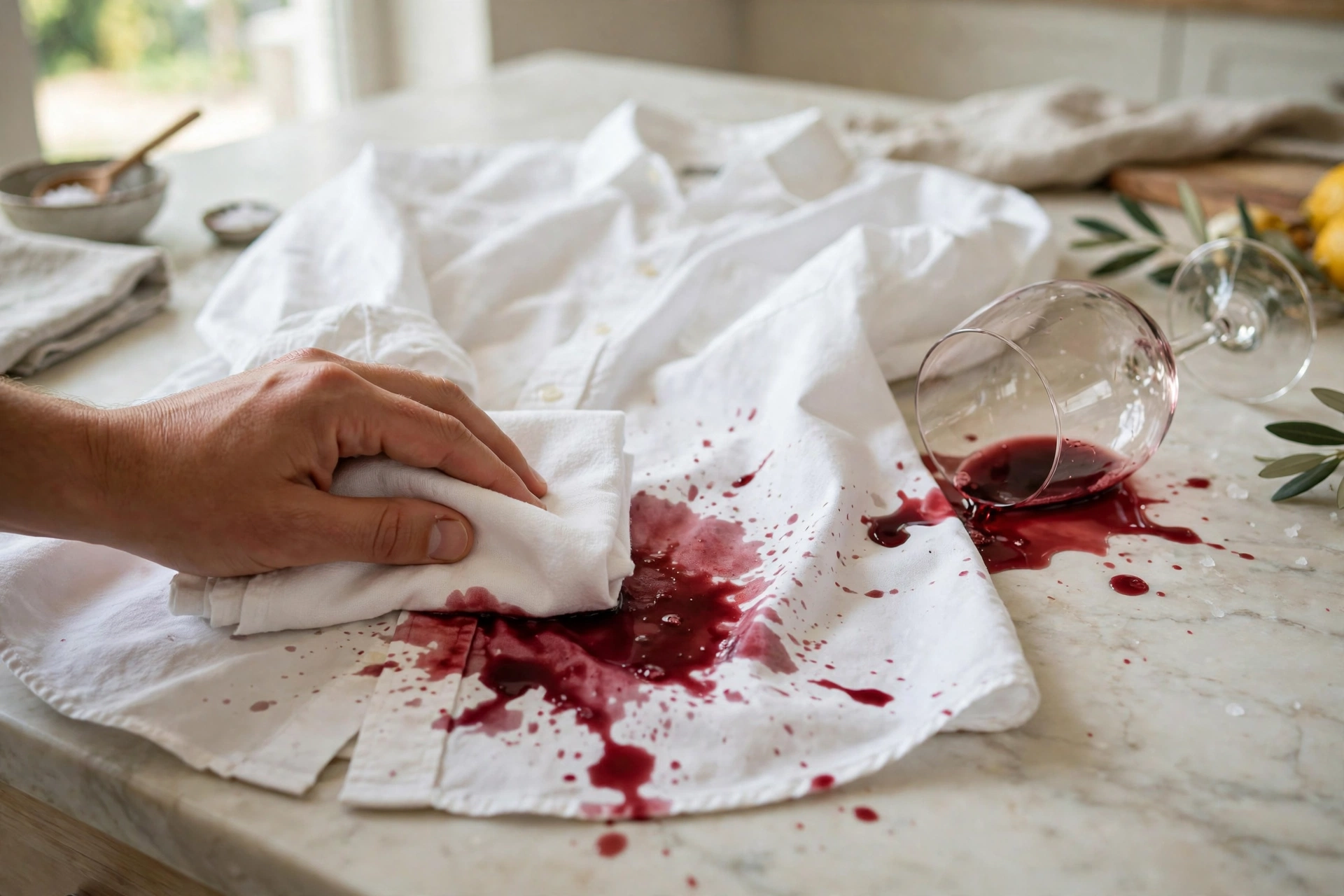

It always happens the same way. One second you’re holding a glass and laughing, the next there’s a dark red splash across your shirt, and the whole table goes quiet. Someone reaches for the salt. Someone else says, “Pour white wine on it, quick!”
Here’s what I wish someone had told me before I ruined a good white blouse with a salt crust and scrubbing: wine on clothes is not wine on carpet. Carpet you can only blot. Clothes you can rinse from the back and wash — which means most of these stains are fixable.
TL;DR
Blot, don’t rub. Flush cold water through the back of the stain. For whites, treat with 3% hydrogen peroxide plus a drop of dish soap; for colors, use white vinegar followed by liquid laundry detergent. Soak dried stains in oxygen bleach. Wash cold, check in bright light, and only then use the dryer — heat sets wine permanently. Salt and club soda are damage control at best; white wine on red wine is a myth.
Why Red Wine Grips Fabric So Hard
Red wine’s color comes from anthocyanins, the pigments in grape skins, plus tannins — the compounds that make your mouth feel dry after a sip. Anthocyanins bond to fibers, tannins help them grip tighter, and the bond strengthens as the stain dries. That’s why a fresh splash looks bright while a stain found the next morning looks darker and more settled in.
Heat is the real villain: hot water or a dryer can lock that bond in place for good. So no heat until the stain is completely gone. Not “mostly gone.” Gone.
The First 60 Seconds
Speed matters more than any product. First, blot, don’t rub: press a clean white cloth straight down, lift, refold to a clean section, and press again. Rubbing grinds pigment deeper and spreads the stain — it’s how a small splash becomes a big one.
Second, get the garment off if you can. Third, flush from the back: hold the fabric taut over a sink, stain side down, and run cold water through the back for a minute or two. You’re pushing pigment out the way it came in.
Fresh Stains on Whites
Whites give you the most options, since dye isn’t a worry. Dab on a mix of about three parts 3% hydrogen peroxide and one part clear dish soap, and let it sit 20 to 30 minutes. Blot, rinse cold, and check.
If a pink shadow remains, soak in cool water with oxygen bleach (sodium percarbonate, sold as OxiClean and store brands) for one to four hours per the package directions. It’s far kinder to fabric than chlorine bleach — see how it compares with other stain fighters in our complete stain removal guide (https://thetidyapron.com/complete-stain-removal-guide/). Then wash cold and inspect in bright light before drying. Skip chlorine bleach even on whites: it can yellow fabric.
Fresh Stains on Colors
Colors need a gentler hand, because anything strong enough to strip wine pigment can strip dye too. Spot-test first: dab treatment on an inside seam, wait five minutes, and press a white cloth against it. If color transfers, switch to something milder.
Dab white vinegar on the stain for about 10 minutes — the acid loosens tannin bonds — then work in a few drops of liquid laundry detergent, wait another 10 minutes, and rinse cold from the back. Colored garments can usually handle an oxygen bleach soak too, but keep it to an hour or less, and skip it if the label says “do not bleach.” Wash the garment alone in cold water so loosened pigment can’t redeposit on other clothes, and inspect before drying.
Hydrogen peroxide on colors is a gamble — it can lighten dyes. Spot-test first, never use it on silk or wool, and know vinegar and detergent get you nearly as far with less risk.
Dried Stains: Yes, They Can Still Come Out
Found the stain the morning after? Don’t write it off — but expect two rounds instead of one. A stain already through a hot dryer may never fully disappear; “unnoticeable” is still a win.
Rehydrate first: soak in cold water for 30 minutes (a splash of pharmacy glycerin rubbed in beforehand softens really old stains). Then treat as for a fresh stain, but give it up to an hour before rinsing, followed by an oxygen bleach soak — several hours for whites, up to an hour for colors. Repeat once if a shadow remains. Patience beats aggression; hard scrubbing damages fabric before it beats the stain.
Silk, Wool, and “Dry Clean Only”
Silk and wool react badly to peroxide, vinegar soaks, and oxygen bleach. On these, just blot and flush gently with cold water, dab on mild detergent, rinse, and lay flat to dry. If the stain survives, take it to a dry cleaner and tell them what you’ve tried — that helps them pick the right solvent. If the label says “dry clean only” and the garment matters, skip home experiments: a professional clean costs less than a replacement.
Testing the Myths: Salt, Club Soda, and White Wine
Salt: a Band-Aid, not a treatment. It absorbs surface liquid, so it buys you time on a fresh spill. But it does nothing to pigment already bonded to fibers, and rubbed-in crystals can grind pigment deeper. Blot the salt up and treat properly at home.
Club soda: barely better than water. The fizz adds a little agitation, but the real work is cold liquid diluting and flushing the wine — plain cold water does the same job. Don’t hunt for a bottle when a glass of water is right there. The method changes when you can’t rinse from behind, which is why our guide to red wine on carpet (https://thetidyapron.com/red-wine-stain-carpet/) takes a different approach to the same spill.
White wine on red wine: retire this one. All you’re doing is diluting red pigment with another liquid — the same dilution you’d get from water — while adding more alcohol, sugar, and tannins. On a dried stain it just makes a stickier mess. Save it for drinking. Detergent maker Tide agrees: peroxide and detergent plus a proper wash beats folk remedies (Tide’s guide to removing wine stains: https://tide.com/en-us/how-to-wash-clothes/how-to-remove-stains/wine-stains).
FAQ
Can you get red wine out of clothes after it has dried?
Usually, yes. Rehydrate in cold water, treat as for a fresh stain, and follow with an oxygen bleach soak. Expect two rounds. Stains already through a hot dryer are the hardest — faint and unnoticeable is sometimes the realistic result.
Does salt actually remove red wine stains?
No. It absorbs surface liquid on a very fresh spill, which can lighten the stain slightly, but it doesn’t break the pigment bonds in the fibers. Think of it as a paper towel in mineral form: helpful in the first minutes, not a treatment.
Is hydrogen peroxide safe on colored clothes?
It’s risky. Three percent peroxide can lighten dyes, so reserve it for whites and colorfast fabrics, and spot-test on a hidden seam first. Never use it on silk or wool. For colors, vinegar followed by detergent is the safer first move.
What if the stain survives everything?
If two full rounds leave a shadow, stop before you damage the fabric. A professional cleaner has solvents you don’t — take it in, and tell them what you’ve already tried.
A red wine stain feels like a disaster in the moment, but most are fixable — blot instead of rubbing, keep everything cold, and resist the folklore. The glass is replaceable. Your favorite shirt, more often than not, is not lost yet.