
TL;DR
Figuring out how to get paint out of carpet starts with one question: what kind of paint is it — that decides everything. Latex and acrylic (water-based, the most common) come out with scraping plus warm soapy water, and rubbing alcohol for dried acrylic. Oil-based paint and gloss need white spirit on a cloth, never poured straight on the carpet. In every case: blot, never rub, and test any solvent on a hidden patch first.
What You Need
- A dull knife, old spoon, or plastic putty knife
- Clean white cloths and paper towels (white, so no dye transfers)
- Warm water and mild dish soap
- Rubbing alcohol (for dried acrylic)
- White spirit / mineral spirits (for oil-based paint only)
- Rubber gloves, and an open window if solvents are involved
- An old toothbrush for dried paint
Wet Latex or Acrylic Paint: The Easy Rescue
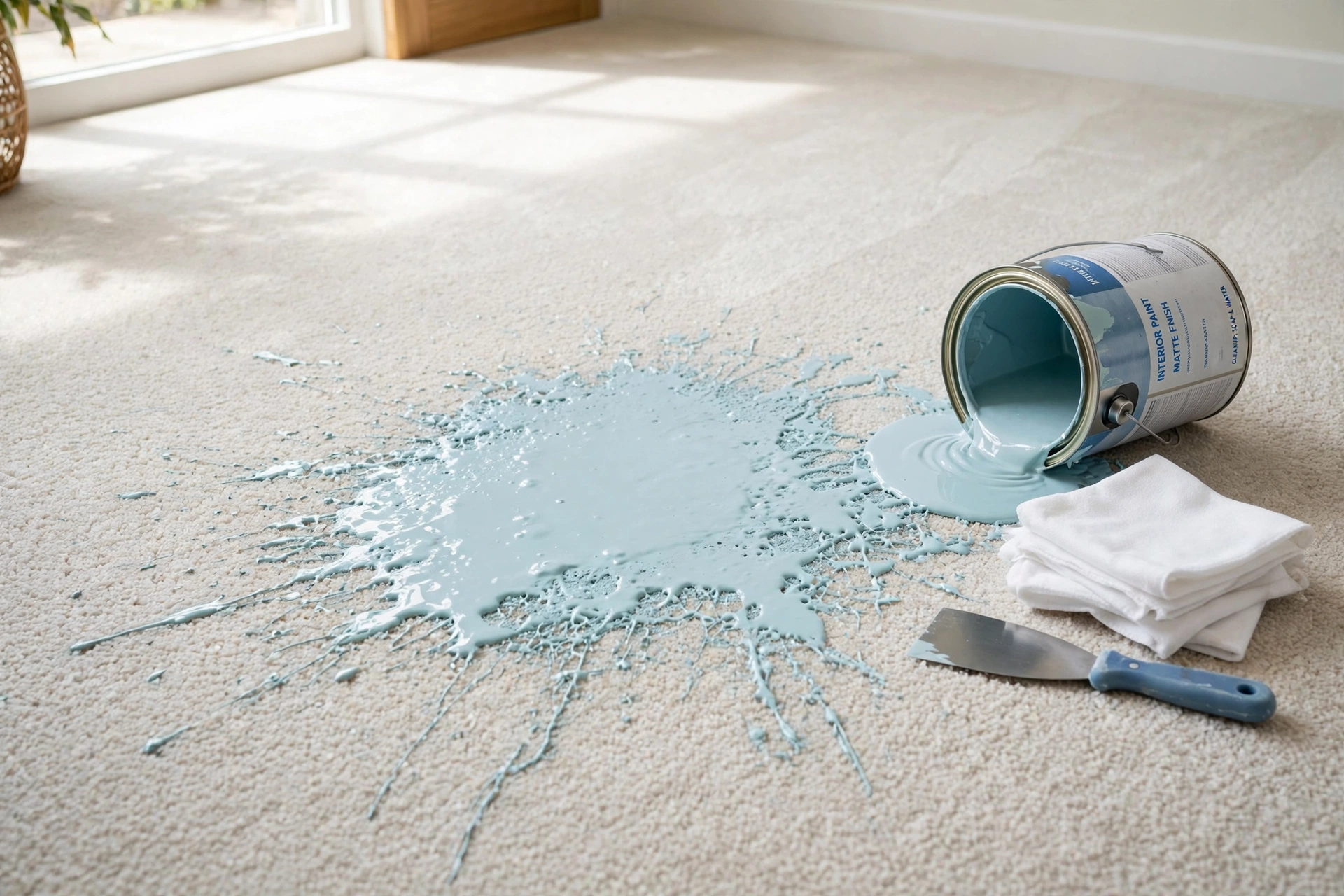
If the paint is still wet, you are in luck. This is the simplest version of the job. Scoop up as much as you can with the putty knife or spoon, working from the outside edge toward the middle so you do not push paint into clean carpet. Then blot, do not rub, with paper towels to lift the rest. Rubbing grinds paint into the fibres; blotting lifts it out. Mix one teaspoon of mild dish soap into a cup of warm water. Dampen a white cloth in it and blot the stain, working from the outside in. Keep switching to a clean section of cloth as paint transfers onto it. When the colour stops transferring, rinse with a cloth dampened in plain water, then blot dry with towels. Let it air dry fully before walking on it. If the paint was a craft acrylic that has started to go tacky, the same method works, just slower. Keep the cloth damp, not dripping, and give the soapy water time to soften the paint between blotting rounds.
Dried Latex or Acrylic Paint: Soften First, Then Lift
Dried water-based paint forms a hard film, and plain water will not dissolve it. The trick is softening it before you try to remove it. Start by scraping gently. Hold a dull knife almost flat and lift off any raised flakes, then vacuum up the debris. Do not gouge or saw at the carpet; you are removing the crust, not the fibres. Next, lay a cloth soaked in warm soapy water over what is left for 10 to 15 minutes. This loosens the edges and softens the film. Then work at it gently with an old toothbrush, blotting with a clean cloth as paint lifts. Repeat the soak-and-blot cycle until it stops lifting. For stubborn dried acrylic on synthetic carpet, rubbing alcohol is the next step up. Test a little on a hidden area first — alcohol can fade some dyes. If the colour holds, dab it on with a white cloth, blot, then rinse with plain water. Do not soak the carpet in alcohol, and do not use nail polish remover with acetone on carpet unless you have tested it, because acetone is much harsher. One honest shortcut: if a tiny spot has dried only on the very tips of a cut-pile carpet, you can carefully snip just those tips with small scissors. Never do this on loop pile, where cutting can make the loops unravel and leave a visible bald patch.
Oil-Based Paint and Gloss: The Solvent Method
Oil-based paint does not respond to water at all. Water on wet oil paint just spreads it. This is the method that needs care. First, scoop and blot the excess exactly as above, with a dry cloth. Then dampen a white cloth with white spirit (mineral spirits) and dab only the paint, not the surrounding carpet. Let it sit a minute to soften the paint, then blot as it lifts, switching to clean cloth sections. Work from the outside in. Three safety rules, non-negotiable: keep the room well ventilated and the windows open, wear gloves, and keep solvents away from flames. Never pour white spirit straight onto the carpet, because it soaks through to the backing and can damage it. And never use paint stripper on carpet — it is far too aggressive for fibres and backing. When the paint is out, wash the area with warm water and dish soap to remove the solvent residue, rinse with plain water, and blot dry. Dried oil-based paint is genuinely hard at home. Soften it with a little white spirit and scrape gently, and if it will not shift after a couple of careful tries, a professional carpet cleaner is the safest option. There is no shame in that; some dried oil paint has bonded with the fibres in a way that home methods cannot undo without damage.
What NOT to Do
- Do not rub. Every paint type gets worse with rubbing. Blot only.
- Do not pour water on oil-based paint. It spreads the mess and complicates the solvent step.
- Do not pour solvent directly on the carpet. Always apply it to a cloth first.
- Do not use a heat gun. Heat melts polyester pile and can set paint deeper.
- Do not use paint stripper on carpet. It attacks fibres and backing, not just paint.
- Do not skip the spot test. Solvents and alcohol can fade dyes. A hidden corner test takes one minute.
Paint on Different Carpet Types
Low-pile and berber: The easiest. Paint sits on the surface, scraping and blotting work fast, and solvents are less likely to reach the backing.
Plush and medium pile: Expect repeat rounds. Paint works down between fibres, so the soak-and-blot cycle matters more than force.
Loop pile: Be gentle with scraping and never snip tips. Loops unravel, and a small cut becomes a visible run.
Wool and natural fibres: Skip alcohol and be cautious with solvents. Test carefully, use the mildest method first, and consider a professional sooner rather than later.
FAQ
Can I use a steam cleaner on paint in carpet?
For dried latex or acrylic, yes, a steam cleaner can help loosen the film after scraping, and it is often recommended as a step before blotting with soapy water. For oil-based paint, no — steam does not dissolve oil paint, and heat plus solvent residue is a bad combination.
How long does dried paint take to remove?
A small dried latex spot usually takes 30 to 45 minutes across a few soak-and-blot rounds. A large dried oil-based area can take hours, and may still need a professional. Time spent softening is never wasted; force is what damages carpet.
Does paint stain carpet permanently?
Water-based paint usually does not, if you catch it before it cures fully into the fibres. Oil-based paint can leave a shadow even after the paint itself is gone, especially on light carpet. That shadow is pigment trapped deep in the fibres, and it is the main reason professionals exist.
What if I do not know what kind of paint it is?
Check the tin first. If there is no tin, test a hidden drop: water-based paint softens with warm soapy water, oil-based paint does not budge with water but softens with white spirit on a cloth. Start with the water test, since it is the gentler one.