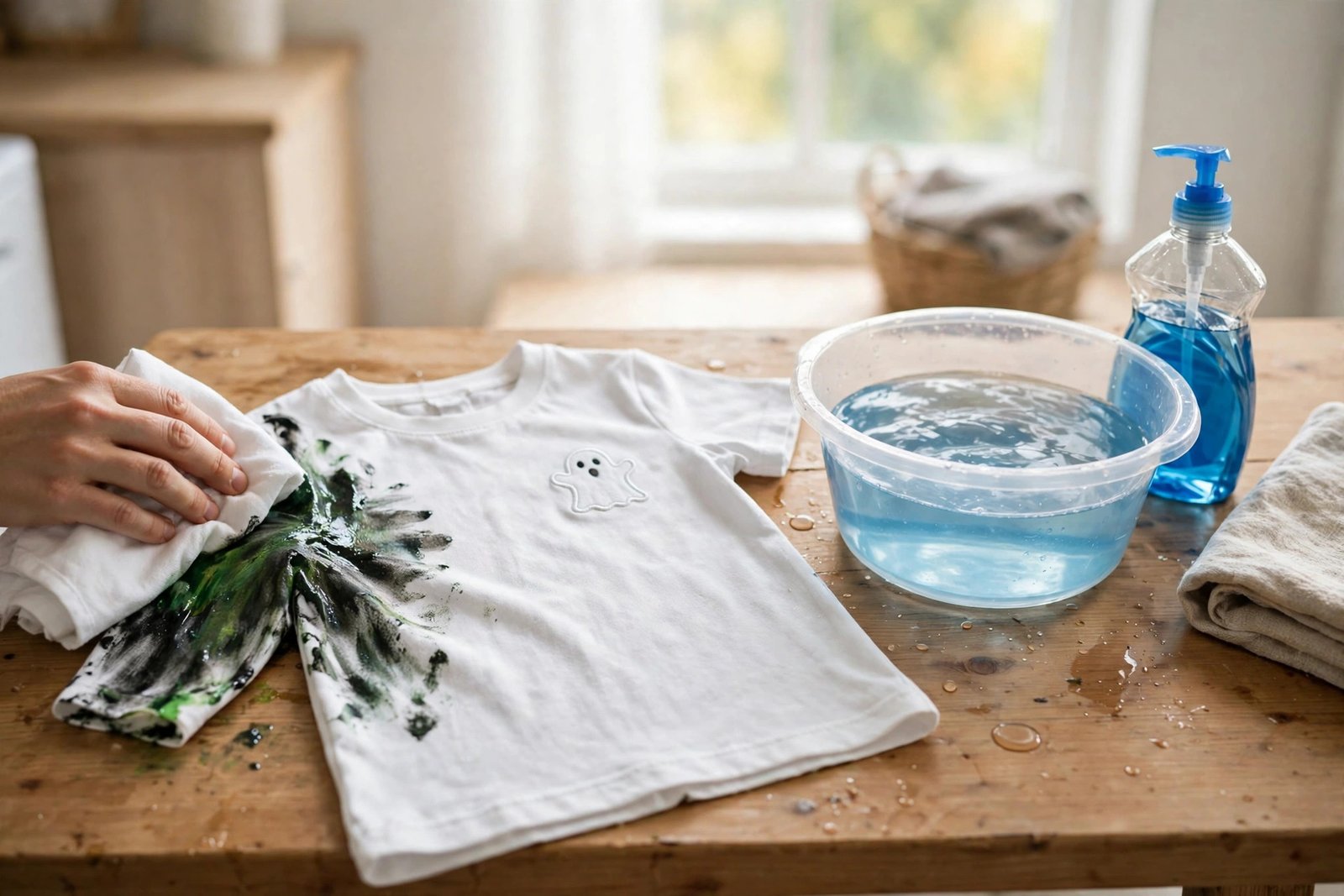

Last Halloween my nephew came home as a very convincing zombie, except the zombie had clearly wiped his face on his sleeve at some point, and the white shirt under the costume was now streaked green and black. His mum’s first instinct was to throw it straight in the wash. I stopped her, because face paint is one of those stains where the first thing you do matters more than the product you use — and the right first step depends entirely on what kind of paint it is.
Here’s the thing most guides skip: face paint comes in two families, and they need opposite treatments. Water-based paint — the stuff in most kids’ palettes and cheap Halloween kits — rinses out with soap and water. Oil-based or grease-based paint — theatrical makeup, clown white, the heavy-duty costume stuff — laughs at soap and water and needs something that dissolves grease first. Treat an oil-based stain like a water-based one and you’ll just smear it around. Figure out which one you’re dealing with, then follow the matching method below.
The Quick Answer
| Paint type | How to tell | First move | Wash |
|---|---|---|---|
| Water-based (most kids’ paint) | Feels chalky when dry, rinses off skin with water | Rinse under cool water, then dish soap | Machine wash as normal |
| Oil-based / grease paint | Feels waxy or greasy, needs makeup remover off skin | Makeup remover or plain hand cleaner first | Dish soap, then machine wash |
| Glitter paint | Sparkles, gritty texture | Lint roller or tape first to lift glitter | Then follow the water-based method |
| Dry-clean only garment | Label says so | Blot only, don’t wet it | Take it to the cleaner |
Not sure which type it is? Think about how it came off the face. If it rinsed away with water at the sink, it’s water-based. If it needed cold cream or makeup remover, it’s oil-based. When in doubt, treat it as oil-based — the grease method won’t hurt a water-based stain, but the reverse isn’t true.
Table of Contents
What You’ll Need
- Clean white cloths or white paper towels
- Liquid dish soap (clear, no bleach)
- Liquid laundry detergent
- Makeup remover or plain, grit-free hand cleaner (for oil-based paint only)
- Rubbing alcohol (for stubborn oil-based marks — optional)
- A soft brush, like an old toothbrush
- Cold water
Water-Based Face Paint: The Easy One
This is the most common case, and honestly the most forgiving stain in this whole series.
Step 1: Rinse from the back
Hold the stained area face-down under cool running water so the water pushes the paint out the way it came in. You’ll see color running out immediately. Keep rinsing for a minute or two until the water runs mostly clear. Persil’s face paint guide makes the same point I always make with stains: don’t rub at this stage, or you drive the paint deeper into the fibers.
Step 2: Work in dish soap
Rub a few drops of liquid dish soap into what’s left with your fingertips or a soft brush, working gently in small circles. Let it sit for 5–10 minutes. For a faint shadow, a second round of soap does more than a stronger product.
Step 3: Wash, then check before drying
Machine wash on the garment’s normal cycle. Now the rule that applies to nearly every stain on this site: check the spot in good light before it goes near the dryer. Heat sets whatever is left. If a trace remains, repeat the soap step and wash again. If it’s gone, dry however you like.
Oil-Based and Grease Paint: Dissolve First, Then Wash
Theatrical paint, clown makeup, and heavy costume paint are built to survive sweat and a long night. Water alone won’t touch them, and that’s normal — it doesn’t mean the garment is ruined.
Step 1: Break down the grease
Work a small amount of makeup remover into the stain with your fingers, or use a plain, grit-free hand cleaner — the kind mechanics use. Either one dissolves the waxy base that holds the pigment. Let it sit for 5 minutes. You’ll see the color start to lift into the product. Hoover’s paint removal guide notes the same distinction: grease-based paints need a remover step before washing, and skipping it is why people think the stain is permanent.
Step 2: Dish soap, then rinse
Now work liquid dish soap into the same spot. This lifts the dissolved grease and the remover itself out of the fabric. Rinse thoroughly under cool water. If a colored shadow is still there, dab — don’t rub — a little rubbing alcohol onto a white cloth and blot the spot. Test the alcohol on an inside seam first, because it can affect some dyes.
Step 3: Wash and check
Machine wash as normal, then check before drying, same as above. Oil-based paint sometimes needs two full rounds. That’s fine. Two rounds beats one ruined costume.
Glitter Paint: Get the Glitter Off First
Glitter is a separate problem from the paint underneath it. If you wash glitter paint straight away, the glitter spreads through the whole load and you’ll be finding sparkles in your socks for a month. Before any water touches it, press strips of tape or a lint roller over the stain and peel the loose glitter away. Then treat whatever paint is left using the water-based method above.
Different Fabrics, Different Care
Not every fabric forgives the same way. Cotton and polyester — the usual costume and T-shirt fabrics — are the easy ones: they take soap, water, and a second round without complaint. Denim is thicker and holds paint deeper in the weave, so give it a longer soak — 30 minutes in cool water with detergent — before you work the stain, and expect an extra round. Delicate fabrics are another story: silk, wool, and anything with beading or sequins should not be soaked or scrubbed at all. Blot what you can with a dry cloth and let a cleaner handle the rest, because water and remover can damage the fabric faster than the paint did. And on white costumes, the rule from the start applies double: only white cloths, or you trade a paint stain for a dye stain.
What NOT to Do
- Don’t rub. Rubbing is the fastest way to turn a small paint mark into a large, faint smear that never fully comes out.
- Don’t put it in the dryer until the stain is gone. Heat is the one step you can’t undo.
- Don’t use bleach on a colored costume. It will take the paint out and the costume’s color with it.
- Don’t wet a dry-clean-only garment. Blot what you can, then let the cleaner handle it — and tell them it’s face paint, so they use the right solvent.
- Don’t mix methods blindly. If you used makeup remover, rinse it out before the alcohol step. Layering products without rinsing just moves the mess around.
My Honest Results
Water-based paint on cotton and polyester comes out nearly every time with the rinse-and-soap method — my nephew’s zombie shirt was clean after one wash, and I checked it twice because I didn’t believe it either. Oil-based paint is a two-round job more often than not, and on white costumes a very faint tint sometimes survives the first wash even when you do everything right; the second round usually finishes it. Glitter is the honest limit: the paint comes out, but a few stubborn sparkles can survive in the weave of textured fabrics. Tape first, and accept that one or two glints might stay behind on a heavy costume.
FAQ
Does face paint come out of white clothes?
Water-based paint, yes — rinse, soap, wash, and check before drying. Oil-based paint on white needs the makeup remover step first, and may need two rounds. On white, use only white cloths for blotting, or a colored towel can add its own dye to the problem.
How do I tell if face paint is water-based or oil-based?
How it came off the skin is the giveaway. Water at the sink took it off? Water-based. Needed cold cream or makeup remover? Oil-based. The packaging sometimes says “greasepaint” or “theatrical” for oil-based, and “washable” usually means water-based.
Can I use makeup remover on any fabric?
On washable cotton and polyester, yes. On silk, wool, or anything dry-clean only, no — blot and take it to a professional. And always test remover or rubbing alcohol on a hidden seam first.
What if the stain is already dried?
Dried face paint is harder but not hopeless. Soak the garment in cool water with a little detergent for 30 minutes first to soften it, then follow the matching method above. Dried oil-based paint may need the remover step twice.
For Further Reading
Costume blood is the other Halloween classic — my fake blood out of clothes guide covers that one, since fake blood stains differently from paint. For the general system, start with How to Get Stains Out of Clothes, and the Complete Stain Removal Guide has every stain type in one place.
By Daniel Brown — I test every method in this guide at home before it goes on the site.