
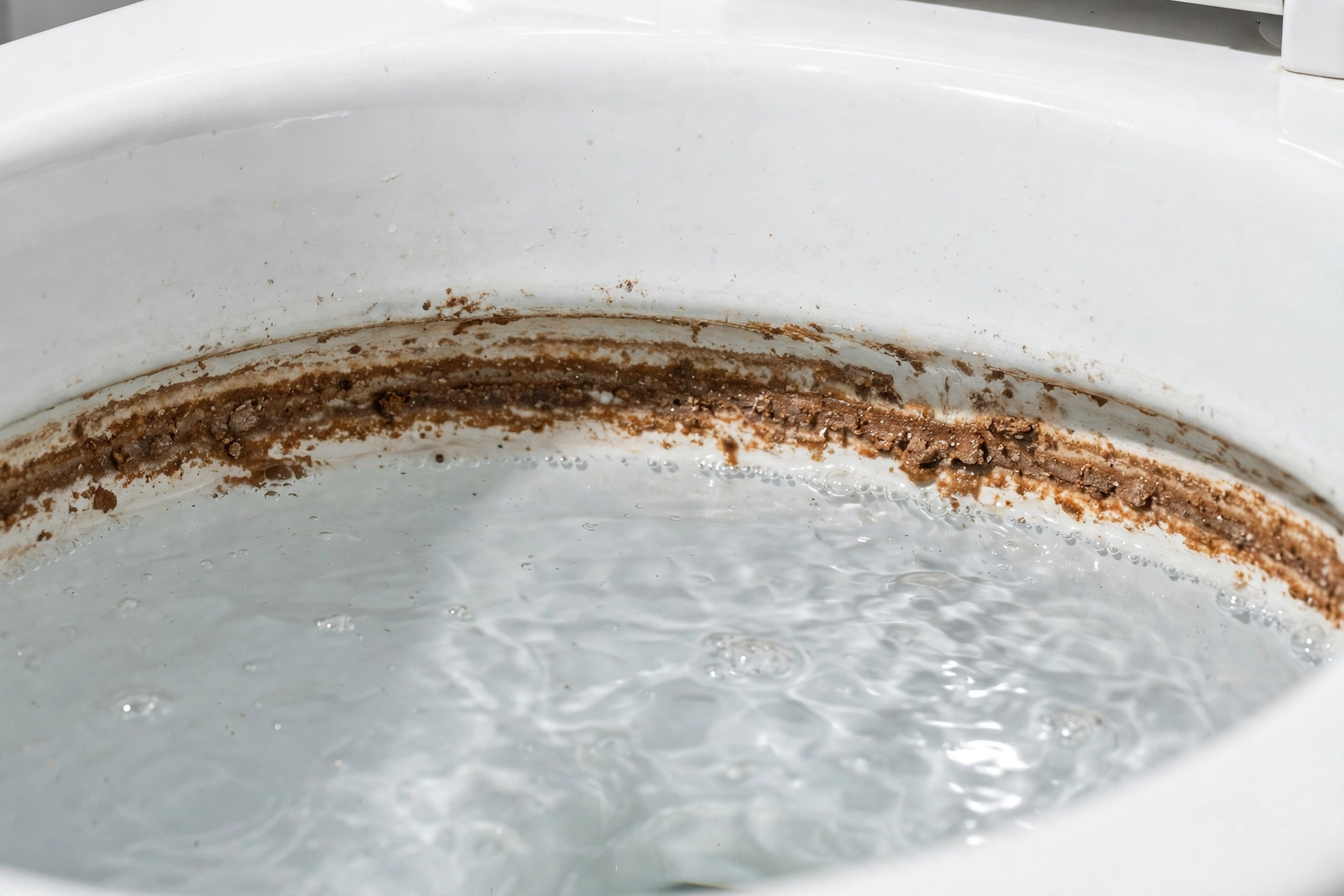

TL;DR: Learning how to remove toilet bowl ring stains starts with one realization — that ring is mineral scale, not dirt, so elbow grease alone will never win. Lower the water level first so your cleaner touches the stain undiluted, soak the ring with an acid (white vinegar or citric acid) long enough to dissolve the minerals, then scrub lightly. That’s the whole method.
You know the ring — that crusty line sitting right at the water level in the bowl. You’ve scrubbed it until your arm ached, and it barely faded. Here’s the truth: the ring is not dirt, it’s rock. Calcium and lime from hard water settle at the waterline, layer upon layer, building a thin crust bonded to the porcelain. Regular toilet cleaners are detergents: great on dirt and germs, useless on mineral scale. You can’t scrub off a rock. You have to dissolve it — and that’s cheap, easy, and mostly works while you go do something else.
Table of Contents
Why Scrubbing Fails (It’s Not Your Fault)
Every flush leaves water sitting at a fixed level. Minerals settle out and cling to the porcelain at the waterline, and after hundreds of flushes you’ve built a mineral deposit. Detergents loosen the soft stuff — dirt, soap residue, germs — but they don’t dissolve mineral scale. So your scrubbing sessions feel pointless because they are: you’re polishing a mineral deposit with a product built for a different job. The fix is chemistry, not force: acids dissolve scale. That’s the entire game — the same enemy as the chalky white spots on glass shower doors, beaten the same way. I dug into that fight in my hard water stains on glass shower doors guide.
What Color Is Your Ring?
The ring’s color tells you what you’re dealing with:
| Ring color | Likely cause | Best method |
|---|---|---|
| White, chalky, or grayish | Calcium/limescale — the most common kind | White vinegar soak or citric acid soak |
| Yellow, orange, or brownish | Iron in the water, often mixed with lime | Vinegar soak first, then borax paste |
| Pink or reddish film | Airborne bacteria, not mineral scale | Wipe off with a disinfecting bathroom cleaner; dry the area and ventilate |
| Greenish or blue-green | Copper from older pipes | Vinegar soak usually handles it |
Pink rings are a bacteria that loves damp bathrooms — they wipe off easily, no acid needed. If they keep returning, the fix is drying and ventilation, not stronger chemicals.
Step Zero: Lower the Water Level
The step everyone skips — and why their cleaner “didn’t work.” A full bowl dilutes anything you pour in, so the acid that reaches the ring is too weak. Lower the water so the ring sits above it:
- Bail it: Shut off the supply valve behind the toilet (clockwise), flush, bail the rest out with an old cup or sponge.
- Plunge it: A few firm plunges push water through the trap and drop the level enough to expose the ring.
This single step makes everything below work twice as well.
Method 1: White Vinegar Soak (Start Here)
Plain white distilled vinegar is about 5% acetic acid — strong enough to dissolve limescale, gentle on porcelain, dirt cheap.
- With the water lowered, pour 2–3 cups of undiluted vinegar right onto the ring, or press vinegar-soaked paper towels against it like a poultice.
- Wait at least an hour — overnight for a stubborn ring. Then scrub lightly; the crust that fought you before now flakes off.
- Flush, turn the valve back on, let the tank refill. The overnight soak does the heavy lifting while you sleep.
Method 2: Citric Acid Overnight Soak (The Stubborn Ones)
When vinegar isn’t enough — thick ring, very hard water — citric acid is the upgrade: the same acid family as lemons, concentrated, sold cheaply as food-grade powder in the canning aisle. Sprinkle a few tablespoons around the exposed ring, leave it overnight or at least several hours, scrub lightly, flush.
Two warnings:
Never pour boiling water into a porcelain toilet bowl. Sudden extreme heat can crack porcelain. Hot tap water is fine; boiling is not.
Never mix acid cleaners (vinegar, citric acid) with bleach. The combination can release chlorine gas. Use one or the other, never together, and flush well between different products.
Method 3: Borax Paste (For Rust-Tinted Rings)
Orange or brown ring? That’s iron, and borax handles rust staining where vinegar sometimes can’t finish. Mix borax with a little water into a thick paste, spread it over the ring wearing gloves, wait 30–60 minutes, scrub, flush. For a really rusty ring, vinegar-soak first to break down the mineral base, then borax paste to finish the color.
Method 4: Wet Pumice Stone (Last Resort, Used Gently)
Pumice can remove a ring nothing else touches — but it scratches when used wrong. Absolute rules: plain white porcelain only (never colored, plastic, fiberglass, or coated); keep the stone AND the porcelain soaking wet the whole time; light pressure only. Rub gently, rewetting every few strokes. If the acid soaks above do their job — they usually do — you’ll never need the stone.
Method Comparison
| Method | Best for | Dwell time | Caution |
|---|---|---|---|
| White vinegar soak | Standard white/gray limescale rings | 1 hour to overnight | Never mix with bleach |
| Citric acid soak | Thick, old, or very hard-water rings | Overnight / several hours | No boiling water in the bowl; never mix with bleach |
| Borax paste | Orange/brown iron-tinted rings | 30–60 minutes | Wear gloves; best after a vinegar soak |
| Wet pumice stone | Any mineral ring that survived the above | A few minutes, gentle | Porcelain only, kept wet at all times |
| Commercial limescale remover | Heavy scale when home methods fail | Follow the label exactly | Ventilate, gloves, never mix with bleach |
On commercial removers: products like CLR are formulated acids that work, but they’re the last resort — pricier and harsher. Follow the label to the letter.
Do This, Not That
| Do | Don’t |
|---|---|
| Lower the water level before applying anything | Pour cleaner into a full bowl and hope |
| Let acids soak for hours — time does the work | Scrub furiously at a dry mineral crust |
| Use vinegar or citric acid on porcelain | Mix acid cleaners with bleach — dangerous fumes |
| Keep a pumice stone soaking wet if you use one | Use pumice dry, on colored bowls, or on plastic/fiberglass |
| Wear gloves with borax or commercial cleaners | Pour boiling water into a porcelain bowl |
| Flush well between different products | Combine products hoping they work “better” together |
Keeping the Ring From Coming Back
Prevention is just consistency:
- Brush weekly. Thirty seconds with a brush and regular cleaner breaks up deposits before they harden. The ring never gets a foothold.
- Monthly vinegar swish. A cup or two of vinegar, 20–30 minutes, brush, flush.
- Know your water. If rings return fast no matter what, you have very hard water — the same minerals are filming your shower doors too.
- Clean the whole bathroom on a rhythm. A ringy toilet next to grimy grout just means the bathroom is overdue. My bathroom grout cleaning guide pairs well with this one for a full refresh, and my complete stain removal guide breaks down the chemistry-beats-force framework behind every stain in the house.
FAQ
Will vinegar damage my toilet’s porcelain?
No. White distilled vinegar is a mild acid and plain porcelain handles it easily — that’s why the soak is the recommended first try. Just don’t mix it with bleach.
How long should I leave vinegar in the bowl?
At least an hour for a light ring; overnight for a stubborn one. Time is the active ingredient — and lower the water level first so the vinegar stays concentrated on the stain.
Why does the ring keep coming back?
Your water keeps delivering the minerals — every flush lays down a tiny new layer. It’s a symptom of hard water, not bad cleaning. Weekly brush-outs plus a monthly vinegar swish stop it from ever building up.
Can I use bleach to remove a toilet bowl ring?
Bleach disinfects and whitens, but it doesn’t dissolve mineral scale — so on a true hard-water ring, it mostly won’t work. Worse, bleach must never be mixed with acid cleaners like vinegar or citric acid, since that can release dangerous chlorine gas.
Is a pumice stone safe to use in the toilet?
Yes, with strict conditions: plain white porcelain only, stone soaking wet the entire time, light pressure. Dry pumice scratches porcelain. Never on colored, coated, plastic, or fiberglass bowls. When in doubt, do a longer acid soak instead.
What if none of the home methods work?
Still there? A commercial limescale remover used exactly per the label — ventilated bathroom, gloves, never mixed with bleach — is the legitimate last resort.
The Short Version
A toilet bowl ring isn’t dirt — it’s mineral scale, and that’s why scrubbing never worked. Lower the water level, dissolve the scale with an acid soak (vinegar first, citric acid for the tough ones), finish rust tints with borax paste, and keep the pumice stone as a gentle last resort. Brush weekly, vinegar-swish monthly, and you’ll never fight that ring again.


