
The One Rule That Decides Everything
A nosebleed onto a pillowcase. A kid’s scraped knee, discovered by the state of the bedsheets. A shaving nick on a white collar. Blood stains in a house are never dramatic — they’re just frequent, and almost everybody’s first instinct is exactly wrong: run it under hot water to “clean it properly.”
I made that mistake on a favorite shirt years ago and cooked the stain in permanently. Because that’s literally what happens. Blood is a protein stain, and heat sets protein — the same reason egg white turns solid white in a hot pan. Hot water, a warm wash cycle, the dryer: each one locks the stain deeper. Cold water, and only cold water, at every step until the stain is gone. That’s the whole secret. Everything below is just details.
Quick Answer
| Situation | Method | Time needed |
|---|---|---|
| Fresh stain on washable clothes | Flush from the back with cold water, detergent, cold wash | 20–30 minutes |
| Dried stain on clothes | Cold salt soak or enzyme pre-soak, then peroxide (whites/colorfast only) | 2 hours to overnight |
| Blood on a mattress | Blot with cold water on a cloth — never pour — then salt paste or careful peroxide dab | About 1 hour + drying |
| Stain already went through the dryer | Enzyme soak, repeated; expectations low | Overnight, maybe twice |
What You’ll Need
- Cold water — genuinely cold, not “cool-ish warm”
- Table salt (for soaks and paste)
- Liquid laundry detergent, ideally one with enzymes
- Enzyme stain pre-treatment or pre-soak product (optional but powerful)
- 3% hydrogen peroxide — the standard brown-bottle kind from the pharmacy
- Clean white cloths or white paper towels
- A spray bottle (for the mattress)
- A fan (also for the mattress)
Fresh Blood on Clothes: The 20-Minute Fix
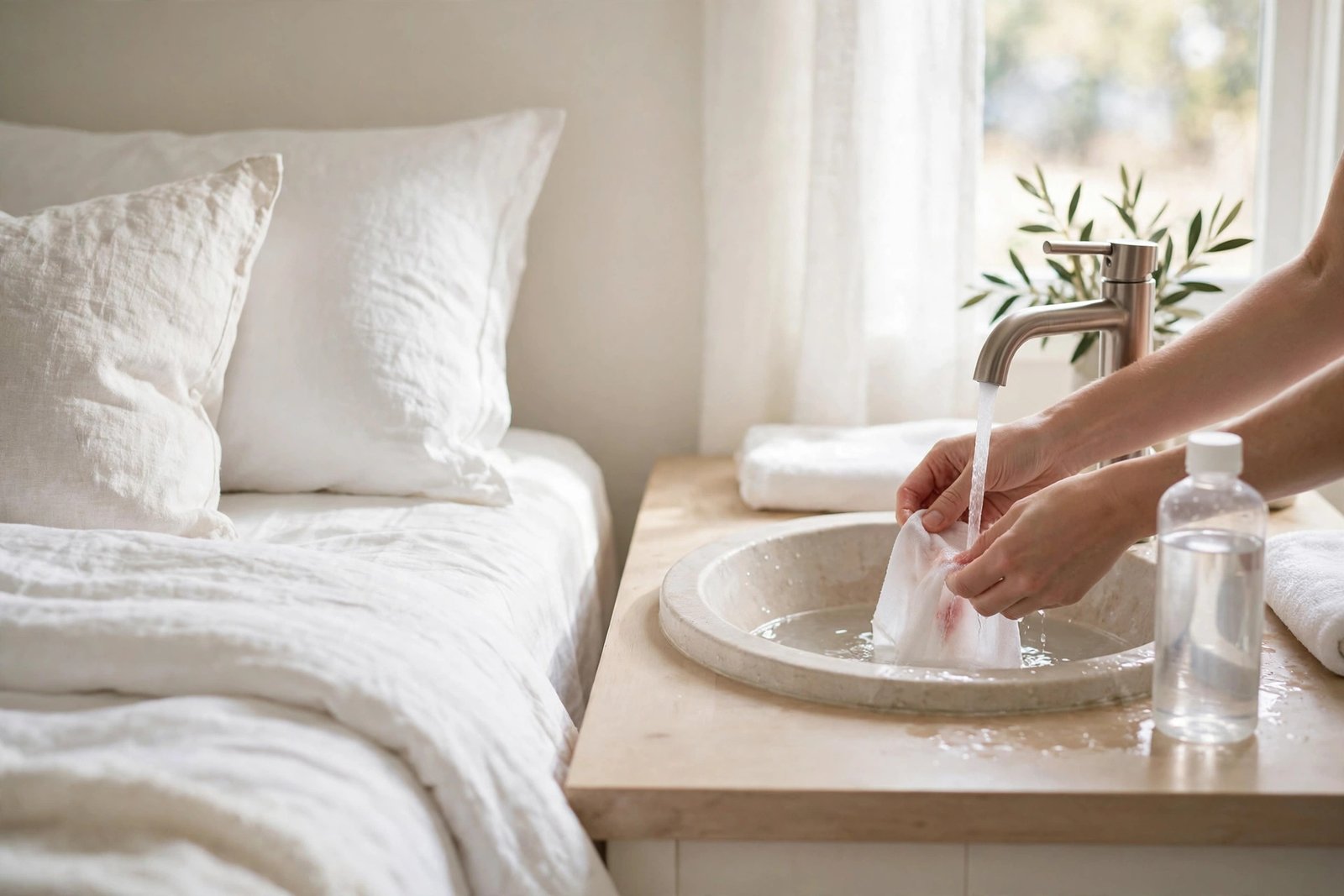
- Flush from the back. Hold the stain face-down under a cold running tap so the water pushes the blood out the way it came in, instead of driving it through the fabric. Two or three minutes of this removes a surprising amount — often most of it.
- Work in detergent. Rub a few drops of liquid laundry detergent (or plain bar soap) into what’s left with your fingertips. Let it sit 5 minutes.
- Soak if needed. Still a shadow? Thirty minutes in a basin of cold water finishes most fresh stains.
- Wash cold, then check before drying. Run a cold cycle. Now the critical inspection: look at the spot in good light before the dryer. Stain gone? Dry however you like. Faint trace left? Repeat the soak — because the dryer would make that trace permanent.
The University of Georgia Extension’s blood stain removal guide backs this exact order — cold rinse, soap, cool soak, launder — and repeats the same warning about heat setting the stain.
Dried Blood on Clothes: The Overnight Version
Dried blood is the same stain with more patience required, that’s all.
- Brush off the surface. Flick away any dried, crusty excess with an old toothbrush or the edge of a spoon. Don’t soak yet — dry flakes in the soak just tint the whole basin.
- Cold salt soak. Fill a basin with cold water and stir in about 1 tablespoon of salt per quart of water. Submerge the garment for at least 2–3 hours; overnight is better for a stain that’s been sitting for days. An enzyme pre-soak mixed to its label directions in cold water is the stronger alternative, and my first choice for anything valuable.
- Peroxide, with respect. If a brownish shadow remains and the fabric is white or has passed a color test (see the warning below), dab 3% hydrogen peroxide directly onto the stain with a cloth or cotton ball. It will fizz on contact with blood — that’s it working. Blot after a few minutes, rinse cold, and repeat if needed. UGA Extension’s guide uses peroxide the same way, briefly and followed by a thorough rinse.
- Wash cold and inspect before any heat touches it, same as fresh.
The peroxide warnings, because they matter: peroxide is a mild bleach. It can lift dye out of colored fabrics and is genuinely hard on wool and silk — never use it on those, and never on anything marked dry-clean only. For colored clothes, test first: a drop on an inside seam, wait 5 minutes, blot with a white cloth. Color on the cloth means skip the peroxide and rely on the enzyme soak, twice if necessary. On dark fabrics, honestly, the enzyme route alone is the safer bet.
Blood on a Mattress: All the Rules, Half the Water
You can’t soak a mattress or throw it in a cold cycle, and flooding it creates a worse problem — a damp interior that dries slowly and smells for weeks. The mattress method is the clothing method with strict water discipline: moisture goes on with a cloth, never poured.
- Blot first. Press a dry white towel into the spot to lift anything still wet. No rubbing — that spreads it across the ticking.
- Cold water on the cloth, not the mattress. Dampen a clean white cloth with cold water (a little salt in the water helps), then blot, working from the outside edge inward. Rinse the cloth, repeat. The stain should transfer to the cloth, gradually.
- Salt paste for what’s left. Mix salt with just enough cold water to make a thick paste, spread it over the stain, and leave it 30–60 minutes. As it dries it draws moisture — and loosened stain — up out of the surface. Brush and vacuum up the dry residue.
- Peroxide, mattress edition. Most mattress ticking is white or off-white, which makes peroxide practical: dab it on with a cotton ball, watch the fizz, blot after a few minutes, and finish by blotting with a cloth dampened in plain cold water. Spot-test in an inconspicuous corner first anyway — five minutes of caution beats a bleached patch in the middle of the bed.
- Dry it like you mean it. Press with dry towels, then point a fan at the spot for 2–3 hours. Don’t remake the bed until it’s fully dry to the touch. When this happens in my house, the mattress gets a washable protector afterward — it turns the next incident into a laundry problem instead of a mattress problem.
What NOT to Do
- No hot water. Ever. Not for rinsing, not for soaking, not “just a quick warm wash.” This is the mistake that converts a removable stain into a keepsake.
- No dryer or iron until the stain is out. Heat is heat, whatever appliance it comes from.
- No peroxide on wool, silk, or untested colors. See above — it’s a bleach, treat it like one.
- Don’t mix treatments. Never combine peroxide with vinegar, and never mix anything with chlorine bleach. Pick one method, rinse it out completely, then try the next.
- Don’t pour water on a mattress. Blot it on, blot it off. A soaked mattress core is a much bigger problem than the stain was.
My Honest Results
Fresh blood on cotton and jersey: the cold flush plus detergent gets it fully out nearly every time — this is one of the most reliable stain fixes I know. Dried blood on a white sheet took the overnight salt soak and two short peroxide rounds; after the first round a faint tan shadow stayed, and I’d have sworn it was permanent, but the second round lifted it. The honest limit is the dryer. A stain that has already been through a hot wash and dry cycle has resisted everything I’ve tried beyond an enzyme soak lightening it a shade. If that’s your situation, try the soak — just go in with modest hopes.
Safety and Spot-Test Notes
Gloves are a sensible idea when the blood isn’t yours. Check the care label before anything touches a garment, spot-test any treatment on a hidden area first, and use one cleaning method at a time with a full cold rinse in between. For the full system this method belongs to, start with How to Get Stains Out of Clothes.
Frequently Asked Questions
Does hot water really make a blood stain permanent?
Yes — it’s the one irreversible step in this whole process. Heat cooks the protein into the fibers. A dried stain that never meets heat is almost always still workable; a fresh stain rinsed hot can be locked in within a minute.
Is hydrogen peroxide safe on colored clothes?
Sometimes, and “sometimes” is doing heavy lifting. It’s a mild bleach: fine on many colorfast synthetics and sturdy cottons, risky on dark colors, and off-limits for wool and silk. Always test an inside seam first, and when in doubt, use the enzyme soak instead.
Salt soak or enzyme soak — which is better?
Salt is the free, always-in-the-cupboard option and works well on fresh-to-recent stains. An enzyme pre-soak is stronger on old, dried stains because the enzymes break down the protein itself. For a stain I care about, I go enzyme first.
Can I use this method on a mattress protector or sheets instead?
Sheets and protectors are just washable fabric — use the clothing method, fresh or dried depending on the stain’s age, and enjoy the fact that you can actually soak them.
What about blood on upholstery?
Blot with cold water on a cloth, same water discipline as the mattress, and work from the edges inward. The upholstery-specific walkthrough is coming in this site’s furniture series; the principles in Complete Stain Removal Guide apply until then.
Treating a stain that’s more about the laundry basket than the first aid kit? How to Get Grease Stains Out of Clothes handles the other classic — and for carpet emergencies, Red Wine Stains from Carpet is the one to read before your next dinner party, not after.
— Daniel Brown, The Tidy Apron