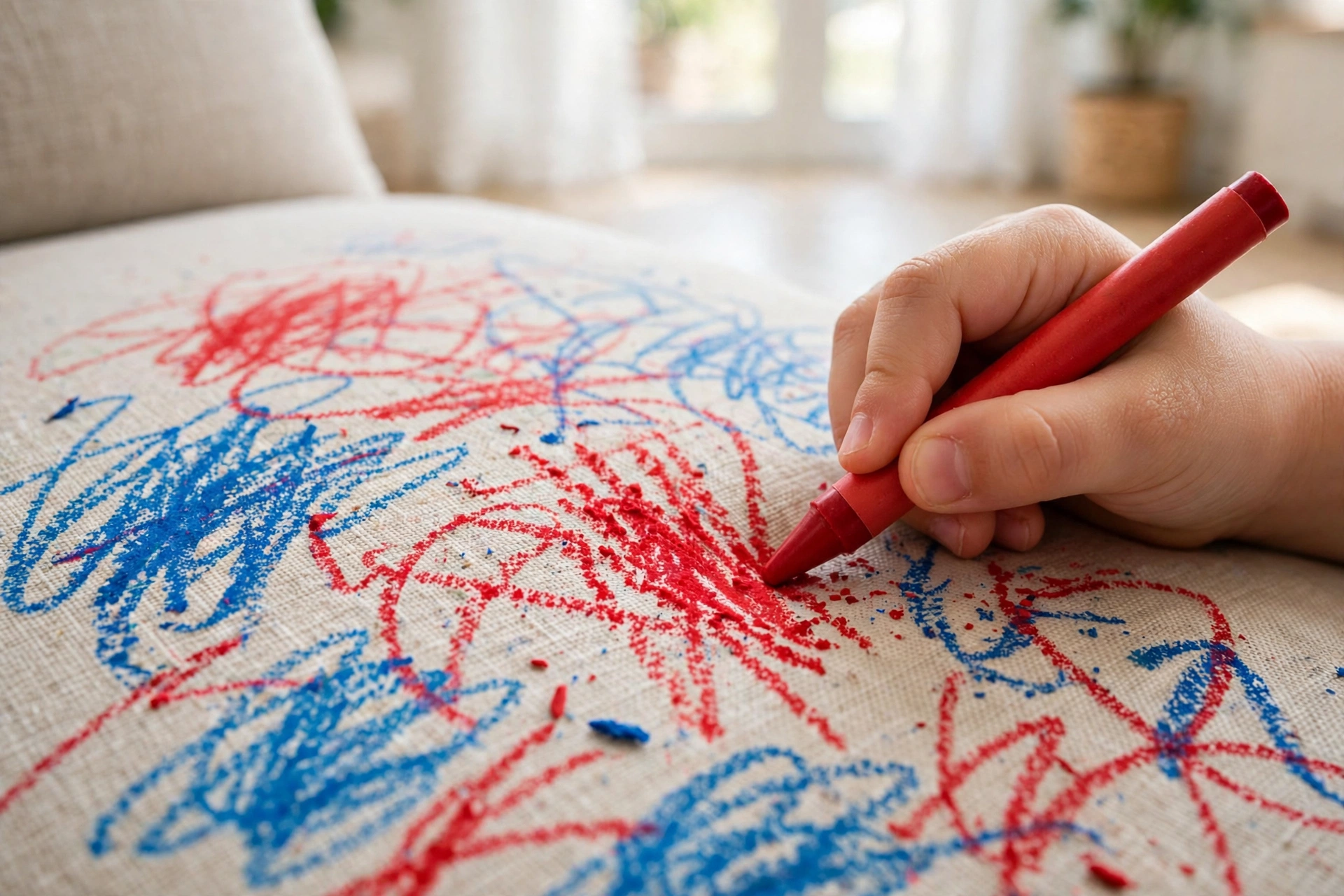

It happens in about four seconds: a toddler, a red crayon, and your favourite couch cushion. By the time you turn around, there is a bright scribble across the fabric, and your first instinct is to grab a cloth and scrub. Stop. Scrubbing is the one thing that makes a crayon stain worse — it pushes melted wax deeper into the fibres and grinds the pigment in. Crayon is wax plus colour, and the fix has to deal with both, in the right order: freeze and scrape the wax first, lift what is left with gentle heat, and only then treat the colour.
Done that way, most crayon comes out of a couch completely, with nothing more than ice, a butter knife, an iron, and dish soap. The method changes a little depending on whether your couch is fabric, microfiber, or leather — so the first step is always the same: find the cleaning code.
Key Takeaways
How to get crayon out of couch: first find the cleaning code on the tag under the cushion (W, S, WS or X) — it decides what you can safely use. Then harden the wax with ice and scrape it off with a dull knife. Lay a paper towel over the remaining wax and press with a warm iron on low, swapping in clean paper as the wax transfers. Finally, blot the leftover colour with dish soap and cool water on W and WS fabrics, or a solvent upholstery cleaner on S fabrics. Never scrub the stain, never use hot water on the colour, and never dry the cushion with heat until the crayon is fully gone.
Table of Contents
First: Read the Cleaning Code (It Decides Everything)
Every upholstered couch has a cleaning-code tag, usually sewn under a cushion or on the underside of the frame. That little letter tells you what the fabric can handle, and it is the difference between removing the stain and leaving a permanent ring.
| Code | Meaning | What you can use |
|---|---|---|
| W | Water-based cleaners only | Dish soap and water — the safest fabric to clean |
| S | Solvent cleaners only | Dry-cleaning solvent or a solvent upholstery cleaner — no water |
| WS or W/S | Water or solvent cleaners | Either method — the most forgiving fabric |
| X | Vacuum only | No liquid cleaning at all — call a professional |
No tag, or the tag is worn away? Treat the couch as S — use the dry-cleaning solvent method and no water. A water-based cleaner on an S fabric can leave a permanent ring even when the wax itself comes off fine, so the cautious route is the right one. And always test whatever you use on a hidden spot first — the back of a cushion or the fabric under the seat — and wait for it to dry before judging the result.
What You Need
- Ice cubes in a plastic bag
- A dull knife, a spoon, or an old credit card
- Paper towels or a brown paper bag
- A clothes iron (or a hairdryer on low)
- A clean white cloth (coloured cloths can transfer dye)
- Mild dish soap
- Cool water
- A soft toothbrush
- Dry-cleaning solvent or a solvent upholstery cleaner (for S-coded fabric)
- Leather cleaner and conditioner (for leather couches only)
White cloths matter more than you would think. A coloured towel can leave its own dye on damp upholstery, and then you have two stains instead of one.
Step 1: Freeze and Scrape the Wax
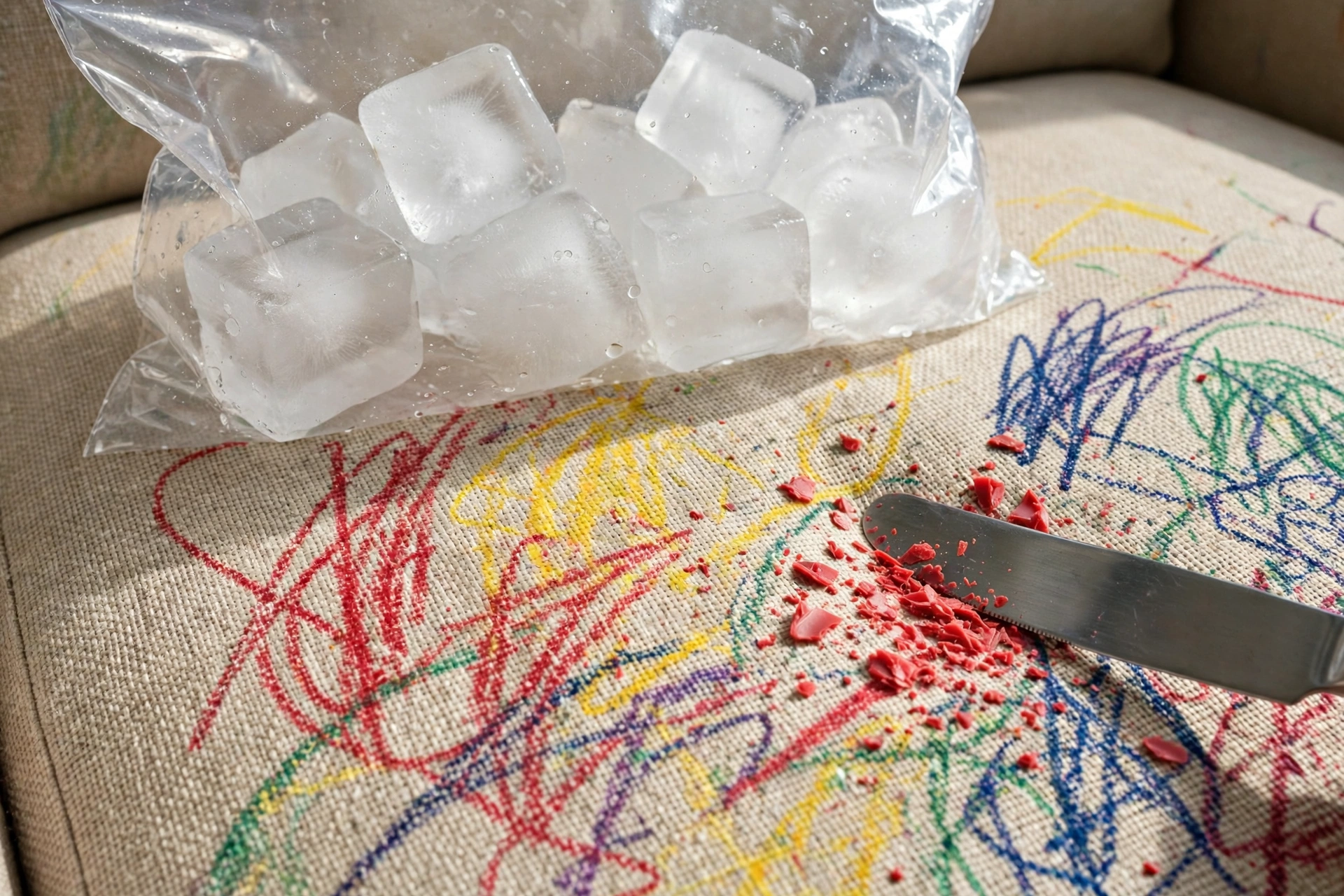
Crayon is mostly wax, and wax gets brittle when it is cold. Hardening it first means you can lift most of the stain off the surface instead of smearing it around.
- Put a handful of ice cubes in a plastic bag and hold it on the crayon for a few minutes, until the wax feels hard and brittle.
- Gently scrape the hardened wax off with a dull knife, a spoon, or the edge of an old credit card. Work from the outside of the stain toward the middle so you do not spread it.
- Use light pressure. The goal is to lift the wax off the surface, not to push it into the fibres.
- Pick up the loose flakes with your fingers or a vacuum with an upholstery attachment.
If the crayon is still soft and smears when you touch it, it needs more time under the ice. Patience here saves you work later — every flake you lift now is wax you do not have to melt out in step 2.
Step 2: Lift the Wax with Gentle Heat
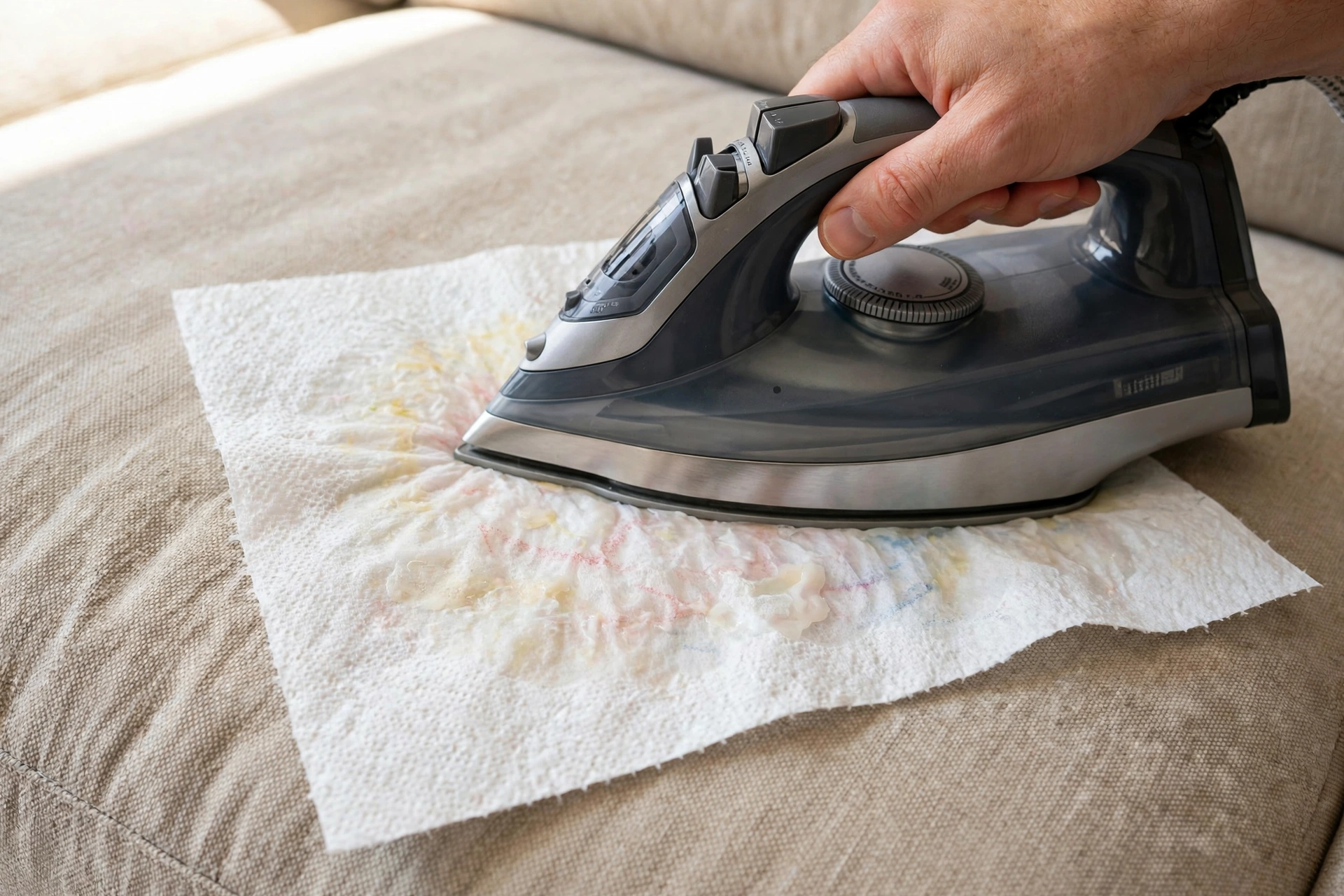
What is left after scraping is a thin layer of wax pressed into the fibres. Heat melts it, and absorbent paper soaks it up. This is the same trick that works for candle wax on carpet, and it works just as well on a couch — with one extra caution, because there is cushion filling underneath.
- Lay a folded paper towel — or a piece of a brown paper bag — flat over the stain.
- Set the iron to low, with no steam.
- Press the iron onto the paper for a few seconds, then lift it and check. The paper should be picking up melted wax.
- Move to a clean patch of paper and repeat. Keep going until a fresh sheet comes away spotless.
- Never let the iron touch the upholstery directly, and never rest it in one place for long. Short, lifting passes only — sustained heat can damage the cushion filling underneath, and on synthetic fabrics it can melt the fibres themselves.
A hairdryer on low heat works as a gentler alternative if you are nervous about the iron: hold it a few inches away and blot the softened wax with paper towel as it melts. It is slower, but there is almost no risk of heat damage.
Step 3: Treat the Colour That’s Left
Once the wax is gone, a coloured shadow usually remains — that is the pigment. This is the step where the cleaning code decides the method.
For W and WS fabrics: dish soap and cool water
- Mix one tablespoon of mild dish soap into two cups of cool water.
- Dip a clean white cloth in the solution, wring it out, and blot the stain. Press, lift, check — never scrub.
- Rinse the cloth in plain cool water and blot again to lift the soap out.
- Repeat until the colour is gone, then blot with a dry cloth and let the cushion air-dry.
Use cool water, not hot. Hot water can set the pigment deeper into the fibres, which is the opposite of what you want. And use as little liquid as you can — a soaked cushion takes hours to dry, and damp foam can develop a musty smell of its own.
For S fabrics: dry-cleaning solvent
- Dampen a clean white cloth with dry-cleaning solvent.
- Sponge the stain gently — press the solvent into the fabric, then blot it up. Do not scrub.
- Repeat with a clean part of the cloth until the colour lifts.
- Let the area air-dry completely before sitting on it.
Work in a ventilated room and keep the solvent away from heat. If the idea of using a solvent makes you uneasy, a professional upholstery cleaner will do this step for a modest fee — and on a good couch, that is money well spent.
Crayon on Leather Couches
Leather is a different surface, and it is actually one of the easier ones — crayon sits on top of leather instead of sinking into fibres.
- Scrape off the loose wax gently with a credit card. Leather scratches easily, so use the lightest touch.
- For the remaining wax, warm it slightly with a hairdryer on low and wipe it away with a soft cloth.
- For the colour, mix equal parts lemon juice and cream of tartar into a paste, spread it thinly over the mark, and leave it for about 10 minutes. Wipe it off with a damp cloth.
- If any colour remains, use a cleaner made specifically for leather — never use dish soap, solvents, or all-purpose cleaners on leather, as they strip the finish.
- Finish with a leather conditioner to restore moisture to the spot.
Never use an iron on leather, and never use a magic eraser or an abrasive pad — both will damage the finish permanently. If the crayon is on a light-coloured leather couch and the colour will not lift, that is a professional’s job, not a stronger chemical’s.
Crayon on Microfiber
Microfiber is common on family couches for a reason: it cleans up well, as long as you use the right liquid. Most microfiber is W or WS coded, which means the dish-soap method in step 3 works fine.
Two microfiber-specific tips: first, use as little water as possible — microfiber dries fast, but the foam underneath does not, and a soaked cushion can smell musty for days. Second, after the stain is gone and the fabric is dry, brush the spot gently with a soft, dry toothbrush. Microfiber fibres can clump together when wet and leave a stiff patch; brushing restores the soft texture.
If your microfiber is S-coded, skip the water entirely and use the solvent method. The code on the tag wins over any general advice, including this article’s.
What NOT to Do
| The mistake | Why it hurts |
|---|---|
| Scrubbing the stain | Pushes wax and pigment deeper into the fibres |
| Hot water on the colour | Sets the pigment instead of lifting it |
| Using a coloured cloth | Transfers dye onto damp upholstery |
| Iron directly on the fabric | Burns synthetic fibres and damages cushion filling |
| Water on an S-coded fabric | Leaves a permanent water ring, even after the crayon is gone |
| Drying with heat before the stain is out | Heat sets whatever is left, making it permanent |
| Bleach or all-purpose cleaner | Bleach discolours fabric; all-purpose cleaners can strip leather finishes |
The single most common mistake is scrubbing. It feels like the right thing to do — more effort should mean more cleaning — but with wax, effort in the wrong direction just grinds the stain in. Blot, lift, and let the heat and the solvent do the work.
When to Call a Professional
Most crayon on a couch is a home fix. Call a professional upholstery cleaner when:
- The code is X — vacuum only, no liquid cleaning at all.
- The stain covers a large area, or it is on a prized or antique piece.
- The couch is velvet, suede, or silk — these fabrics punish mistakes.
- You have tried the full method and a coloured shadow remains after two rounds.
- The crayon is on light-coloured leather and the colour will not lift.
A professional upholstery clean typically costs around $150–$200 for a sofa, which is worth comparing against the cost of the couch. For a standard fabric family couch, though, the ice-and-iron method in this guide handles it in under half an hour.
FAQ
Does crayon come out of a couch completely?
Usually, yes — if you deal with the wax before the colour and you do not scrub or heat-set the stain first. Fabric and microfiber couches respond best. Leather usually cleans up fully with the paste method. The cases that stay stained are almost always ones where someone scrubbed with hot water first, which drives the pigment in.
Can I use WD-40 to remove crayon from upholstery?
It works on the wax — WD-40 dissolves it — but it leaves an oily residue that then needs dish soap to remove, and it can stain some fabrics. The freeze-and-iron method does the same job without adding an oil stain to the problem. If you do use it, test a hidden spot first and follow with a thorough dish-soap blot. For most couches, the ice method is simpler and safer.
What if the crayon melted into the couch on a hot day?
Melted crayon has soaked deeper into the fibres, so step 1 changes: skip the ice and go straight to the paper-and-iron method in step 2, with extra paper swaps. It may take more passes, but the wax still lifts. The colour step is the same. This is the same principle as removing candle wax — heat plus absorbent paper, patience over force.
My child drew on the couch with washable crayons. Is it easier?
Yes, much easier. Washable crayons use water-soluble pigment, so after scraping the wax, the dish-soap-and-cool-water method usually lifts the colour in one or two rounds. Standard wax crayons need the full freeze-and-iron sequence first.
How do I stop it happening again?
Honestly, you probably can’t — not entirely. What helps: washable crayons for younger children, a washable throw over the favourite cushion during craft time, and keeping a small kit (ice bag, white cloths, dish soap) where you can reach it fast. A fresh crayon stain is far easier than a dried one, so speed matters more than any product. And if the same child has already decorated other furniture, the same freeze-and-lift method works on chocolate on the sofa too — different stain, same patient approach.
The Bottom Line
Crayon on a couch looks like a disaster and acts like a small one — but it is really two easy problems in a row. Freeze and scrape the wax, lift the rest with gentle heat and paper, then blot the colour with the cleaner your fabric’s code allows. Don’t scrub, don’t use hot water, and don’t dry it with heat until the colour is gone. In half an hour your couch is back to normal, and the crayon artist can go back to paper — where the art belongs.


