
Your fabric headboard is basically a giant sponge standing behind your pillows. Every night it collects a little more dust, skin oil and hair-product residue — and because you never really look at it up close, the buildup creeps up on you until one day you notice the dull grey shadow where your head rests.
The good news: most headboards come back to fresh with a gentle routine and things you already own. The trap is too much water — behind the fabric is foam, and soaked foam stays damp for hours, which is exactly how mildew starts. So this whole method uses the least liquid possible, and dries everything fully.
Key Takeaways
How to clean a fabric headboard: vacuum it thoroughly first, then spot-clean with a barely-damp cloth and a drop of dish soap, working from the outside of each spot inward. Never soak the fabric — the foam behind it holds water and can grow mildew. Finish by deodorizing with dry baking soda, vacuuming it off, and letting the headboard air-dry completely before you lean against it again. Check the cleaning code on the tag before anything wet touches the fabric.
Table of Contents
Table of Contents
First: Read the Cleaning Code (It Decides Everything)
Headboards are labelled less clearly than sofas, so check before you mix anything. Look for the care tag behind the headboard, under the bed rail, or stapled to the back panel. The code tells you what the fabric can handle:
| Code | Meaning | What you can use |
|---|---|---|
| W | Water-based cleaner | The dish-soap mix in this guide |
| S | Solvent only | Dry-cleaning solvent; no water at all |
| WS (or W/S) | Either | Water-based or solvent cleaner |
| X | Vacuum only | No wet cleaning — vacuum and call a professional for spots |
No tag at all? Treat the fabric as S — clean dry, and test everything in a hidden spot first. A two-minute test on the back edge can save the whole headboard.
Fabric type matters too, because each one has its own weak spot:
| Fabric | Watch out for |
|---|---|
| Linen and cotton | Shrinks and puckers if it gets too wet or too hot |
| Polyester and blends | Usually the most forgiving; still test first |
| Velvet | Water leaves marks and flattens the nap — barely-damp cloth only, vacuum after drying to lift the pile |
| Faux leather | Wipe, don’t soak; skip anything abrasive |
If your headboard is velvet, read the spot-cleaning section twice — the cloth should be barely damp, never wet, and you finish by vacuuming the dry fabric to bring the nap back up.
What You Need
Nothing fancy — gather these before you start:
- Vacuum with an upholstery brush and a crevice tool
- Two clean white cloths (white, so dye can’t transfer onto the fabric)
- A small bowl, distilled water, and clear gentle dish soap
- A dry towel and a fan, if you have one
- Optional: baking soda, white vinegar, and 70% isopropyl alcohol for specific spots
Distilled water is worth using if you have it. Tap water can leave mineral spots on some fabrics as it dries, and the whole point here is to leave nothing behind.
Step 1: Vacuum Thoroughly (Top Down)
Most “dull, dusty headboard” complaints are solved by a surprisingly thorough vacuum. Dust hides in seams, button tufts, nailhead trim channels, and the tiny gap between the mattress and the headboard — places a quick pass never reaches.
Start at the top edge and work down, so dust doesn’t fall onto areas you already cleaned. Use the upholstery brush for the flat panels and the crevice tool for tufts, seams, and trim. Go slowly: one slow pass lifts far more than three fast ones.
Step 2: Spot-Clean Gently
This is where the foam rule matters most. Fabric headboards usually have foam right behind the fabric, and foam hates being soaked. Your goal is to treat each spot with the least liquid possible, blotting patiently instead of scrubbing.
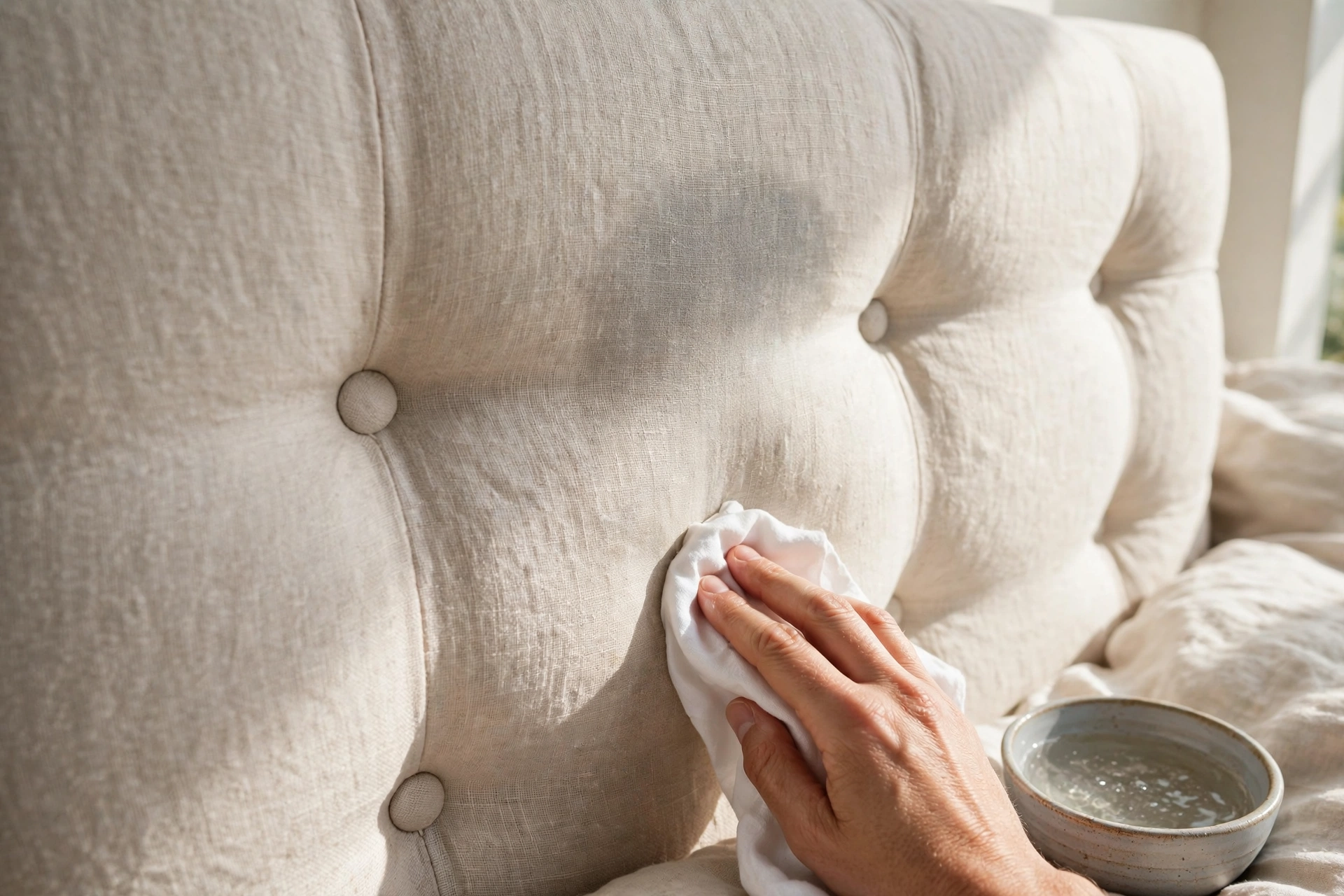
The all-purpose mix (for most W or WS fabrics): one cup of distilled water with one or two drops of clear, gentle dish soap. Dampen a clean white cloth so it is barely wet — wring it until almost no water comes out. Blot from the outside of the spot inward, so you don’t push the stain into a bigger ring. Then blot with a cloth dampened with plain distilled water to lift the soap out, and press with a dry towel.
Different spots need slightly different treatment:
| Spot | What to do |
|---|---|
| Dust and general dullness | Vacuum first — often enough on its own |
| Body-oil shadow where your head rests | All-purpose mix first; if the shadow stays, add one teaspoon of white vinegar to the cup of water and repeat, then rinse-blot with plain water |
| Fresh spill | Blot immediately with a dry cloth, then the all-purpose mix, outside in |
| Sticky hair-product residue | All-purpose mix, repeated blotting; patience beats pressure |
| Odour but no visible mark | Skip to Step 3 — don’t wet a clean-looking spot just for smell |
For some colourfast synthetic fabrics, a tiny amount of 70% isopropyl alcohol on a cotton swab can help with a stubborn mark. Dab lightly, never rub, and test it first on a hidden spot. For S-code fabrics, stop here: no water at all — use a dry-cleaning solvent made for upholstery, exactly as its label says, or leave the spot to a professional.
Never scrub in circles. Scrubbing grinds dirt deeper into the fibres and can leave a fuzzy, worn patch that looks worse than the spot did. Blot, lift, check, repeat.
Step 3: Deodorize Without Soaking
If your headboard smells a little stale, the smell is usually trapped in the fabric and the foam behind it. You want to neutralise it without adding moisture — so this step stays completely dry.
Sprinkle baking soda lightly over the fabric, leave it for a few hours (overnight is fine), then vacuum it all off slowly with the upholstery brush. Baking soda absorbs odour instead of covering it, and because it goes on dry, the foam never gets wet.
What NOT to Do
- Don’t use a steam cleaner or garment steamer on most headboards. Steam can shrink or distort fabric, loosen the adhesives holding it to the frame, and push moisture deep into the foam where mildew starts. If your manufacturer allows it, the tag will say so. Otherwise, skip it.
- Don’t soak the fabric. A dripping cloth, a spray bottle held too close, or a carpet-cleaner pass with too much solution all put water into foam you can’t dry. Barely damp, always.
- Don’t use bleach, ammonia, or all-purpose sprays. They can strip colour and damage the fabric’s finish.
- Don’t scrub. Blot. Every time.
- Don’t lean against it while it’s damp. Body heat plus damp fabric presses moisture deeper and can leave a fresh oil mark on the spot you just cleaned. Let it dry fully first.
Drying and the Routine That Keeps It Fresh
Drying is half the job. After any damp cleaning, point a fan at the headboard and give it a few hours of airflow — overnight is ideal. The fabric should feel completely dry to the touch, including inside tufts and seams, before pillows go back against it.
Once it’s clean, keeping it that way is mostly a small routine:
| How often | What to do |
|---|---|
| Weekly | Quick vacuum with the upholstery brush — two minutes |
| Monthly | Vacuum thoroughly, seams and tufts included |
| When a spot appears | Blot it the same day; fresh spots come out, set spots fight back |
| Every few months | Baking-soda deodorise, then vacuum off |
Two habits do more than any product: wash your pillowcases often, since they sit between your head and the headboard, and keep hair products off the fabric.
For Further Reading
- How to Get Makeup Out of a Couch
- How to Get Body Oil Out of a Couch
- How to Get Pet Hair Out of a Couch
- The Complete Stain Removal Guide
- How to Keep Your Home Clean on a Schedule
FAQ
Can I use a carpet cleaner or upholstery machine on my headboard?
You can, but carefully. If the machine has an upholstery attachment, use the lightest solution setting, make a single slow pass, and extract as much water as you can. Then dry it with a fan for hours. If your machine only soaks and doesn’t extract well, don’t use it — hand blotting is safer.
How often should I clean a fabric headboard?
Vacuum weekly, spot-clean marks as they appear, and do the full vacuum-plus-spot-clean routine every few months. Homes with pets, kids, or allergy sufferers should vacuum more often — dust and dander settle on a headboard just like on a shelf.
My headboard is velvet. Is this method safe?
Mostly yes, with two changes: keep the cloth barely damp, and after the fabric dries completely, vacuum it gently to lift the nap back up. Never steam velvet unless the tag explicitly allows it, and test any liquid in a hidden spot first — velvet shows water marks easily.
The tag says S — solvent only. What do I do?
No water, no dish-soap mix. Use a dry-cleaning solvent made for upholstery, following its label, in a ventilated room — or call a professional upholstery cleaner. Water on an S fabric can leave rings and distort the weave.
The smell won’t go away. What now?
First, check the mattress and pillows — the smell often lives there, not in the headboard. If the headboard itself still smells after baking soda and a full dry-out, the foam underneath may have gotten damp in the past. A professional upholstery clean with proper extraction is the next step; soaking it yourself will only make it worse.
The Bottom Line
A fabric headboard isn’t hard to clean — it’s just easy to clean wrong. The people who ruin theirs all make the same mistake: too much water, too fast, and not enough drying. Vacuum first, use a barely-damp cloth, blot instead of scrubbing, deodorize dry, and let it air out completely. Do that, and the headboard behind your pillows stays as fresh as the bedding in front of it.
I learned this the slow way — the first headboard I ever cleaned, years ago, I went at with a wet sponge and good intentions. It dried with a faint ring around every spot I’d “cleaned” and a musty smell that took a professional to fix. The gentle version takes ten minutes longer. It works the first time.


