
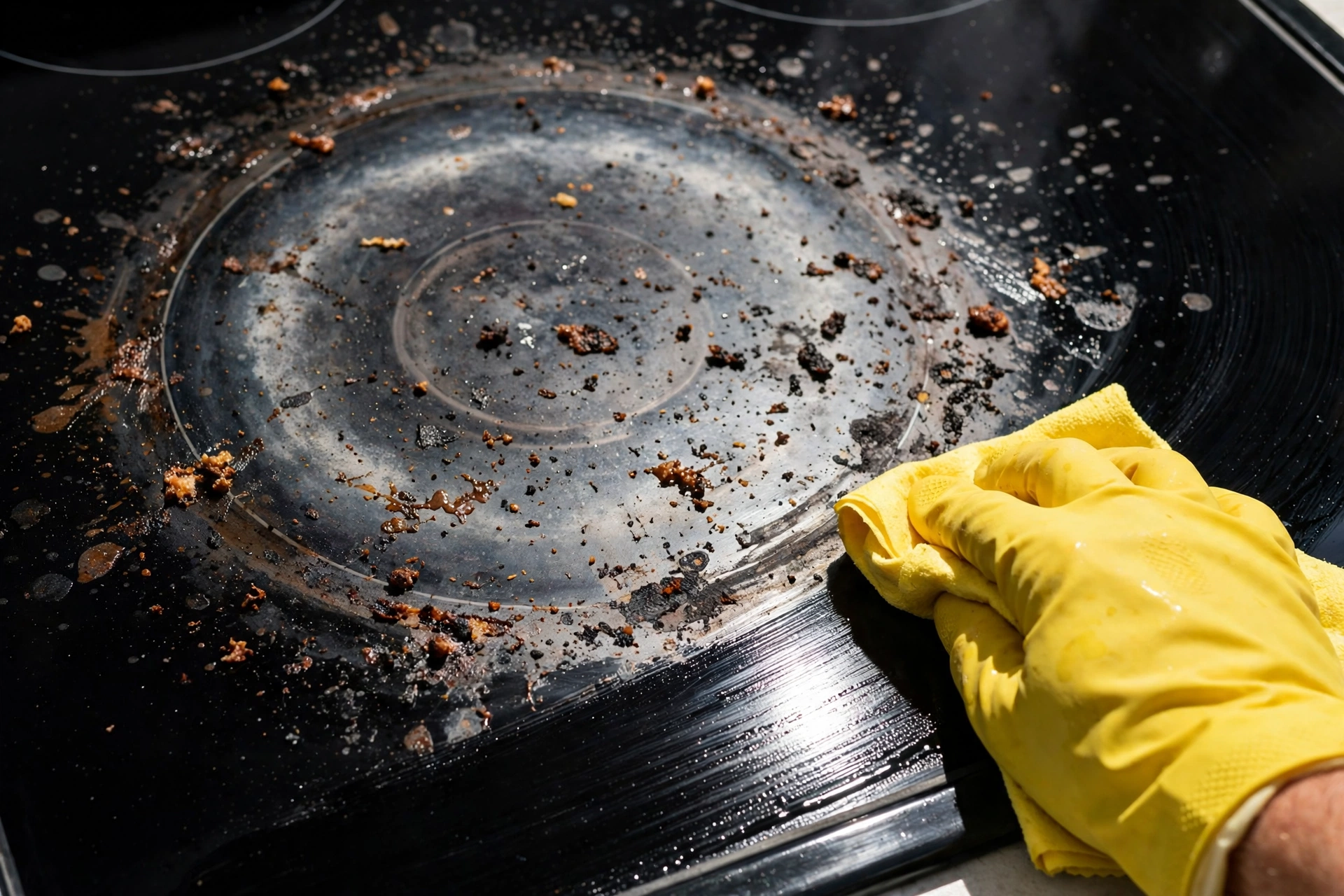

A glass stovetop looks wonderful the day it is installed — black, glossy, almost like a mirror. Then real cooking happens. A pot boils over, tomato sauce splatters and bakes on, and a week later the surface is covered in dull brown spots that will not wipe off with a sponge.
The fear is real: one wrong scrub and the glass is scratched forever. The good news is that glass-ceramic is tougher than it looks, as long as you soften the mess before you touch it and never use anything abrasive. You need white vinegar, baking soda, dish soap, microfiber cloths, and a scraper made for glass cooktops. A routine clean takes 15 minutes; a badly burnt-on one takes about 45, most of it waiting for the paste to work.
Key Takeaways
How to clean a glass stovetop without scratching it: let the surface cool completely, wipe away loose crumbs, and spray white vinegar over the mess. Sprinkle baking soda on top, lay a warm damp cloth over it, and wait 15 to 20 minutes so the burnt-on food softens. Lift what is left with a cooktop scraper held at a 30 to 45 degree angle, never dry and never flat. Finish with a few drops of dish soap and water, wipe with a damp microfiber cloth, and buff dry. Never use steel wool, scouring powder, or a regular razor blade — those are what actually scratch the glass.
Table of Contents
- Why Glass Scratches So Easily
- What You’ll Need
- Step 1: Cool It and Clear the Crumbs
- Step 2: The Everyday Clean
- Step 3: Baking Soda Paste for Burnt-On Food
- Step 4: The Scraper for Stubborn Spots
- Step 5: Polish It Streak-Free
- Stain by Stain: What to Do for Each Mess
- What NOT to Use
- Keeping It Clean
- When to Call a Professional
- FAQ
- The Bottom Line
Why Glass Scratches So Easily
A glass stovetop is glass-ceramic, made to handle heat, but its glossy surface shows every mark. Scratches almost never come from cooking. They come from cleaning — grit dragged across the surface, or a pad harder than the glass.
| Scratch cause | How it happens | How to avoid it |
|---|---|---|
| Grit under a sponge | Crumbs and dried food act like sandpaper | Wipe loose debris off first, dry, before any liquid |
| Steel wool, scouring pads | Metal fibers gouge the smooth surface | Use microfiber or a soft non-scratch sponge only |
| Sliding rough-bottomed pots | Cast iron and unglazed stoneware drag grit | Lift pots to move them; wipe pan bottoms clean first |
| Dry scraping | A dry blade catches and digs in | Soften the spot first, keep the blade wet and angled |
| Abrasive powders | Scouring powder is literally grit in a can | Baking soda paste is the strongest abrasive you need |
One honest warning before you start: check your stovetop manual. A few manufacturers say not to use vinegar or baking soda on their surface, and the manual wins. If yours does, skip to a manufacturer-approved glass cooktop cleaner and the scraper method in Step 4.
What You’ll Need
Everything here is probably already in your kitchen. If you do not own a cooktop scraper yet, buy one made for glass-ceramic — it usually comes with a holder and spare blades, and it costs less than a takeout dinner.
| Tool | What it does | What to use instead |
|---|---|---|
| White vinegar in a spray bottle | Cuts grease and loosens baked-on food | A manufacturer-approved cooktop cleaner |
| Baking soda | Gentle lift for burnt-on spots | A paste of cooktop cleaner, if your manual forbids baking soda |
| Dish soap | Everyday degreasing and the final polish | Any mild liquid dish soap |
| Microfiber cloths, 2 or 3 | Wiping and buffing without lint or scratches | A soft cotton cloth, never paper towels |
| Cooktop scraper | Lifts softened burnt-on food | A plastic scraper for light spots |
| Soft non-scratch sponge | Light agitation on the paste | A soft cloth |
Paper towels feel soft, but they leave lint and drag tiny particles across the glass — microfiber is cheaper in the long run and does a better job. The same gentle approach works on the sink next to it — see how to clean a stainless steel sink.
Step 1: Cool It and Clear the Crumbs
Never clean a hot stovetop. Cleaning a hot surface can burn you, crack the glass, or bake a cleaner permanently into the surface. Wait until it is completely cool to the touch — after a big cooking session, that can take 30 minutes or more.
Then wipe the whole surface with a dry microfiber cloth to pick up loose crumbs, salt, and dried bits of food. This is the step most people skip, and it is the step that prevents most scratches: any grit left on the glass gets dragged around by your sponge in the next step.
Step 2: The Everyday Clean
If the stovetop is just greasy or lightly spotted — no burnt-on food — you do not need the full treatment. This takes five minutes and is the clean to do after most meals.
Spray the surface lightly with white vinegar, or with a few drops of dish soap in warm water. Wipe with a damp microfiber cloth in small circles, rinse the cloth and wipe again to pick up the loosened grease, then buff dry with a clean dry cloth. Buffing is what gives you the streak-free shine — if you let it air dry, the minerals in the water leave a haze.
Do this after cooking, while the mess is still fresh, and you will rarely need the deeper methods below.
Step 3: Baking Soda Paste for Burnt-On Food
Burnt-on food is the real enemy, and the fix is patience, not force. The paste softens the baked layer so you lift it off instead of grinding at it.
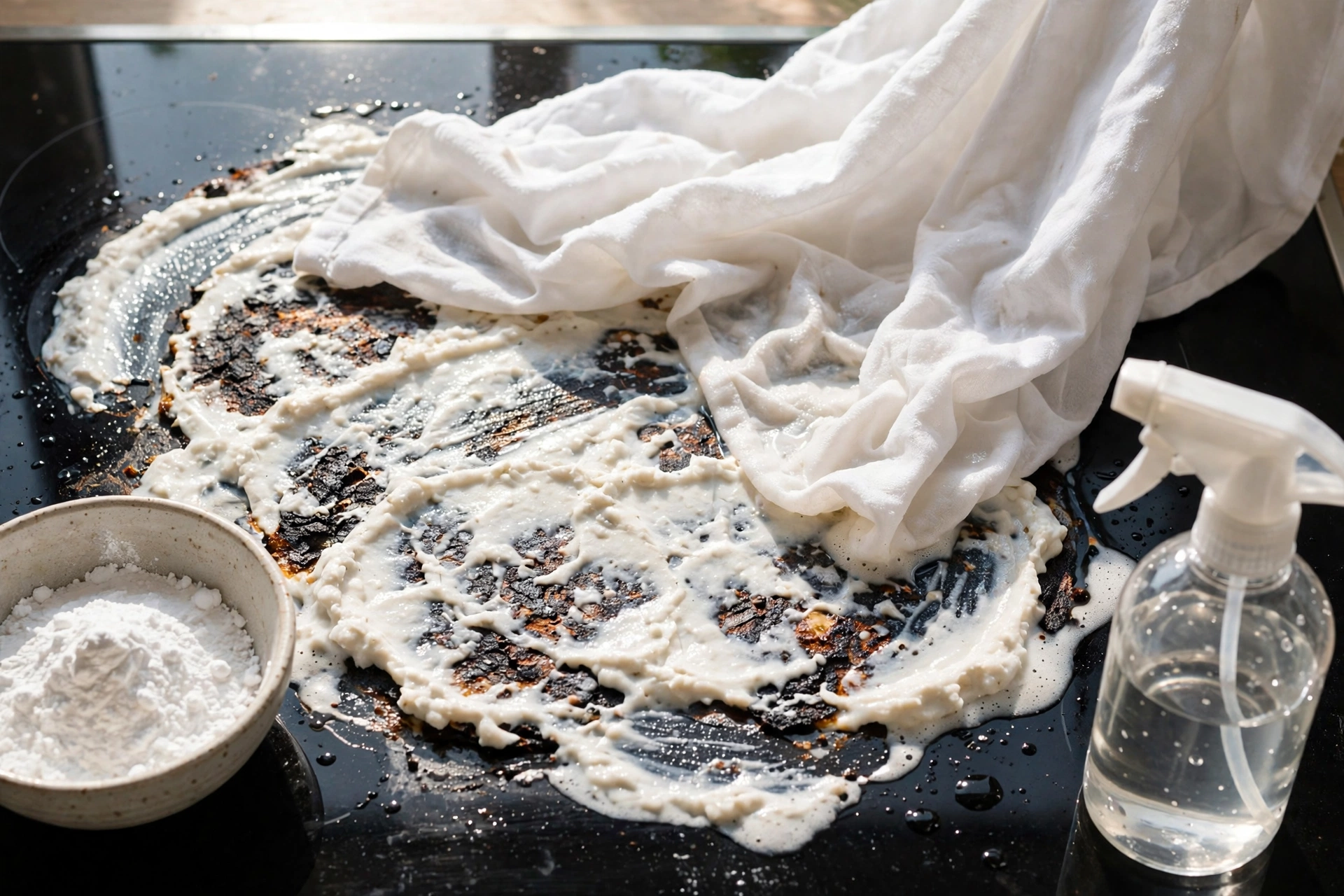
Sprinkle baking soda generously over the burnt areas, then spray white vinegar over it. It will fizz — that is the reaction doing its work. Lay a warm, damp cloth over the area and leave it for 15 to 20 minutes. For a really stubborn spot, make a thicker paste of three parts baking soda to one part water, spread it on, cover it with the damp cloth, and give it a full 30 minutes.
Then lift the cloth and wipe the paste away with a damp microfiber cloth, using gentle circles. Most of the burnt food should come with it. If a dark patch remains, repeat the paste once more rather than pressing harder. Rinse the cloth often so you are not dragging loosened grit back across the glass.
Step 4: The Scraper for Stubborn Spots
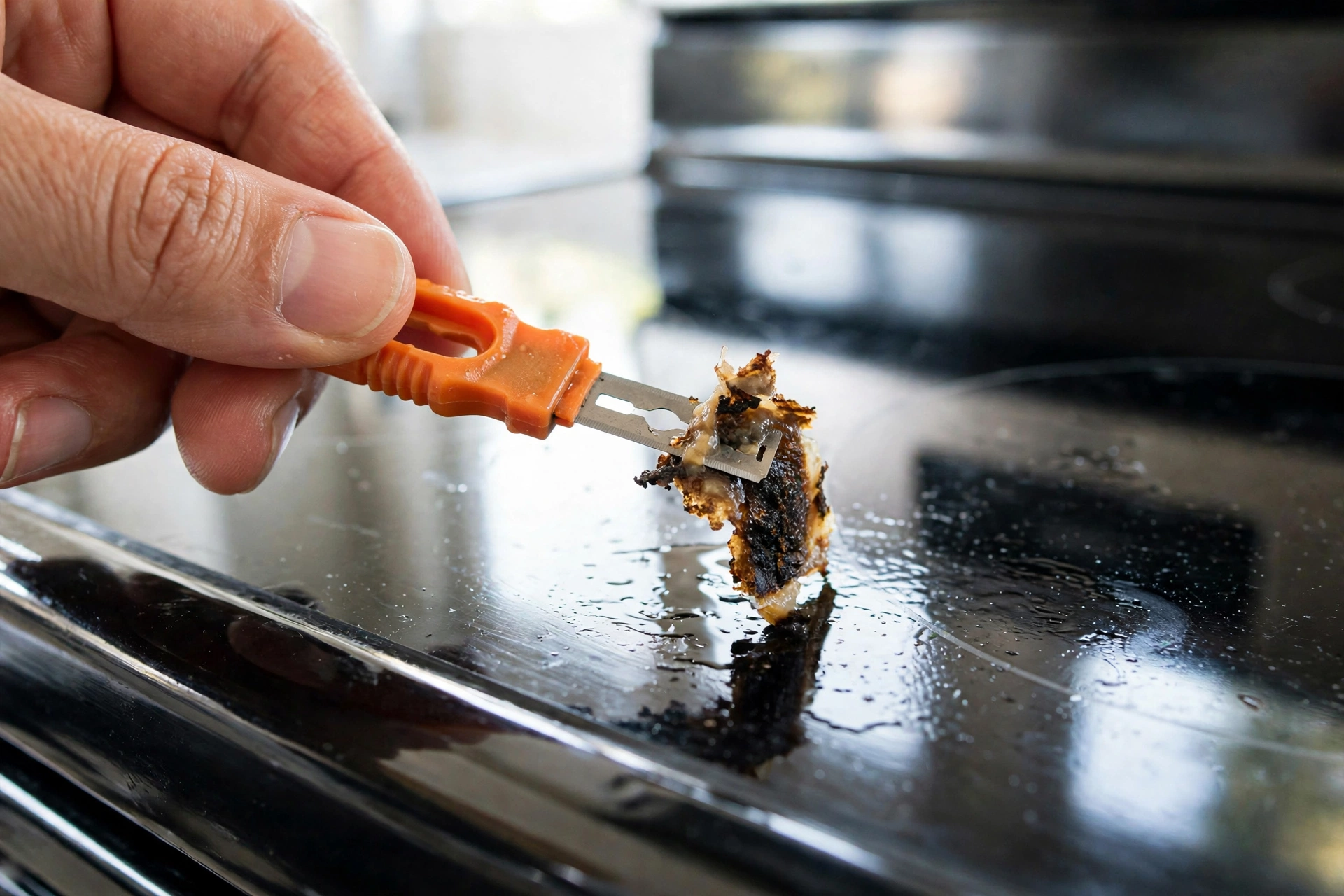
Some spots survive the paste. That is what the scraper is for — and it is safe, as long as you use it right. The rule from every manufacturer is the same: soften first, scrape wet, keep the angle low.
Hold the scraper at a 30 to 45 degree angle to the glass, with the blade flat against the surface, and push it slowly under the softened residue. Work in short strokes, lifting the blade to clear it often — a blade with trapped food particles under it will scratch. Never hold the scraper upright or vertical, and never scrape a dry surface. If the spot resists, stop, reapply the baking soda paste, wait another 15 minutes, and try again. The scraper is a lifting tool, not a chisel.
One important exception: sugary spills. Melted sugar can fuse to glass-ceramic and pit the surface if it cools and hardens there, so scrape a sugar spill off while the surface is still warm — carefully, with an oven mitt. That is the one time the cool-first rule does not apply.
Step 5: Polish It Streak-Free
After the food is gone, the glass often looks cloudy — a thin film of cleaner, minerals, or grease. Fix it with the simplest step in the whole job.
Put a few drops of dish soap on a damp microfiber cloth and wipe the whole surface. Then wipe again with a clean cloth dampened with plain water, to remove every trace of soap. Finally, buff dry with a dry microfiber cloth, using long straight strokes. If you still see a haze, it is usually hard water: lay a cloth soaked in undiluted white vinegar on the hazy patch for five minutes, wipe, and buff again. The same mineral film shows up on shower glass — see how to remove hard water stains from shower doors.
A pea-sized dab of a commercial glass cooktop cleaner, buffed in with a soft cloth, leaves a thin protective film that makes the next clean easier. It is optional, but if you cook daily, it is worth it.
Stain by Stain: What to Do for Each Mess
Not every mark is the same problem, and each one has a fastest fix.
| Mess | What it looks like | Fastest fix |
|---|---|---|
| Burnt-on sauce or food | Brown or black crust, rough to the touch | Baking soda paste, 15 to 30 minutes, then scraper |
| Grease film | Shiny smear that catches the light | Dish soap and warm water, then buff dry |
| White haze, hard water | Cloudy white film, worst near the edges | Vinegar-soaked cloth, 5 minutes, wipe and buff |
| Rainbow or bronze discoloration | Shimmery patches on the burner rings | Cooktop cleaner, buffed in — this is usually heat marks, not dirt |
| Sugar spill | Hard, glassy crust | Scrape while still warm (see Step 4), then paste |
| Melted plastic or foil | Stuck, shiny blob | Cool completely, then paste and scraper — never peel it hot |
If a mark will not come off after two rounds of paste and scraper, stop — it may be a heat mark or a scratch in the glass itself, and no cleaner will remove it.
What NOT to Use
This list is short, and every item on it is a common mistake. If you remember one thing from this article, remember this table.
| Never use | Why it damages the glass |
|---|---|
| Steel wool or metal scouring pads | Scratches the surface on the first pass |
| Scouring powder or abrasive cream cleansers | Grit that grinds into the glass |
| Oven cleaner | Too harsh for glass-ceramic; can damage the surface and seals |
| Bleach or ammonia-based cleaners | Can discolor the glass and damage the seals around the edges |
| A standard utility razor blade | Wrong blade, wrong angle — use a scraper made for cooktops |
| Paper towels for scrubbing | Lint plus dragged grit; fine for nothing but a final buff, and microfiber is better |
And never mix cleaners. Vinegar and bleach together create toxic gas, and bleach should never go near a stovetop anyway. For a bigger kitchen clean, see how to deep clean your kitchen step by step — and the same soften-first thinking works on grease on an oven door.
Keeping It Clean
A glass stovetop stays clean when the mess never gets a chance to bake on. That is mostly habit, and the habits are small.
| Habit | How often | Why it works |
|---|---|---|
| Wipe after every use, once cool | Every time you cook | Fresh spills wipe off; baked-on ones need the full treatment |
| Lift pots instead of sliding them | Every time | Sliding drags grit and rough pan bottoms across the glass |
| Wipe pan bottoms before cooking | Every time | Burnt food on a pan bottom transfers to the glass |
| Deep clean with paste and scraper | Weekly, or when you see spots | Stops the dull haze building up over months |
| Use flat-bottomed, smooth cookware | Always | Even heat and no rocking, which grinds grit into the glass |
The wipe-after-every-use habit is the whole secret. Thirty seconds with a damp cloth after dinner saves a 45-minute deep clean on Saturday.
When to Call a Professional
Most stovetop cleaning is a home job, but call a professional if the glass is cracked or chipped — a cracked cooktop can be a safety issue, and no cleaner fixes it. Also call one if a sugary spill has fused and pitted the surface, or if the control panel is not responding after a spill. If the cooktop is sparking or tripping the breaker, stop using it and call an electrician.
FAQ
Can I use vinegar and baking soda on a glass stovetop?
Yes, for most glass-ceramic stovetops — it is the standard gentle method. But check your manual first: a few manufacturers advise against it, and if yours does, use a manufacturer-approved glass cooktop cleaner instead.
Will a razor blade scratch a glass stovetop?
A scraper made for glass cooktops, used on a softened spot at a 30 to 45 degree angle, will not scratch it. A standard utility razor blade held upright or used on a dry surface can. The difference is the tool and the angle — and softening the spot first.
How do I get burnt-on food off a glass stove top?
Sprinkle baking soda over the spot, spray white vinegar on top, lay a warm damp cloth over it, and wait 15 to 30 minutes. Wipe the paste away, then lift anything left with a cooktop scraper held at a low angle. Repeat the paste once if needed — never press harder.
Why does my glass stovetop look cloudy after cleaning?
Usually it is cleaner residue or hard-water minerals left behind. Wipe the surface with a cloth dampened with plain water, then buff completely dry with a microfiber cloth. If the haze stays, lay a vinegar-soaked cloth on it for five minutes and buff again.
Can I clean a glass stovetop while it is still hot?
No — except for one case. Wait until it is completely cool for normal cleaning, because heat can crack the glass or bake cleaner into it. The only exception is a sugary spill, which should be scraped off while still warm, carefully, with an oven mitt, because melted sugar can pit the surface if it cools and hardens.
The Bottom Line
A glass stovetop does not need harsh scrubbing — it needs patience. Let it cool, wipe away the grit, soften burnt-on food with baking soda and vinegar, lift what is left with a scraper at a low angle, and buff it dry. Avoid steel wool, scouring powder, and oven cleaner, and wipe the surface after every meal so the mess never bakes on in the first place. Do that, and the black glass stays black and glossy for years.
Written by Daniel Brown — The Tidy Apron.


