

Table of Contents
TL;DR
Here’s how to clean grease off oven door glass without choking on chemical fumes: spread a thick paste of baking soda and water over the fully cooled glass, let it dwell for 20–30 minutes (several hours or overnight for heavy baked-on buildup), wipe it off with a damp microfiber cloth, then rinse with a vinegar-dampened cloth and buff dry. Oven grease is heat-fused to the glass, so dwell time — not hard scrubbing — does the real work. Never use steel wool, abrasive scouring pads, or metal scrapers on the glass, and keep all cleaners off the rubber door gasket.
Why Oven Grease Won’t Just Wipe Off
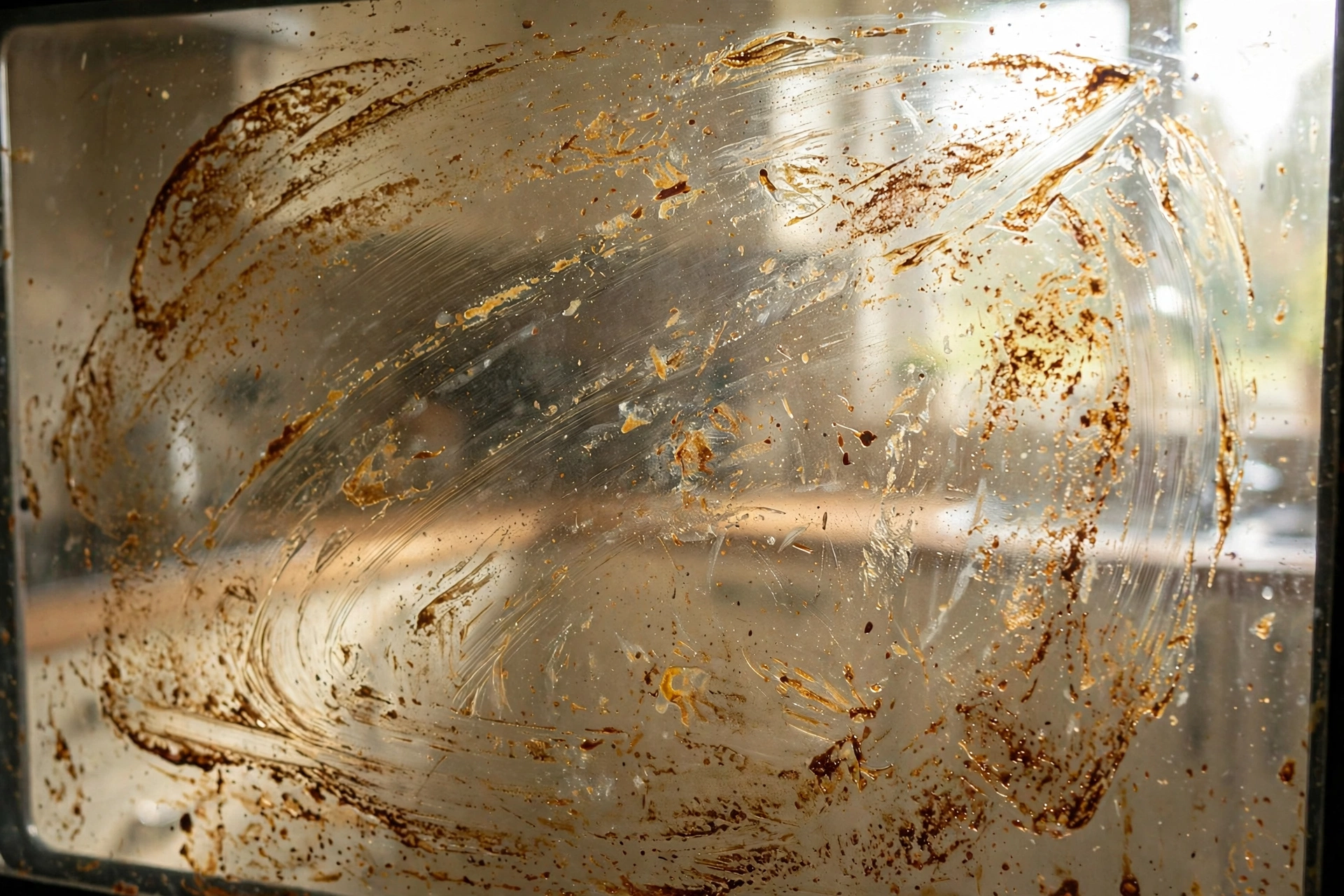
The brown film on your oven door isn’t ordinary dirt. Every time you roast or bake, grease splatters onto hot glass, and the heat essentially bakes the oil molecules into a semi-solid film fused to the surface. Regular all-purpose spray can’t break those bonds — which is exactly why wiping harder never works.
Once you understand that, the whole approach changes: you don’t need more muscle, you need chemistry plus patience. Soften the film, let the cleaner sit, then wipe. Every method below follows that logic, and it’s the difference between a streaky mess and glass you can actually see through.
The One Rule Before You Start: Cool the Oven Completely
Never clean the door on a warm oven. Cleaner residue bakes onto hot glass and becomes harder to remove than the grease, hot glass plus cold liquid can stress the tempering, and you risk a burn. Let it cool fully to room temperature. While you wait, gather the supplies:
| Supply | Why it matters |
| Baking soda | Mild alkali that softens baked-on grease without scratching |
| White vinegar | Rinses away baking-soda residue and cuts light film |
| Microfiber cloths (2–3) | Lift residue without lint or scratches; use separate ones for cleaning and buffing |
| Small bowl + spoon | For mixing the paste |
| Plastic scraper or old credit card | For stubborn spots — plastic, never metal |
| Rubber gloves | Keeps your hands out of the paste and any degreaser you use |
| Towel for the floor | Catches drips at the bottom of the door |
Check your oven manual if the door has special coatings — a few models need their own cleaning guidance.
Method 1: The Baking Soda Paste (Best All-Rounder)
This handles most oven doors, from light haze to serious baked-on brown.
- Mix the paste. Stir about half a cup of baking soda with 2–3 tablespoons of water until it’s the texture of soft frosting — thick enough to cling to vertical glass without sliding off.
- Spread it on the glass only. With gloved fingers, a brush, or a spatula, cover the greasy glass in an even layer. Keep the paste off the rubber gasket, vents, hinges, and trim — cleaner on the gasket causes it to deteriorate.
- Let it dwell. 20–30 minutes handles light residue. Thick, dark buildup needs several hours or overnight — the soak is what loosens the grease so you barely have to scrub. This is the step people rush, and rushing it is why the method “doesn’t work” for them.
- Wipe it off. Use a damp microfiber cloth or a non-scratch sponge, working in straight lines. Stubborn patches get a second application rather than harder scrubbing.
- Rinse with vinegar. Lightly spray or wipe white vinegar over the glass — it fizzes slightly against any remaining baking soda and lifts the residue. Don’t let vinegar pool along the bottom edge near the gasket; wipe it away.
- Buff dry. A final pass with a clean, dry microfiber cloth removes streaks. Streaks almost always mean leftover residue — a second damp wipe plus a fresh dry buff fixes them.
Method 2: Vinegar Steam for Light Haze
For a door that’s just dull rather than crusted, you don’t need the full paste treatment.
- Put a microwave-safe bowl with 1 cup of water and 2–3 tablespoons of white vinegar (or a few lemon slices) inside the oven.
- Heat on a low setting for 3–4 minutes — you want steam, not a boil-over.
- Let it sit with the door closed for 5–10 minutes so the steam softens the film.
- Wipe the interior glass with a damp microfiber cloth, then buff dry.
This is a maintenance method, not a rescue method. It keeps a clean door clean; it won’t dissolve months of baked-on grease on its own.
Stubborn Spots: The Plastic Scraper
Some spots survive the paste — usually the thickest splatter right at eye level. For those, use a plastic razor-blade scraper (sold cheaply as “plastic razor blades”) or an old credit card at a low angle, keeping the spot damp while you work. Short, gentle strokes.
Why plastic and never a metal blade? Tempered glass is tough but its surface can be scored by harder materials, and a scratch in oven glass is permanent. A few appliance guides suggest a metal razor at a careful angle — but one slip leaves a mark you see every time you cook, so plastic is the safer honest recommendation.
Method Comparison at a Glance
| Method | Best for | Time needed | Watch out for |
| Baking soda paste | Moderate to heavy baked-on grease | 20 min–overnight dwell | Keep off gasket and vents; rinse fully so no residue smokes next use |
| Vinegar steam | Light haze, maintenance cleaning | ~15 minutes | Won’t touch thick buildup alone |
| Plastic scraper | Surviving thick spots after the paste | A few minutes | Keep the surface damp; never substitute a metal blade |
| Commercial oven cleaner | Extreme buildup when DIY isn’t enough | Per label (often 15–30 min) | Ventilate well, wear gloves, never mix products, rinse thoroughly — residue causes odors and smoke next bake |
If you go the commercial route, foaming products cling to vertical glass better than liquid sprays. And whatever you use, the final rinse is non-negotiable — leftover cleaner residue is what causes that acrid smell the next time the oven heats up.
The Brown Haze Between the Glass Panes
Here’s something most guides skip: if the cloudiness is inside the door, between the glass layers, no surface method will ever reach it. Grease and steam work their way in through the door’s vents over years.
That fix means taking the door apart, and on many models the manufacturer recommends a service technician for it — incorrect disassembly can damage the door or void a warranty. Check your manual first. It’s better to know this upfront than to scrub the outside glass for an hour wondering why nothing changes.
What NOT to Do
Some of these are tempting shortcuts. All of them risk permanent damage.
| Don’t | Why |
| Steel wool or abrasive scouring pads | Scratches tempered glass permanently — the #1 way to ruin an oven door |
| Metal razor blades or knives | One slip scores the glass; plastic scrapers exist for this job |
| Cleaning while the oven is warm or hot | Bakes cleaner onto the glass, risks burns and thermal stress on the glass |
| Letting cleaner pool on the gasket or seals | Degrades the rubber gasket and can weaken the door seal over time |
| Mixing cleaning products | Bleach + vinegar and similar combos release dangerous fumes — one product at a time |
| Ammonia-based sprays on a self-cleaning oven | Can damage interior coatings; check the manual before using anything harsh |
| Skipping the final rinse | Leftover residue smokes and stinks the next time you bake |
Prevention: Keep the Door Clean Between Deep Cleans
- Quick wipe after roasting. Once the oven cools to warm (not hot), a damp microfiber pass takes ten seconds and stops grease from polymerizing.
- Use a splatter cover. A microwave-safe cover or even a loose sheet of foil over bubbling dishes cuts airborne grease dramatically.
- Monthly vinegar wipe. The steam method above, once a month, keeps buildup from ever reaching paste territory.
FAQ
Can I use regular oven cleaner spray on the door glass?
Yes, but rinse it completely and ventilate the kitchen. Caustic sprays work fast on extreme buildup, yet their residue causes odors and smoke on the next bake — and the fumes are harsh. For most doors, the baking soda paste gets the same result with none of that.
My oven glass is still cloudy after cleaning — why?
Two likely reasons. First, the haze is between the glass panes (see the section above) — that’s a disassembly job, not a cleaning job. Second, years of abrasive scrubbing may have etched or micro-scratched the surface; etched glass can’t be polished back to clear by cleaning.
Is vinegar safe on oven door glass?
Yes, as a rinse or light steam. The one caution: don’t let liquid vinegar pool along the bottom edge where the gasket sits, and always wipe it away. Brief contact is fine; prolonged soaking at the seals isn’t.
Can I clean the glass while the oven is still warm?
No. Cool it completely first. Cleaner on hot glass bakes on harder than the original grease, and the burn risk is real.
How often should I clean the oven door?
A quick damp-microfiber wipe weekly or after heavy roasting, plus the full paste treatment a few times a year depending on how much you cook. Maintenance beats rescue every time — and the home cleaning schedule shows how to fold it into a routine.
Will baking soda scratch the glass?
Used with a soft cloth and no hard scrubbing, no — it’s far gentler than the scouring pads people reach for. Scratches come from abrasive tools and metal blades, not from the paste itself.
Conclusion
Cleaning grease off an oven door is a patience job, not a strength job. Cool the oven, spread the baking soda paste, give it real dwell time, wipe, rinse with vinegar, and buff dry. Save the plastic scraper for stubborn spots, keep everything abrasive off the glass, and don’t chase haze trapped between the panes — that’s a different repair. Do the quick wipe after your next roast, and you’ll rarely need the full treatment again. For the science of why grease bonds the way it does, the complete stain removal guide has the full picture, and if grease splattered on your clothes instead, this grease-on-clothes guide covers that. The same goes for hard water film on shower glass — different room, same dwell-time principle.


