
Table of Contents
TL;DR
Here’s how to get dog drool out of couch cushions without setting the stain permanently: blot fresh slobber with a dry cloth (never rub), treat with an enzyme cleaner or a mild DIY solution using COLD water only — drool is protein-based, and hot water cooks the proteins into the fabric so the mark sets for good — let it dwell, blot again, and air dry. For dried drool, soften the patch with a cold damp cloth first, then clean the same way.
Why Drool Is Trickier Than It Looks
Drool looks like water, but it’s loaded with proteins and enzymes from your dog’s mouth. Once those proteins dry into fabric, plain water and regular soap can’t easily break them loose.
Most people grab a hot sponge or steam, thinking heat helps. With protein stains, heat does the opposite. Think of an egg white in a frying pan — runny when raw, solid the moment heat hits it. Hot water does that same cooking job to drool proteins in your couch fabric, and once cooked in, the stain is permanent. So the single most important rule of this whole article: cold water only.
Regular soap is the second trap. Dish soap and laundry detergent are built for grease, and on protein stains they can leave a stiff, gray patch. Enzyme cleaners exist precisely for this job — their biological enzymes break protein chains apart, the same way saliva breaks food down. Spray, wait, blot, done.
Check Your Fabric Care Code First
Couches carry a care tag under a cushion — check it first, because the wrong cleaner on the wrong fabric leaves water marks worse than the drool:
| Code | Means | What you can use on drool |
|---|---|---|
| W | Water-based cleaners only | Cold water, enzyme cleaner, mild DIY solution — all fine |
| WS | Water or solvent cleaners | Cold water, enzyme cleaner, mild DIY solution — all fine |
| S | Solvent only, NO water | Rubbing alcohol on a cloth, barely damp; call a pro for dried stains |
| X | Vacuum only | Vacuum dried drool; don’t wet the fabric at all |
If yours is S (common on microfiber and velvet), water can leave a ring — use rubbing alcohol instead and keep everything barely damp. Leather gets its own section below.
Fresh Drool: The 10-Minute Fix
- Blot, don’t rub. Press a clean dry cloth straight down and lift, repeating with fresh sections. Rubbing pushes proteins deeper and roughs up the fabric.
- Apply enzyme cleaner. A light spray — dampen, don’t soak. Pet-aisle enzyme formulas are made for protein messes, the same reason they’re the go-to for pet urine (this guide covers that).
- Let it dwell 10–15 minutes. This is the step people skip, and it’s the one that does the real work.
- Blot again. Press with a clean cold-damp cloth to lift the dissolved residue, then a dry towel to pull out moisture.
- Air dry at room temperature. No hair dryer, no radiator — heat is still the enemy; a fan helps.
Dried Drool: Soften First, Then Clean Like Fresh
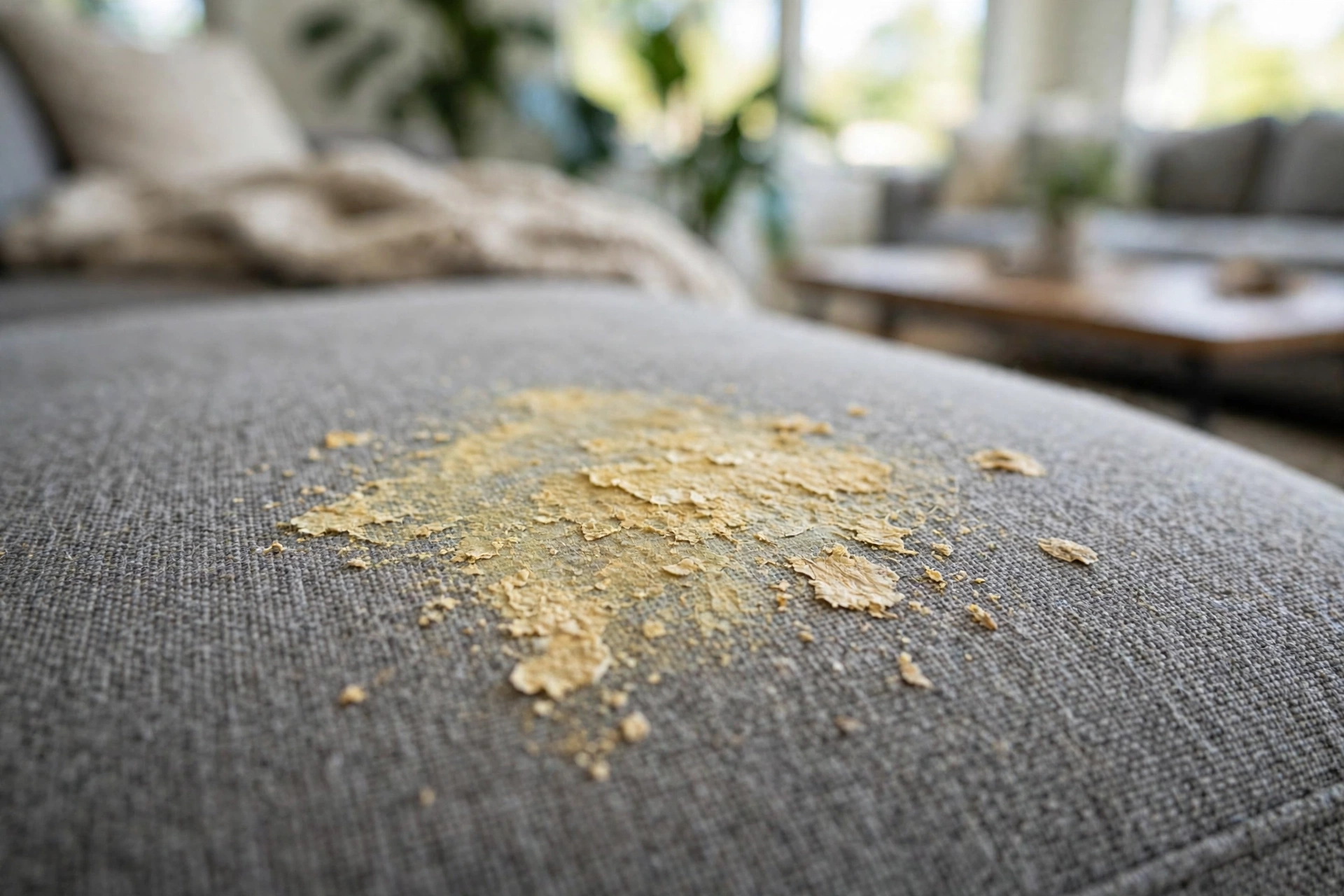
Dried drool is that crusty, slightly shiny patch on the armrest. Don’t scrub it dry — that grinds protein deeper and frays the fabric.
Instead, rehydrate: lay a cold-damp cloth over the patch for about 10 minutes to soften the dried proteins without heat. Lift the loosened residue, then follow the fresh-drool method exactly — enzyme cleaner, dwell, blot, air dry. If a faint outline remains, repeat the enzyme step once. Two gentle passes beat one aggressive pass every time.
Fresh vs. Dried Drool: Method at a Glance
| Fresh drool | Dried drool | |
|---|---|---|
| First step | Blot with dry cloth immediately | Cold damp cloth ~10 min to soften |
| Cleaner | Enzyme cleaner, light spray | Enzyme cleaner after softening |
| Dwell time | 10–15 minutes | 10–15 minutes |
| Removal | Blot with cold damp cloth, then dry towel | Lift softened residue, then same routine |
| Drying | Air dry, room temperature | Air dry, room temperature |
| If a mark remains | Repeat enzyme pass once | Repeat enzyme pass once |
Cleaner Comparison: What Actually Works
All four can work — the question is which fits your situation:
| Cleaner | Best for | Watch out for |
|---|---|---|
| Enzyme cleaner (pet stain formula) | Fresh and dried drool on W/WS fabric; most reliable choice | Needs 10–15 min dwell; get a pet-stain formula, not a general odor eliminator |
| DIY: 3% hydrogen peroxide + a drop of dish soap in cold water | Light stains with no enzyme cleaner on hand | ALWAYS color-test a hidden spot first — peroxide can lighten fabrics; skip on dark or delicate upholstery |
| Rubbing alcohol on a cloth | S-coded fabrics; light fresh spots | Dab, don’t pour; overuse dries fabrics out; ventilate the room |
| Plain blotting with cold water | Drool caught within minutes | Not enough for dried stains — first aid, not a full treatment |
On the DIY mix: one literal drop of dish soap — more soap means more residue, and leftover soap attracts dirt. Color-test on a hidden spot and let it dry fully before touching the visible area.
Leather Couches: A Different Playbook
Leather doesn’t absorb drool like fabric — the fight is surface residue, plus the risk of drying the leather out.
Wipe fresh drool with a damp (not dripping) plain-water cloth, then follow with a dry cloth. For dried drool, hold the damp cloth on the spot a minute to soften, then wipe gently. That’s the cleaning step.
Then condition the leather — wiping strips a little of its natural oils each time, so a pea-sized amount of conditioner buffed in with a soft cloth keeps the spot from drying and cracking months later. No enzyme cleaners, no peroxide, no alcohol on leather — harsh chemicals strip the finish, and once it’s gone the leather stains permanently and looks blotchy.
What NOT to Do
Some of these feel like they’d help. On drool, they don’t.
| Don’t | Why |
|---|---|
| Hot water or steam on the spot | Cooks the proteins and sets the stain permanently — the #1 way to ruin an easy fix |
| Scrubbing in circles | Pushes drool deeper and damages texture; blot straight down and lift |
| Chlorine bleach or harsh cleaners | Discolors upholstery and damages fibers — overkill that creates a bigger problem than the drool |
| Hair dryer or heater to dry faster | Heat can still set leftover residue — air dry at room temperature |
| Soaking the cushion | Excess water leaves marks and foam cushions take forever to dry — damp, not wet |
| Skipping the color test on DIY mixes | Peroxide and alcohol can lighten fabrics — a 2-minute test saves a visible bleach spot |
Don’t iron over the spot through a towel either, a trick suggested for other stains. Heat plus protein equals permanent.
Prevention: Less Drool on the Couch
For champion droolers, prevention beats cleaning:
- Drool rags in the drool zones. Keep cheap washable cloths at your dog’s favorite couch spot — a quick wipe beats a deep clean.
- Washable throws on the favorite cushions. A washable throw is a sacrificial layer. Same logic as my chocolate on the sofa guide: barriers beat scrubbing.
- Wipe after meals and water. Most drool surges follow eating or drinking — a two-second chin wipe becomes habit fast.
- Watch for sudden increases. Drooling can spike with dental problems, so a sudden change deserves a vet visit more than a cleaner.
- Give the drool a target. A specific blanket or dog bed next to the couch, rewarded when used, keeps most slobber in one washable place.
FAQ
Will dog drool stain a couch permanently?
Only when heat gets involved. Drool is protein-based, so hot water, steam, or a hot dryer cooks the proteins into the fabric and sets the mark. Clean with cold water and an enzyme cleaner, air dry, and fresh drool almost never leaves a permanent stain.
Does dog drool smell?
Fresh drool has a mild odor, but drool that’s soaked in and stayed damp can turn sour as bacteria grow — the same reason pet urine needs enzyme treatment, and the same enzyme cleaner fixes both. For lingering dog odor, see this pet urine and odor guide.
Can I use my carpet drool cleaner on the couch?
Yes, with one caveat: check the care code first. Pet enzyme cleaners are generally safe across W and WS fabrics and carpets alike — carpet takes more moisture, upholstery needs a lighter hand — but the cleaner crosses over fine.
How do I clean drool from cushions with non-removable covers?
Same method, lighter on moisture: blot, light enzyme spray, dwell, blot with a barely-damp cold cloth, press with a dry towel, and point a fan at the spot. Over-wetting is the enemy here, so several light passes beat one heavy one.
Is drool harmful to fabric, or just ugly?
Mostly just ugly. Drool doesn’t eat through fabric, but dried drool left for months attracts dirt (it’s slightly sticky), and damp drool left unaddressed can encourage mildew in humid homes — a quick blot when you see it is all the protection you need. The complete stain removal guide covers protein-stain science in more depth.
Conclusion
Dog drool is the easiest stain in the house — with one rule: cold water only, because heat cooks the protein and sets the stain. Blot fresh slobber, let an enzyme cleaner work for ten minutes, blot again, air dry. Soften dried drool with a cold damp cloth first, then treat it the same way. Keep harsh chemicals off leather, check your care code, and keep a drool rag near the favorite spot. Do that, and the couch survives the drool — which isn’t stopping anytime soon.


