

How to Get Burnt Smell Out of a Microwave (The Clean-First Rule)
Key Takeaways
Here’s how to get burnt smell out of microwave interiors for good: cleaning and deodorizing are two separate jobs — do them in that order. First steam-clean with water plus vinegar or lemon for 3–5 minutes, then wipe every surface. Then deodorize overnight with baking soda, activated charcoal, or coffee grounds inside the closed microwave. If the smell survives three full rounds, check the grease filter — and if interior paint is charred through, the microwave is done, not dirty.
Table of Contents
Why Burnt Smell Lingers (It’s Not Just “Smell”)
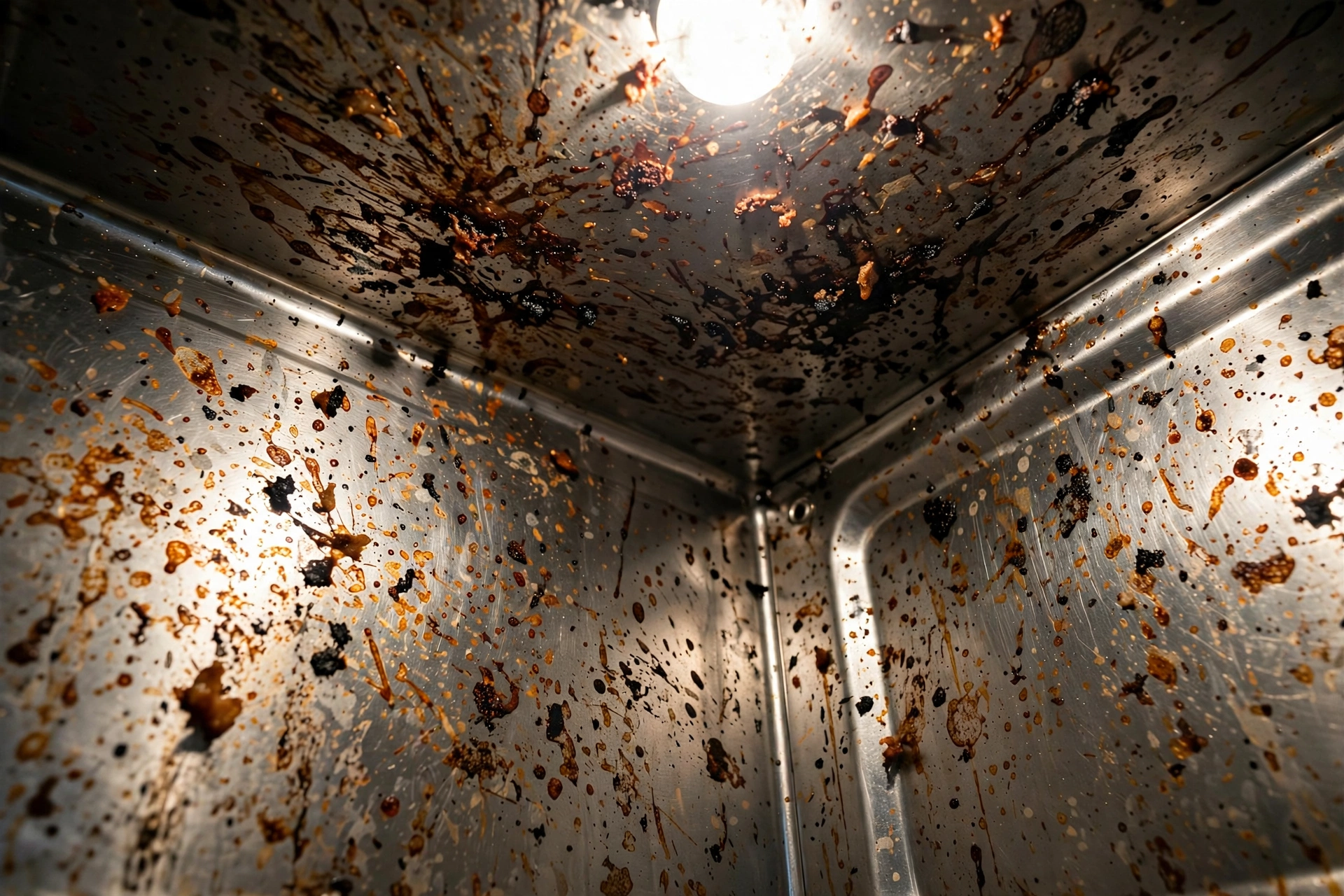
A burnt-popcorn incident feels like it should air out in an hour. It doesn’t, and here’s why: the inside of a microwave is a sealed box with a porous-ish coating, and burnt food leaves two things behind — visible residue and invisible odor molecules soaked into every surface, including the ceiling, the door seal, and the waveguide cover (that little cardboard-looking panel on the wall).
Wiping the visible mess handles half the problem. The other half is grease and smoke particles trapped in places a cloth never reaches. That’s why airing it out barely helps, and why a deodorizer alone — without cleaning first — just perfumes the grease. Clean first, deodorize second. Every time.
Phase 1: Steam-Clean (Loosen Everything)
Steam does what scrubbing can’t: it softens baked-on residue and lifts grease out of the coating so you can wipe it away instead of grinding it in.
- Fill a microwave-safe bowl with 1 cup of water plus 1 tablespoon of white vinegar or lemon juice. For strong smells (burnt fish, melted plastic), go up to a quarter cup of vinegar.
- Microwave 3–5 minutes until it’s steaming hard inside. Don’t open the door yet.
- Let it sit 10–15 minutes with the door closed. The steam keeps working while you do something else.
- Remove the bowl carefully — it’s hot. Dip a soft cloth or sponge in the warm liquid and wipe down every square inch: walls, ceiling, floor, door interior, and around the seal.
- Pull out the turntable and wash it in the sink with dish soap. Soak it first if food is caramelized on.
- Wipe the waveguide cover gently with a damp cloth — don’t soak it, and never scrub it hard. It’s a functional part, not decoration.
For stubborn spots, make a paste of baking soda and a little water, dab it on, wait 10 minutes, and wipe. Never use steel wool, abrasive pads, or harsh scouring powders — they scratch the interior coating, and scratched coating traps more odor next time.
Phase 2: Deodorize Overnight (Pull the Smell Out)
The microwave is clean now, but odor molecules are still hanging around in the surfaces. This is the deodorizing step — and it works while you sleep.
| Deodorizer | How to use it | Best for |
|---|---|---|
| Baking soda | Small open bowl with ½ cup inside, door closed, overnight | Everyday burnt smells; cheapest option |
| Activated charcoal | A few charcoal bags or a bowl of granules, overnight | Smoke and strong smells — the most absorbent |
| Dried coffee grounds | Bowl of grounds, overnight | Burnt food smells; leaves a mild coffee scent |
| Vanilla on cotton ball | A few drops on a cotton ball, a few hours | Finishing touch — masks lightly, doesn’t absorb |
Leave your chosen deodorizer inside with the door shut overnight. In the morning, remove it and sniff-test. Stubborn smells — burnt fish, melted plastic — sometimes need two or three rounds. That’s normal, not failure.
After the overnight step, leave the door open for a few hours so fresh air circulates. Aired-out beats sealed-up every time.
Don’t Forget the Filter
If the smell survives cleaning plus two overnight deodorizing rounds, the problem may not be the cavity at all — it’s the filter.
- Over-the-range microwaves have a grease filter (usually under the unit) that traps cooking grease and its smell. Pull it out and wash it in hot soapy water monthly.
- Charcoal filters (in recirculating models) absorb odors and can’t be cleaned — replace every 6 months. A saturated charcoal filter will keep perfuming your kitchen with old smells no matter how clean the cavity is.
- The vent area around the microwave collects greasy dust. Wipe it down while you’re at it.
The Honest Stop Rule: When It’s Damaged, Not Dirty
Sometimes the answer isn’t another cleaning round. Check for these:
- Interior paint charred or bubbling through — if the coating itself is burned, no cleaner fixes it, and exposed metal can arc. That microwave is done.
- Repeated sparking with nothing metal inside — stop using it and get it inspected.
- Electrical or chemical burning smell (not food) — unplug it. That’s not a cleaning problem.
A burnt-popcorn smell is a cleaning problem. A burning-plastic smell from the appliance itself is a safety problem. Know which one you have.
What NOT to Do
| Don’t | Why |
|---|---|
| Use steel wool or abrasive pads | Scratches the interior coating, which then traps more odor |
| Use bleach or ammonia inside | Damages the coating and leaves fumes that transfer to food |
| Deodorize before cleaning | You’re perfuming grease — the smell comes back in a day |
| Spray air freshener inside | Masks the odor for hours; the grease underneath stays |
| Microwave a dry sponge or paper | Fire risk — deodorizers sit in the OFF microwave, never run it dry |
| Seal it shut “to contain the smell” | Trapped moisture breeds worse smells; air it out between uses |
Prevention: The 5-Minute Weekly Habit
- Wipe it weekly, even when it looks clean. A 5-minute wipe with a damp cloth prevents the grease layer that holds odors.
- Cover food with a microwave-safe lid or paper towel — splatter is the seed of every burnt smell.
- Watch popcorn like a hawk. Most burnt-microwave stories start with “I walked away during popcorn.” Listen for the popping to slow to 2–3 seconds between pops, then stop it.
- Leave the door ajar after use so moisture and heat escape instead of settling into the coating.
- Clean the grease filter monthly if you have an over-the-range model.
FAQ
Will the vinegar smell stay in my microwave?
No — it fades completely within a few hours, especially with the door left open. If you’re sensitive to it, use lemon juice instead; it works the same way and smells better during the process.
How many times do I need to repeat the deodorizing step?
One overnight round handles most burnt-popcorn situations. Burnt fish or melted plastic can take two or three rounds. If three full clean-plus-deodorize cycles change nothing, check the filter — or face the stop rule.
Can I just boil vanilla or lemon to make it smell nice?
Boiling lemon water is a legitimate light deodorizer, but it’s a finishing touch, not the method — it masks more than it absorbs. Do the steam-clean and the overnight absorbent step first, then enjoy the lemon.
Is it safe to use a microwave that smells burnt?
If the smell is from burnt food and the interior coating is intact, yes — clean it thoroughly first. If the coating is charred through, it sparks, or the smell is electrical/chemical, no — unplug it and replace or repair it.
Why does the smell come back a day after I cleaned it?
Because the grease layer underneath wasn’t fully removed — the deodorizer masked it temporarily. Go back to Phase 1 and be thorough: ceiling, door seal, waveguide cover, turntable well. Then deodorize again.
Does baking soda really absorb odors, or is that a myth?
It genuinely absorbs — baking soda (sodium bicarbonate) neutralizes acidic odor molecules rather than just covering them. It’s the same reason an open box works in the fridge. Activated charcoal is even more absorbent for heavy smoke smells.
Conclusion
Burnt smell in a microwave is a two-job problem, and the order is everything: steam-clean first to remove the grease that’s holding the odor, then deodorize overnight to pull out what’s left. Most microwaves surrender to one full round; the stubborn ones need two or three, or a filter cleaning. And if the interior paint is charred through, believe the stop rule — that’s a damaged appliance, not a dirty one. Keep the weekly 5-minute wipe, cover your food, and never walk away from popcorn again. For the same clean-first philosophy applied to the rest of the kitchen, our oven door grease guide pairs well — and the broader science of breaking down kitchen grime is in the complete stain removal guide.


