

Key Takeaways
How to get rid of drain flies: find the breeding drain with a tape test, scrub the biofilm out with a drain brush, and follow up with an enzyme cleaner for 5 to 7 nights. Swatting adults changes nothing — the larvae live in the gunk.
Table of Contents
- Drain Flies or Fruit Flies?
- Why They Show Up
- What You’ll Need
- Step 1: Find the Breeding Drain
- Step 2: Scrub the Biofilm Out
- Step 3: Enzyme Cleaner for a Week
- Step 4: What About Boiling Water, Vinegar, and Bleach?
- Step 5: Fix What Attracted Them
- How Long Until They’re Gone
- Mistakes That Keep Them Coming Back
- Frequently Asked Questions
- Conclusion
1. Drain Flies or Fruit Flies?
Before you treat anything, make sure you are fighting the right insect — they look alike, but they live in different places.
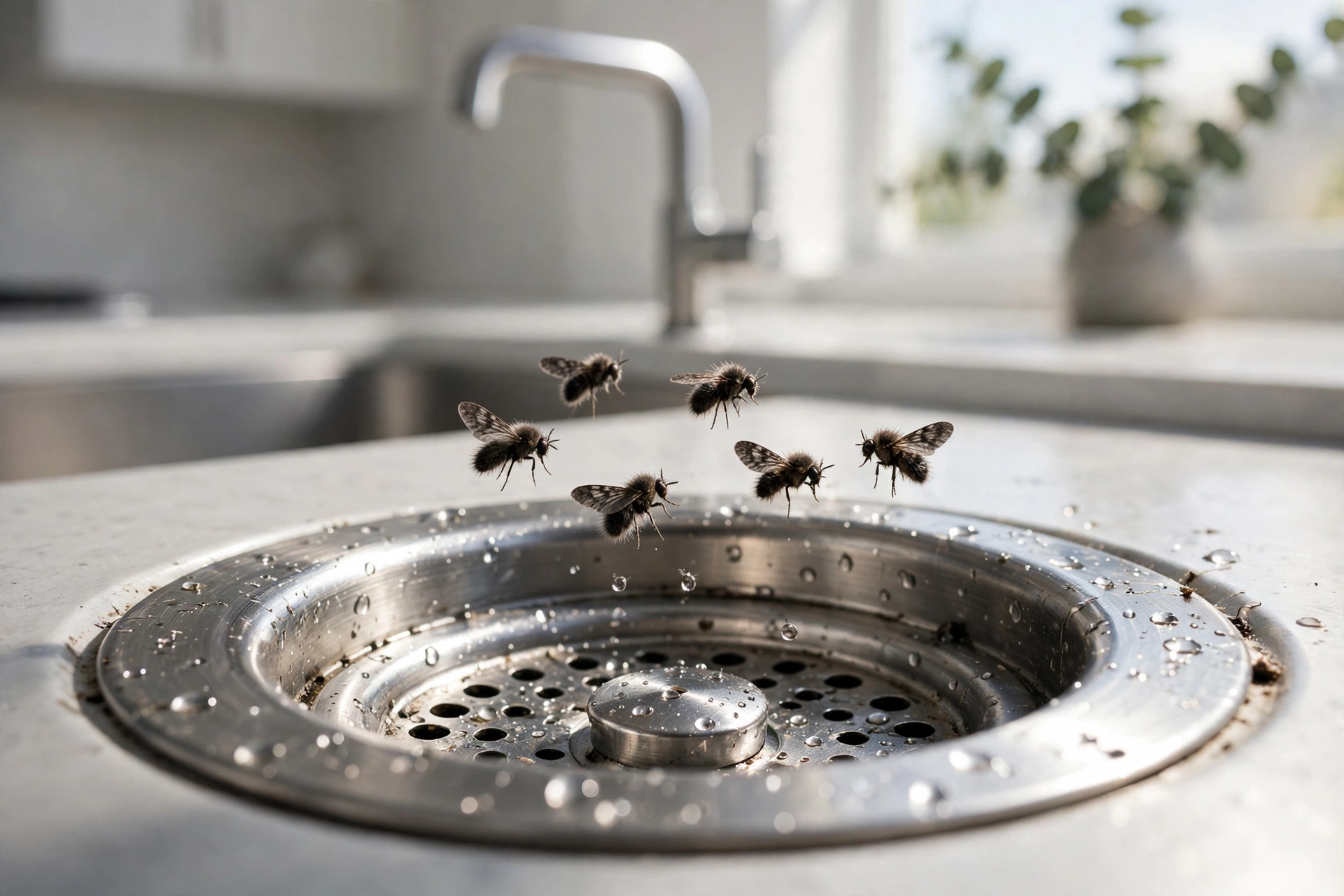
Drain flies are tiny, grey, and fuzzy — miniature moths about 1.5 to 5 mm long that hover by sinks, showers, and floor drains, hopping and fluttering. Fruit flies are sleeker, with red eyes, and hang around fruit bowls, trash cans, and recycling.
| Clue | Drain flies | Fruit flies |
|---|---|---|
| Where they hang out | Right at drains | Fruit bowl, trash, recycling |
| Look | Fuzzy, moth-like, grey-tan | Smooth, shiny, red eyes |
| Flight | Weak, hoppy, short bursts | Fast, darting |
| Source | Biofilm inside a drain | Rotting fruit or food waste |
| Fix | Scrub the drain | Remove the food source |
If you are not sure, the tape test in Step 1 settles it in one night.
2. Why They Show Up
Drain flies do not appear because your home is dirty. They appear because a drain has a stable layer of wet, slimy organic matter — biofilm — coating the inside of the pipe: soap scum, grease, hair, food particles, and bacteria. It is the perfect nursery.
An adult lives only a couple of weeks, but each female lays hundreds of eggs in that slime. The larvae feed on it, pupate, and hatch as adults that crawl up out of the drain. Kill every adult and the next generation is already developing below your sink — sprays and swatters never work, because you have to evict the nursery, not the tenants.
The usual suspects are kitchen sinks (especially with a garbage disposal), bathroom sinks, shower drains, and floor drains. Any drain that goes unused — a guest bathroom, a basement floor drain — is a prime candidate, because the trap water evaporates. A slow or smelly drain is often the same problem: our guide to getting rid of a garbage disposal smell tackles the odour side.
3. What You’ll Need
Clear packing tape, a long flexible drain brush (the bottle-brush type), an old toothbrush, rubber gloves, and an enzyme-based drain cleaner — the kind with live bacterial cultures, not a caustic drain opener. That is the whole kit. No bleach, no bug spray, no fogger.
4. Step 1: Find the Breeding Drain
Never guess which drain is the source — flies wander, and treating the wrong drain wastes a week. Test every drain in the house on the same night: kitchen, bathrooms, laundry, basement floor drains.
Before bed, lay a strip of clear packing tape loosely over each drain, sticky side down. Do not seal it completely, or the flies will not try to come up through it. In the morning, check the tape: flies stuck to the underside confirm a breeding site. Repeat for two or three nights, since a lightly infested drain may catch only one or two flies the first night.
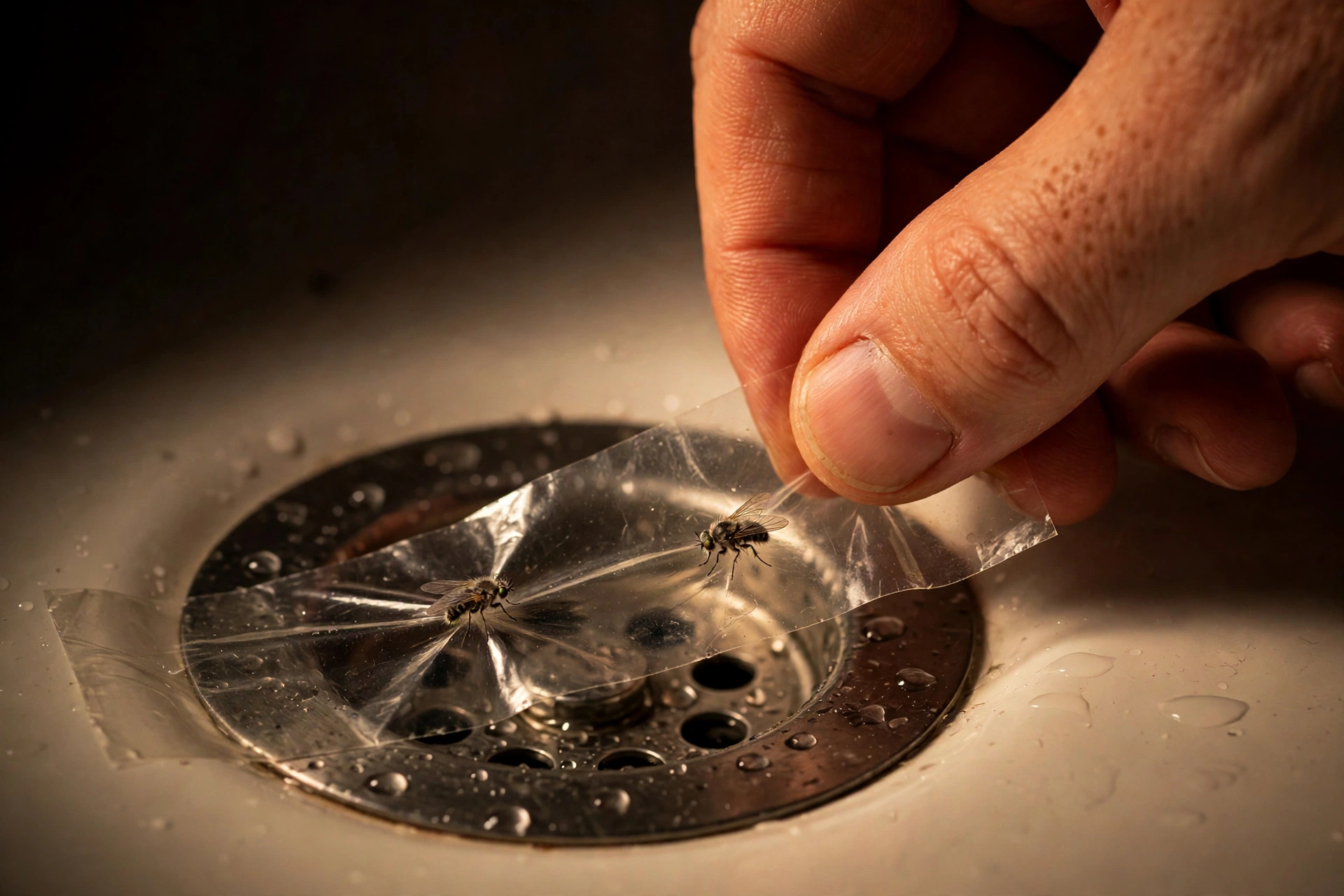
Mark every positive drain — those are the only ones to treat. If no tape catches anything, it is probably fruit flies: check the fruit bowl, trash can, and recycling bin first.
5. Step 2: Scrub the Biofilm Out
This is the step that matters most, and the one most guides skip. No liquid can do what a brush does: biofilm is a sticky layer glued to the pipe wall, and it has to be physically removed.
Put on gloves, pull out the stopper or cover, and remove hair and debris by hand. Push the brush down as far as it will go, working it up and down while twisting to scrub the full circumference of the pipe walls. Rinse and repeat until the brush comes out clean — several passes, not one polite swipe.
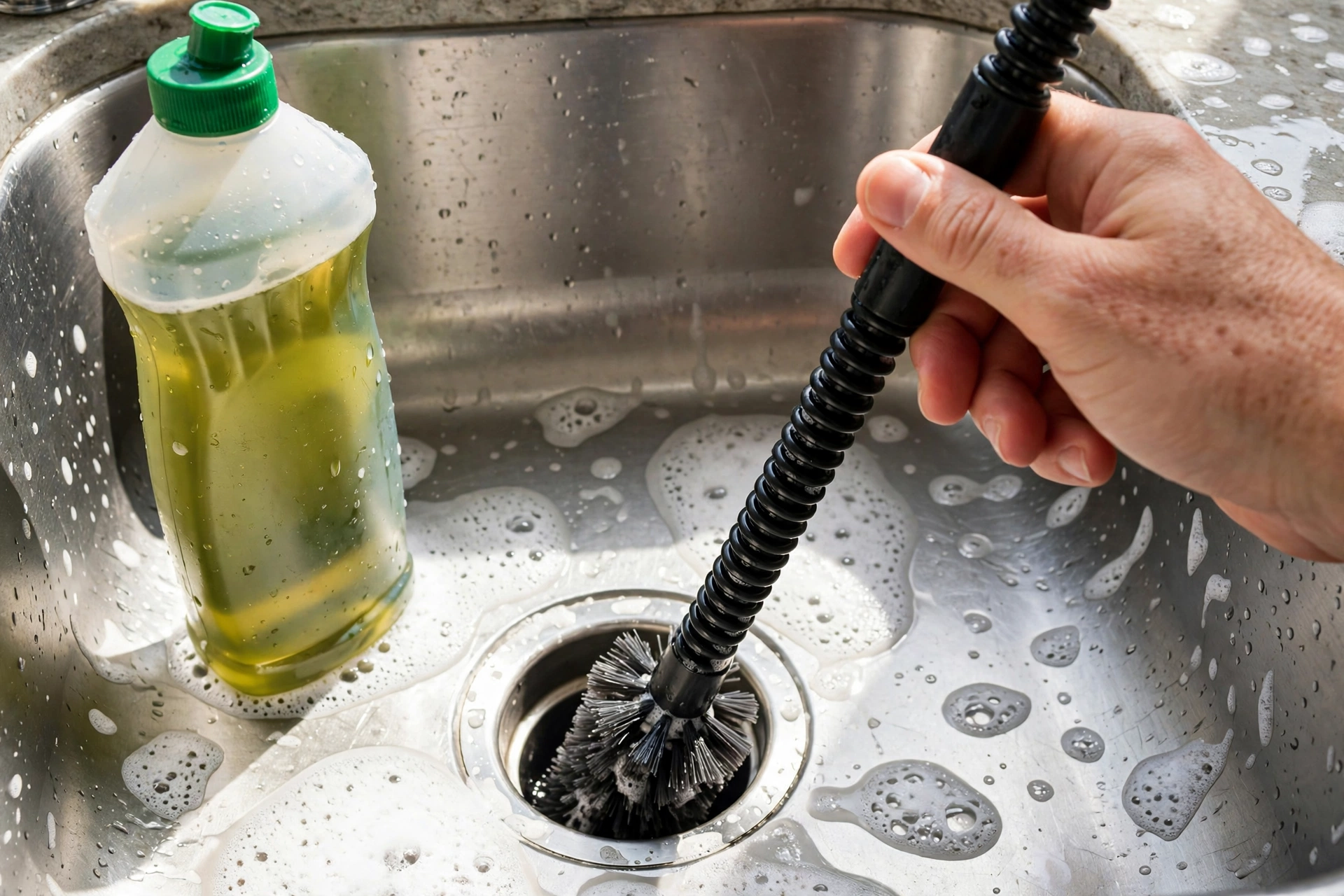
With a garbage disposal, scrub the rubber splash guard too, top and bottom — it holds a thick ring of slime — then run the disposal with cold water and ice cubes. For a shower drain, pull the hair out first: a brush cannot work through a hairball. The same hands-on approach works on mildew on a shower curtain — surface grime needs contact, not just a spray. Flush with very hot tap water, never boiling water on PVC pipes — it can soften the joints.
6. Step 3: Enzyme Cleaner for a Week
Scrubbing removes the bulk of the biofilm, but a thin layer remains in the cracks a brush cannot reach. That is where the enzyme cleaner earns its keep.
Apply it at night, when the drain will sit unused for hours — enzymes work slowly and need contact time. Follow the label dose, pour it in, and do not run water down that drain until morning. Repeat nightly for 5 to 7 nights. Most people quit too early: the flies often drop off after two or three days, but eggs still in the pipe can hatch and restart the cycle.
Use a bacterial enzyme cleaner labelled for organic buildup or drain flies. Caustic chemical drain openers are a different product — they burn through clogs but do not digest biofilm.
7. Step 4: What About Boiling Water, Vinegar, and Bleach?
You will find all three recommended everywhere. As a primary treatment, each is mostly a waste of time:
| Treatment | What it actually does | Verdict |
|---|---|---|
| Boiling water | Flushes loosened debris; kills some eggs | Flush aid only; never the fix, never in PVC |
| Vinegar + baking soda | Fizzes; neutralises into salty water | Does almost nothing to biofilm — skip it |
| Bleach | Kills surface microbes, then runs through | Does not dissolve gunk; can damage septic systems |
The fizz is the trap: vinegar and baking soda look dramatic, but the reaction neutralises in seconds and leaves the slime untouched. Bleach feels like a solution while the nursery stays intact. The brush does the work; the enzyme cleaner finishes it.
8. Step 5: Fix What Attracted Them
Once the flies are gone, a few small habits keep them from coming back. Run every drain weekly — a guest bathroom that sits unused for a month is an invitation. Keep traps full: the water in a P-trap dries out in unused drains, so run the taps for a minute once a week. Clean stoppers and strainers monthly. Fix slow drains and leaks, because standing water feeds biofilm — hard water stains on shower doors are often the visible sign of the same buildup. Run the disposal with cold water after every use. These are the same small-regular-jobs habits in our home cleaning schedule: a minute a week beats a rescue mission every few months.
9. How Long Until They’re Gone
Expect a noticeable drop in 2 to 3 days once the right drain is brushed and treated, and full elimination in 7 to 14 days — eggs left in the pipe need time to hatch and die off. If flies persist after two full weeks, you missed a breeding drain (tape-test every drain again, including the basement), the biofilm is deeper than a hand brush can reach, or a cracked drain line is letting flies in from the sewer side. That last one is a plumber’s job.
10. Mistakes That Keep Them Coming Back
Most problems drag on because of these:
- Only killing the adults. Sprays and swatters change nothing — the larvae are the problem.
- Pouring bleach and calling it done. It runs through too fast to penetrate biofilm and can damage septic systems.
- Treating the wrong drain. Flies wander, but may breed in the guest bathroom — tape-test every drain first.
- Stopping after two good days. Eggs hatch on their own schedule — finish the full 5 to 7 nights.
- Mixing cleaners. Never combine bleach with vinegar or other acids — it creates toxic chlorine gas.
- Ignoring a slow drain. Slow water means buildup, and buildup means a nursery.
Frequently Asked Questions
How do I get rid of drain flies permanently?
Remove their breeding ground: tape-test to find the breeding drain, scrub the biofilm off the pipe walls, then apply an enzyme drain cleaner nightly for 5 to 7 nights. Keep drains running weekly and traps full afterwards.
Are drain flies dangerous?
No — they do not bite or transmit disease. They are unsanitary, though: they breed in decaying organic matter and can carry bacteria onto surfaces. Their presence signals a drain full of biofilm.
Will bleach kill drain flies?
Bleach kills the adults it touches, but it runs through too quickly to penetrate the biofilm where the larvae live, and it dissolves none of the gunk. A drain brush plus an enzyme cleaner is the treatment that ends the cycle.
How long does it take to get rid of drain flies?
A noticeable drop in 2 to 3 days, and full elimination in 7 to 14 days. Eggs in the pipe keep hatching during that window, so finish the full week even after the adults seem gone.
Why do drain flies keep coming back?
Because the biofilm was never fully removed, a breeding drain was missed, or treatment stopped too early. Tape-test every drain, scrub each positive drain until the brush comes out clean, and run the enzyme cleaner for the full 5 to 7 nights. If the toilet bowl ring keeps returning too, the same logic is at work.
Conclusion
Drain flies are one of the most beatable pests in the house — the fix is cleaning, not chemicals. Find the breeding drain with a strip of tape, scrub the slime out with a brush, follow up with a week of enzyme cleaner, and fix the habits that let the biofilm build up. Two weeks from now, the little cloud by the sink will be gone. If your shower has its own buildup, our guide to cleaning a shower head uses the same scrub-first logic.


