

Key Takeaways
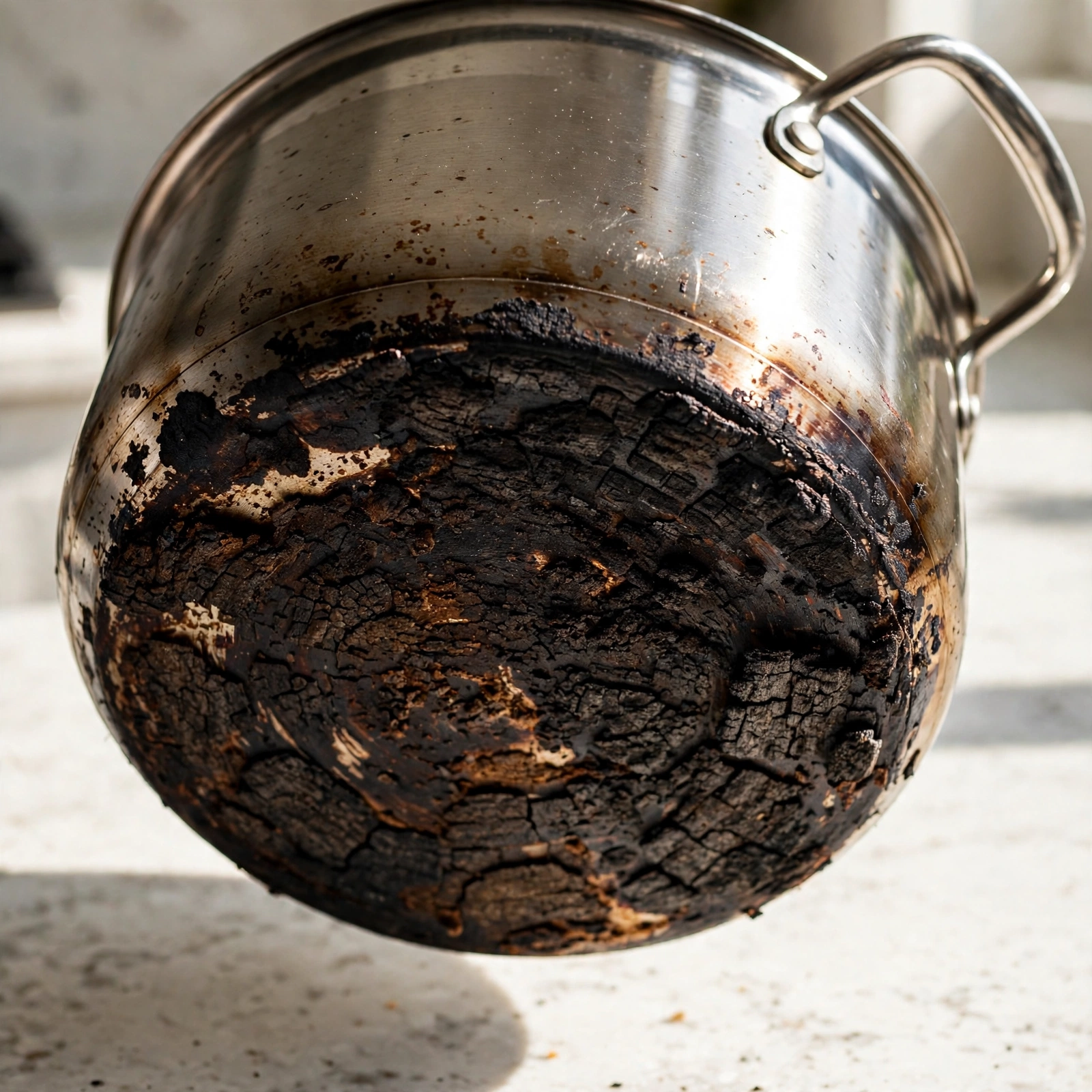
How to clean a burnt pot: let it cool, scrape out the loose food, then soak it in hot soapy water for at least 30 minutes. For a layer that will not budge, simmer water with a few spoonfuls of baking soda for 10–15 minutes, let it cool, and wipe it away with a soft sponge. Match the method to the material.
Table of Contents
- Why Burnt Food Sticks So Hard
- What You’ll Need
- Know Your Pot First
- The Hot Soapy Soak
- The Baking Soda Simmer
- The Vinegar Boil
- The Overnight Baking Soda Paste
- Cast Iron Needs Its Own Rules
- Non-Stick: What Never to Do
- Mistakes That Ruin Pots
- Keeping Pots From Burning Again
- Frequently Asked Questions
- Conclusion
1. Why Burnt Food Sticks So Hard
You turn away for two minutes and the rice catches. By the time you notice the smell, a black crust has formed on the bottom — and grabbing the steel wool can ruin the pan for good.
When food overheats, its sugars and proteins carbonise into a hard layer bonded to the metal. Water alone will not dissolve it, and dry scraping pushes the carbon deeper into tiny scratches. The fix is chemistry and patience: heat and a mild alkaline cleaner loosen the bond. If the smell has spread, our guide to getting a burnt smell out of the microwave covers the same rescue for a different appliance.
2. What You’ll Need
You almost certainly own everything: a wooden spoon or silicone spatula, dish soap, baking soda, white vinegar, a soft sponge, a microfiber cloth, and coarse salt (for cast iron only). No special powders or gadgets.
3. Know Your Pot First
The method that saves a stainless steel pot can strip cast iron seasoning or peel a non-stick coating.
| Pot material | Safe moves | Avoid |
|---|---|---|
| Stainless steel | Soapy soak, soda simmer, vinegar | Steel wool, bleach |
| Non-stick | Warm soapy soak, soft sponge, soda paste | Steel wool, metal tools, oven cleaner |
| Cast iron | Hot water scrub, salt scrub, re-season | Long soaks, soap baths, vinegar, dishwasher |
| Enamel | Warm soapy soak, soda paste, gentle simmer | Metal scrapers, steel wool, cold water |
| Aluminium | Warm soapy soak, soft sponge, soda paste | Strong acids, steel wool |
If you cannot tell what a pot is made of, treat it like non-stick: warm soapy water, a soft sponge, and patience. You cannot un-scratch a coating.
4. The Hot Soapy Soak
Start here for every burnt pot — this alone fixes most light scorching.
Let the pot cool until you can hold the handle — never pour cold water into a scorching-hot pot, or the base can warp. Scrape out the loose food, then fill the pot with hot water to about an inch above the burnt area, add a squirt of dish soap, and leave it for 30 minutes. For a fresh burn, that is often enough.
5. The Baking Soda Simmer
This saves most badly burnt pots, best on stainless steel, enamel, and aluminium. Baking soda is mildly alkaline, which breaks down the carbonised layer, and the simmering water keeps the loosened flakes lifting.
Pour out the soak water. Add fresh water to cover the burnt area, then stir in two to three tablespoons of baking soda per litre of water. Simmer gently for 10 to 15 minutes — dark flakes float free as the crust lets go.
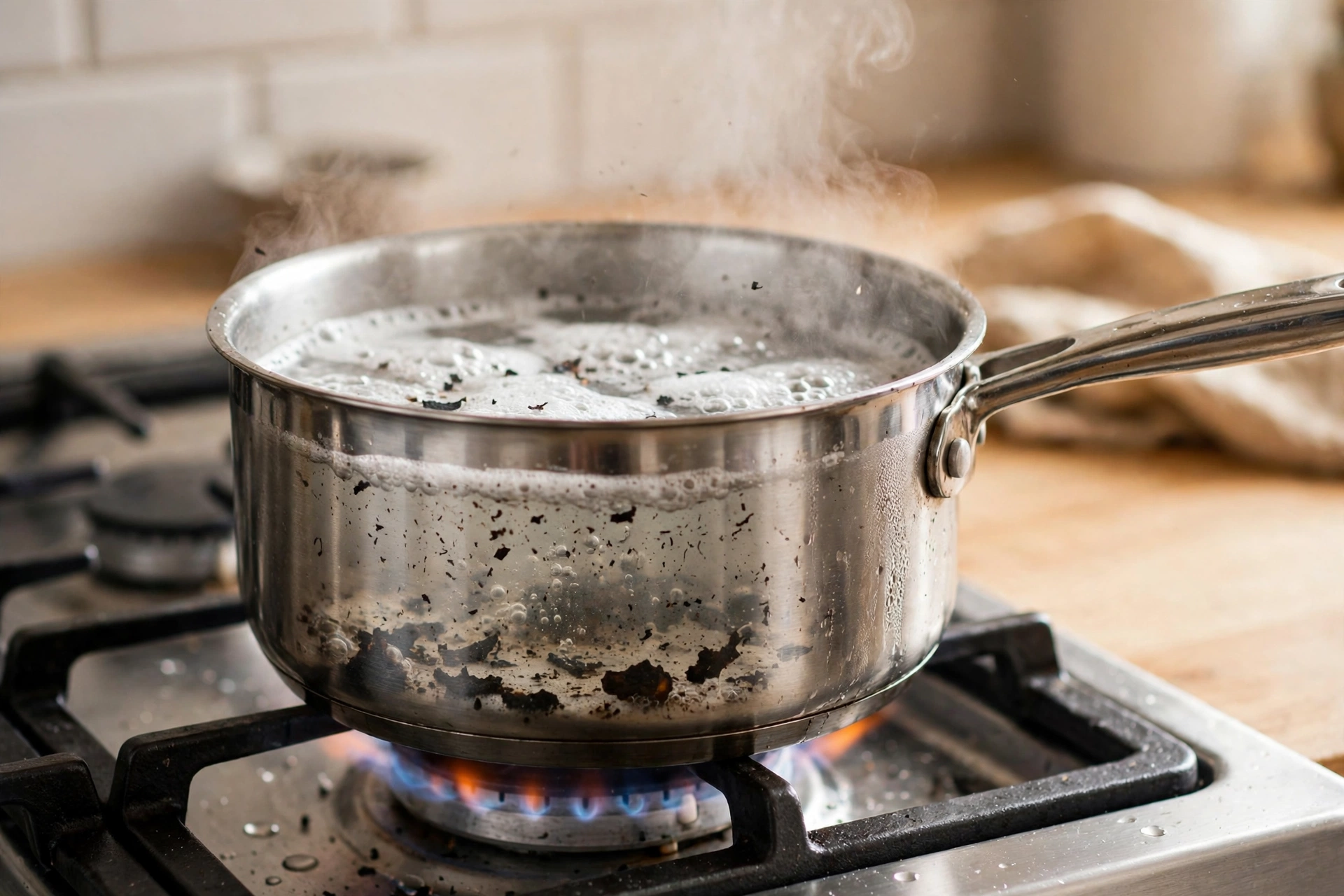
Take the pot off the heat, let it cool, pour out the dark water, and wipe the bottom with a soft sponge. Most of the burn comes away in soft sheets; for anything left, sprinkle dry baking soda on the spot and scrub gently. The same logic works on a glass stovetop too.
6. The Vinegar Boil
If the baking soda simmer leaves a thin, stubborn film behind, vinegar is the next step up. Its acidity dissolves burnt sugars and mineral deposits.
Pour white vinegar in to cover the burnt area, or a half-and-half mix. Warm it gently for 10 to 20 minutes — simmer, do not boil hard, and open a window: hot vinegar fumes are strong. Let it cool, pour it out, and wipe with a soft sponge. For a stubborn layer, do the vinegar boil first, then a baking soda simmer. Skip vinegar on raw cast iron, and do not leave it sitting in aluminium for hours.
7. The Overnight Baking Soda Paste
Some burns are too thick for a simmer — a solid black slab on the bottom. For those, time does more than heat. Make a paste of three parts baking soda to one part water, spread it over the burnt area, cover loosely, and leave it overnight — eight hours at least.
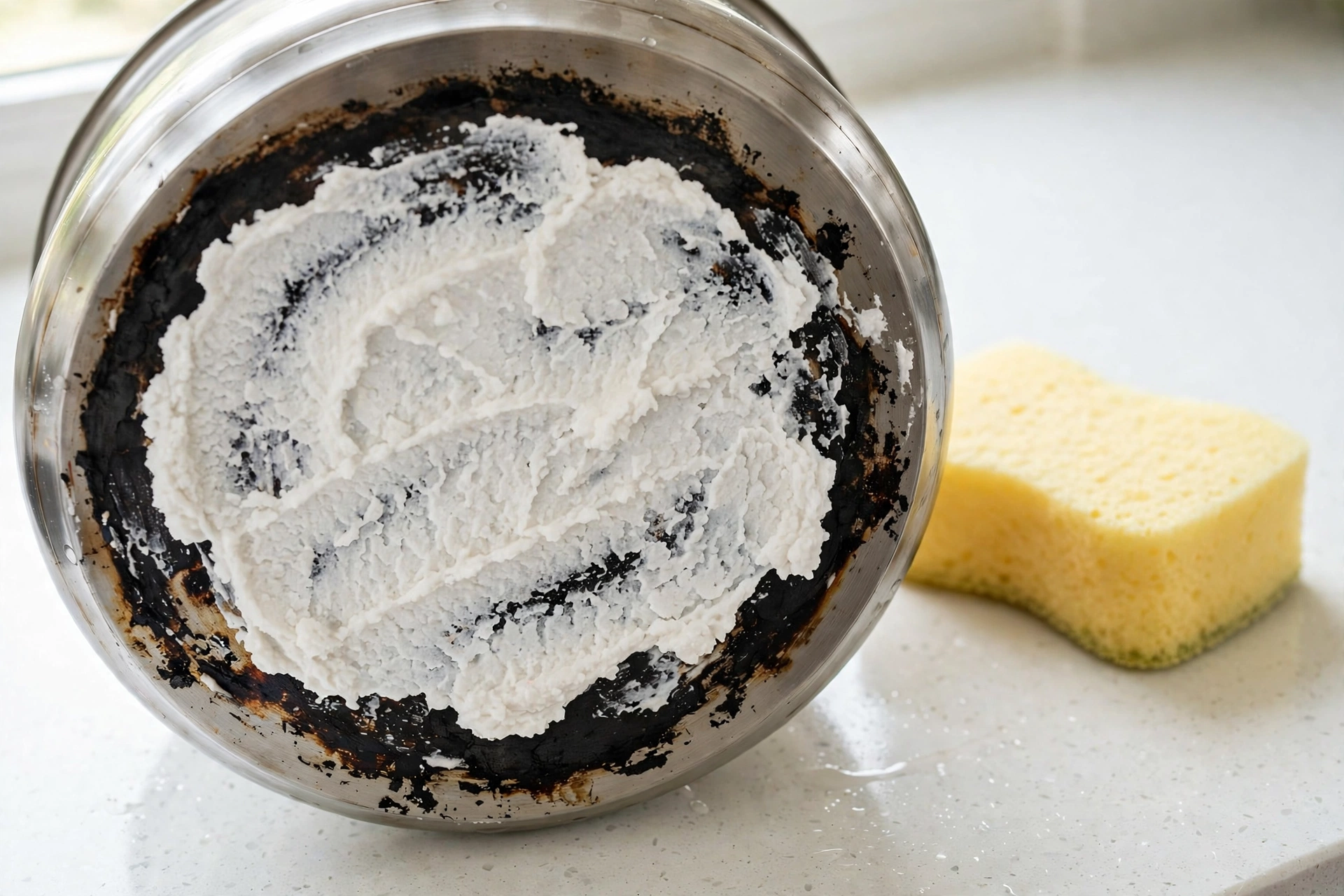
In the morning, the paste will have softened the carbon layer from underneath. Scrub gently with a soft sponge or nylon brush in small circles — the black layer should come away in damp crumbs. Rinse, dry, and check the bottom in good light. A second overnight paste fixes almost anything the first one leaves. Safe for stainless steel, enamel, and ceramic — not raw cast iron.
8. Cast Iron Needs Its Own Rules
Cast iron is the exception: its cooking surface is not metal, but seasoning, a thin layer of oil baked onto the iron. Soak it, and the seasoning softens and lifts.
For a burnt cast iron skillet: while the pan is still warm, scrape out the loose food with a wooden spoon. Add coarse salt and a splash of hot water, and scrub in circles with a stiff brush or folded cloth. Rinse quickly, dry the pan immediately on low heat — never leave cast iron to air-dry — and rub in a thin layer of oil while it is still warm.
9. Non-Stick: What Never to Do
Non-stick is the most delicate surface in the kitchen, and a burnt pot is the moment people destroy it. Once scratched or overheated, the coating stops being non-stick and can flake into food.
For a burnt non-stick pan, fill it with warm water and a little dish soap and soak for at least an hour. Then wipe gently with a soft sponge. If a spot remains, a short baking soda paste (an hour, not overnight) and a soft nylon spatula usually lift it. That is the whole toolkit: no steel wool, metal scrapers, scouring pads, oven cleaner, or boiling vinegar. If the coating is peeling or deeply scratched, retire the pan. If the oven door has taken the worst of the grease, our guide to cleaning grease off an oven door uses the same gentle-first approach.
10. Mistakes That Ruin Pots
Most burnt pots are ruined by the rescue attempt, not the burn:
- Steel wool as a first resort. It scratches steel, strips seasoning, and destroys non-stick.
- Cold water into a hot pot. Thermal shock can warp the base and crack enamel.
- Oven cleaner on cookware. It is made for oven walls, not surfaces that touch food.
- Bleach on stainless steel. Chlorine can pit and discolour it, and it does nothing to burnt food anyway.
- Scrubbing a dry, cold crust. Dry carbon is at its hardest. Soak or simmer first.
- Leaving a wet pot to dry on its own. Water spots on stainless steel are cosmetic, but on cast iron they are the start of rust. The same habit protects your shower head too.
11. Keeping Pots From Burning Again
The best way to clean a burnt pot is to not burn one. Match the burner to the pot. Preheat on medium, not high: most burning happens because a dry pot sat on full heat while the cook chopped one more onion. Stir starchy foods — rice, pasta, sauces — in the first few minutes, and add a splash of water or stock the moment something starts to stick.
A pot cleaned and dried after every use burns less — old grease carbonises faster than a clean surface. The same thinking runs through our home cleaning schedule: small, regular jobs beat one big rescue. And if sticky grease has spread beyond the pots, our guide to cleaning sticky kitchen cabinets tackles it on the doors nearest your stove.
Frequently Asked Questions
How do I clean a burnt pot without scratching it?
How to clean a burnt pot without scratching it comes down to soaking before scrubbing: fill it with hot soapy water for 30 minutes, then simmer water with baking soda for 10–15 minutes and wipe with a soft sponge. Use only wooden, silicone, or soft nylon tools — never steel wool.
Can I use vinegar and baking soda together on a burnt pot?
Yes, but one after the other, not mixed together. A vinegar boil loosens burnt sugars and mineral film; a baking soda simmer then lifts the remaining carbon. Mixed together they neutralise into salty water and fizz.
How do I clean a burnt non-stick pan?
Fill it with warm water and a little dish soap, soak for an hour, and wipe gently with a soft sponge. A short baking soda paste can help a stubborn spot, but never use steel wool, metal utensils, or oven cleaner on non-stick. If the coating is peeling, replace the pan.
How do I clean a burnt cast iron skillet?
Scrape out the loose food while the pan is warm, then scrub with coarse salt and a splash of hot water using a stiff brush. Rinse quickly, dry immediately on low heat, and rub in a thin layer of oil. Avoid long soaks, soap baths, and vinegar on raw cast iron — they strip the seasoning. If the garbage disposal or the dishwasher is adding to the smell, those have their own fixes.
Will baking soda damage my stainless steel pot?
No — baking soda is mildly abrasive and mildly alkaline, and it is safe on stainless steel, enamel, and ceramic coatings as a paste or a simmer. Avoid steel wool and chlorine bleach on stainless steel instead.
Conclusion
A burnt pot feels like a disaster, but it is almost always fixable with things you already own. Start with a hot soapy soak, step up to a baking soda simmer, bring in vinegar for burnt sugar, and save the overnight paste for the truly stubborn crusts. Match the method to the material, keep steel wool in the drawer, and let time and chemistry do the hard work.


