


You love the dog. You love the couch. The problem is that the couch now smells like the dog — a warm, stale, slightly greasy smell that hits you the moment you walk into the room, and that no amount of air freshener seems to fix.
That is because air freshener was never the answer. Dog smell in a couch is not one smell. It is body oils rubbed into the fabric every time your dog naps there, dander and hair worked into the seams, and — very often — an old accident or a drool spot that dried months ago and never really left. You need a vacuum with an upholstery attachment, baking soda, a pet-safe enzyme cleaner, clean towels, and a soft brush. The fix works in layers, from the surface down to the foam, and it takes about a day of mostly waiting.
Key Takeaways
How to get dog smell out of a couch: vacuum every surface, seam, and crevice with an upholstery attachment. Then sprinkle baking soda over the whole couch, leave it overnight, and vacuum it off in the morning. For urine, vomit, or drool spots, use a pet-safe enzyme cleaner: saturate the spot, keep it damp for the full dwell time on the label, and let it air dry completely. Wash removable covers on the warmest setting the care label allows. If the smell comes back, it has reached the cushion foam or the deck underneath, and that layer needs the same enzyme treatment.
Table of Contents
- Where the Smell Comes From
- Step 1: Vacuum
- Step 2: Baking Soda Overnight
- Step 3: Enzyme Cleaner
- Step 4: Wash the Covers
- Step 5: Foam and Deck
- Fabric Codes
- What NOT to Do
- Keeping It Away
- When to Call a Pro
- FAQ
- The Bottom Line
Where the Smell Comes From
A couch smells like dog for several reasons at once, and the fix depends on which one is doing the most damage.
| Source | Smell | How to tell | Fix |
|---|---|---|---|
| Body oils, dander | Warm, stale, “doggy” | Worst where the dog sleeps | Baking soda (Step 2) |
| Hair in seams | Musty, dusty | Visible hair in crevices | Vacuuming (Step 1) |
| Old urine | Sharp, ammonia-like | Flares on damp days | Enzyme cleaner (Step 3) |
| Drool, vomit | Sour, faintly sweet | Stiff or discolored patch | Enzyme cleaner (Step 3) |
| Dampness, mildew | Musty, basement-like | Spill never fully dried | Dry fully, then enzyme |
Not sure which one? Smell each cushion, then the foam, then the deck — the strongest point is where the smell lives. (If it is unmistakably skunk, that is a different problem — see how to get skunk smell off a dog.)
Step 1: Vacuum
Take everything off the couch: cushions out, pillows off, blankets away. Smell hides in layers — you cannot clean what you cannot reach.
Vacuum the whole couch with the upholstery attachment — cushions front and back, backrest, arms, and the deck underneath. Then use the crevice tool along every seam, piping, and the gap where the back meets the seat, where hair and dander collect. For the hair itself, see how to get pet hair out of a couch. Flip each cushion and vacuum the underside too.
Step 2: Baking Soda Overnight
Baking soda suits everyday dog odor — the warm, oily smell from body oils and dander. It absorbs oils and neutralizes the acids that carry the smell. It is not a cure for urine: baking soda cannot break down uric acid crystals, so if the smell is sharp and ammonia-like, skip ahead to Step 3 and come back to this one after.
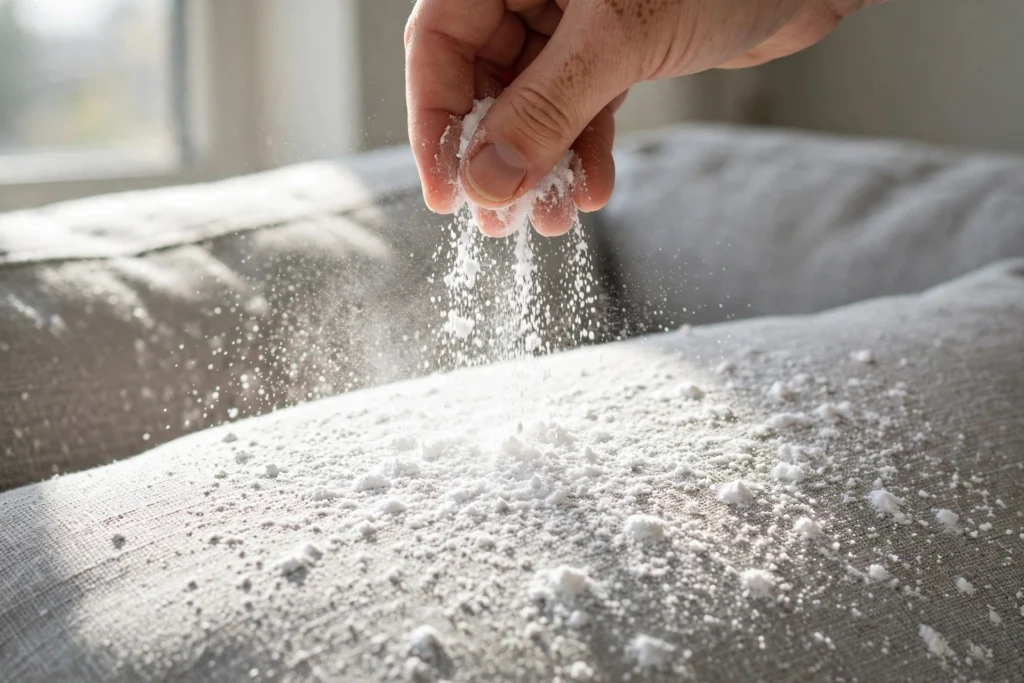
Sprinkle baking soda over every surface — seats, backrest, arms, and both sides of each cushion, about a quarter to a half cup per cushion. For the dog’s favorite spot, use a paste of equal parts baking soda and cornstarch, just wet enough to spread. Leave it overnight, eight hours minimum. In the morning, vacuum it all off, twice over each section. If the smell is lighter but still there, repeat once.
Step 3: Enzyme Cleaner
If the smell is sharp, sour, or ammonia-like, baking soda will not finish the job. Urine, vomit, and drool contain proteins — and urine adds uric acid crystals that dry into the fibers and reactivate when the cushion gets warm or damp. Only an enzyme cleaner breaks those down. (The same method works on carpet — see how to get pet urine smell out of carpet.)
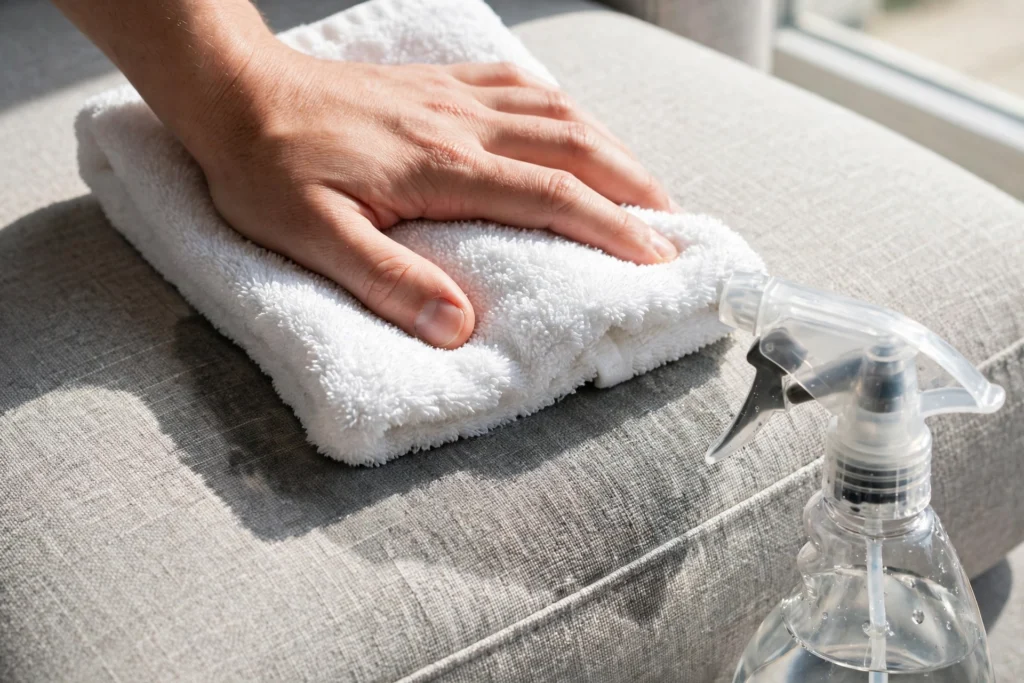
For W and WS fabrics only — S and X need a professional, not a water-based spray — blot up moisture, then saturate the spot. Soak it: the cleaner must reach as deep as the urine did, into the top of the foam. Cover the wet area loosely with plastic wrap so it stays damp, and leave it for the full dwell time on the label, usually 8 to 24 hours. Enzymes stop working the moment they dry out. Then remove the plastic and let it air dry completely — no fan, no hair dryer, no heater: heat sets protein stains and stops the enzymes early. Once fully dry, vacuum and do the nose test again; deep or old spots may need a second round. The same blot-don’t-rub rule applies to drool spots and to visible stains like chocolate on a sofa.
Step 4: Wash the Covers
If your cushion covers unzip, wash them. This is the single most effective step for a couch that smells like dog all over, because covers hold the worst of the odor — they get the most direct contact, every single day.
Wash on the warmest setting the care label allows, with normal detergent plus half a cup of white vinegar in the rinse. The vinegar breaks down the fatty acids in dog oils, and leaves no smell of its own once dry. Do not use fabric softener: it coats the fibers and traps odor in. Air dry if you can, and put covers back only when covers and foam are completely dry.
Step 5: Foam and Deck
If you have done Steps 1 through 4 and the smell still comes back, especially on humid days, it has reached the foam or the deck underneath the cushions. Surface cleaning will never fix that, because the source is underneath the area you treated.
Unzip a cushion cover and smell the foam insert alone. If the foam is the problem and it comes out, take it outside, soak the spot with enzyme cleaner, and let it dry fully in the sun.
Then smell the deck, the platform under the cushions — urine often pools there. Wipe it with enzyme cleaner, let it sit for the label’s dwell time, blot, and let it dry fully. If the foam is glued in or the deck is upholstered, a professional with a hot-water extraction machine earns their fee.
Fabric Codes
Every couch has a cleaning code on a tag, usually under a cushion. It decides what you may use — getting it wrong can damage the fabric. The same codes govern other upholstery jobs — see how to clean a fabric headboard.
| Code | Meaning | What you can use |
|---|---|---|
| W | Water-based cleaners OK | Enzyme spray, baking soda paste, damp cloth |
| S | Solvent-based only | Dry cleaning solvent only |
| WS | Water or solvent | Either approach; enzyme spray is fine |
| X | Vacuum only | Vacuum and brush only — call a professional |
No tag? Treat the couch as S and spot-test on a hidden area first. Wait for it to dry fully before judging — marks and color changes sometimes only show once dry.
What NOT to Do
Four mistakes turn a fixable smell into a permanent one. No ammonia-based cleaners — ammonia smells like urine to a dog and can encourage marking the same spot again. No steam before the enzyme treatment — heat sets protein stains and odors permanently. Do not drown the foam — flooding a cushion turns a smell problem into a mildew problem, because foam dries slowly. And do not mix cleaners: vinegar and bleach create toxic gas, and bleach kills the enzymes in an enzyme cleaner.
Keeping It Away
Getting the smell out is half the job; keeping it out is mostly habit.
| Habit | How often | Why it works |
|---|---|---|
| Vacuum the couch | Weekly | Removes dander and hair before they sink in |
| Wash removable covers | Monthly, or after any accident | Covers hold most of the odor |
| Baking soda sprinkle and vacuum | Monthly | Stops body-oil odor building up |
| A washable throw on the dog’s spot | Wash weekly | The throw takes the oils instead of the couch |
| Groom the dog before couch time | After walks | Less loose hair and dander on the fabric |
The washable throw is the best move here: a ten-dollar blanket, washed weekly, protects a couch that costs a thousand. For the rest of the house, see 15 simple ways to remove bad smells from your home.
When to Call a Pro
Call a professional if the smell has survived two full rounds of enzyme treatment, if more than one cushion is affected, if urine has reached foam that cannot be removed, or if the fabric is silk, velvet, wool, or bouclé. Also call one if the smell suddenly appeared in a dog that never had accidents — a change in toileting habits can be a health issue, and that is a vet visit first.
FAQ
Can I use vinegar to get dog smell out of a couch?
Yes, for fresh accidents and light odor: white vinegar and water, one-to-one, neutralizes ammonia. But vinegar cannot break down uric acid crystals, so old urine smell needs an enzyme cleaner.
How long does baking soda need to sit on a couch?
At least 15 to 30 minutes for a light refresh; overnight, eight hours or more, for real dog odor. The longer it sits, the more body oil it absorbs. Vacuum thoroughly afterward.
Why does the smell come back when it rains?
Humidity reactivates dried uric acid crystals from old urine. They sit dormant in the fibers and foam, then release their smell when damp or warm. The smell has reached deeper than the fabric — treat the foam and deck too.
Is it safe to use enzyme cleaner on all couches?
No. Enzyme cleaners are water-based, so they suit W and WS fabrics, not S (solvent-only) or X (vacuum-only). Check the code tag under a cushion first, and spot-test on a hidden area.
My dog keeps peeing on the same couch cushion. How do I stop it?
Clean the spot with enzyme cleaner until no trace of the smell remains — to a dog’s nose, leftover urine smell is an invitation to go there again. Then block access for a week or two, and check with your vet: sudden accidents can signal a urinary infection.
The Bottom Line
A couch that smells like dog is not ruined — it is layered. Vacuum out the hair and dander, let baking soda work overnight, and use an enzyme cleaner on anything biological, keeping it damp for the full dwell time. Wash the covers, treat the foam and deck if the smell returns, and put a washable throw on the dog’s spot.


