

Key Takeaways
How to clean a range hood filter: pull the metal mesh or baffle filter out, soak it in very hot water with dish soap and baking soda for 30 to 60 minutes, then rinse and dry it completely before refitting. Charcoal filters are the one exception — they cannot be washed and must be replaced.
Table of Contents
- Why Your Range Hood Filter Matters
- Know Which Filter You Have
- What You’ll Need
- The 3 Methods at a Glance
- Method 1: The Hot Soapy Sink Soak
- Method 2: The Baking Soda Boil
- Method 3: The Dishwasher (With Conditions)
- Charcoal Filters: Replace, Don’t Wash
- What NOT to Do
- How Often to Clean Your Filter
- Frequently Asked Questions
- Conclusion
1. Why Your Range Hood Filter Matters
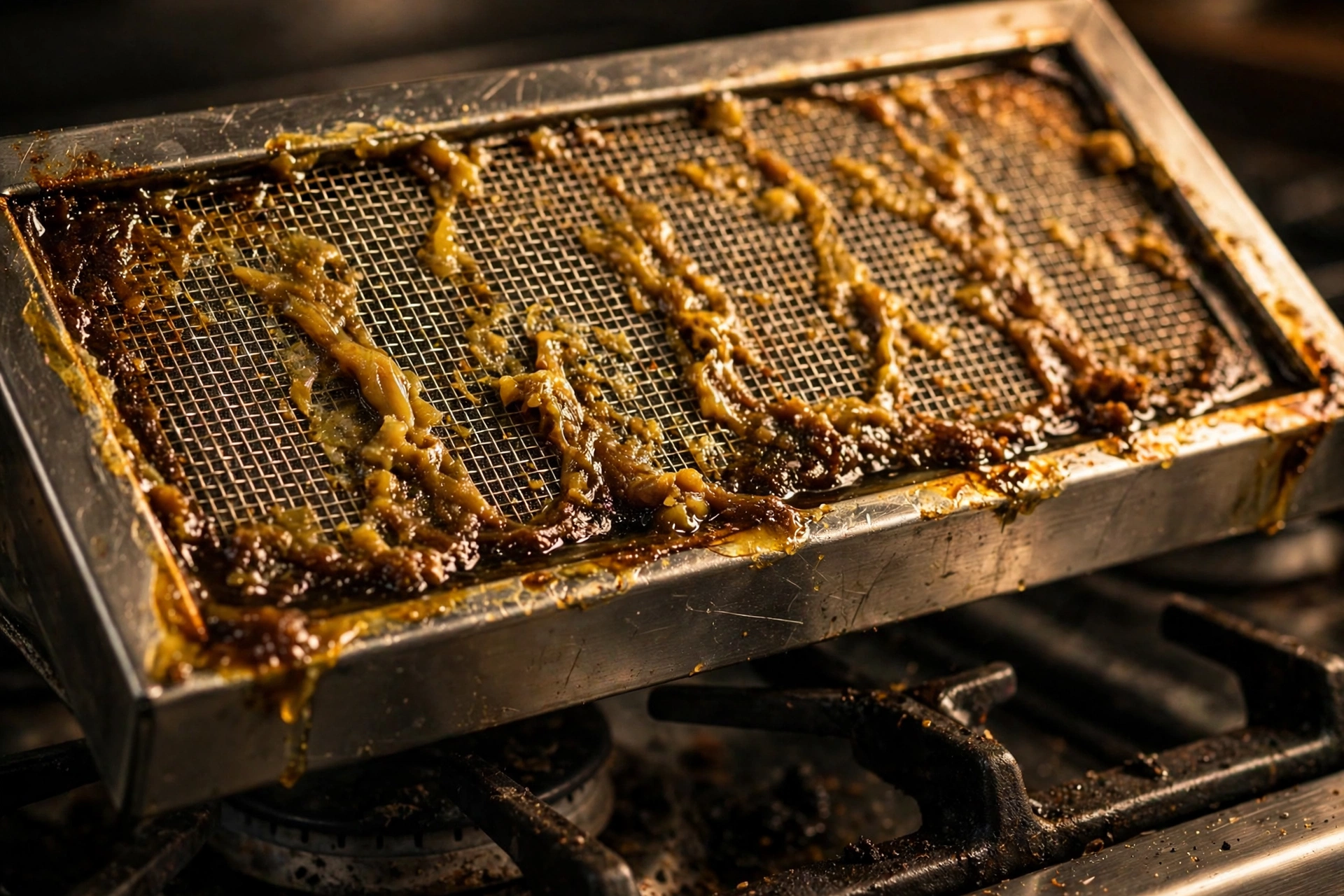
That flat metal panel above your stove is not decoration — it catches the grease. Every time you fry, sear, or simmer, hot air rises through the filter, and the grease in that air sticks to the mesh or baffle slats instead of coating your cabinets, your ceiling, and the inside of the hood.
Left alone, a greasy filter slowly chokes the hood: airflow drops, steam and smells hang in the kitchen, and the fan works harder and louder. Grease-soaked filters are also a fire risk — fat deposits in a metal filter can catch fire.
The good news: cleaning a range hood filter is one of the easiest kitchen jobs there is. It is a soak, not a scrub — hot water and dish soap do the work. If you have ever soaked oven racks overnight instead of scrubbing them, this is the same idea on a smaller scale.
2. Know Which Filter You Have
Before you touch water, work out which type your hood uses — they look similar but are treated very differently.
| Filter type | What it looks like | Can you wash it? |
|---|---|---|
| Aluminum mesh | Flat panel of fine metal mesh, light in the hand | Yes — soak and rinse |
| Stainless steel mesh | Heavier flat mesh panel, shinier finish | Yes — soak and rinse |
| Baffle filter | Thick panel with curved metal slats and a drip tray | Yes — soak and rinse |
| Charcoal (carbon) filter | Dark, fibrous pad behind the metal filter | No — replace it |
Most hoods use one metal grease filter — mesh or baffle — and that is the washable one. Charcoal filters appear only on ductless hoods, behind the metal filter, to absorb odors; they cannot be cleaned, and soaking one ruins it. If you are unsure, check the hood’s manual first.
3. What You’ll Need
You probably own everything already: rubber gloves, grease-cutting dish soap, baking soda, a soft sponge, a nylon brush or old toothbrush for the corners, a kitchen towel, and a sink big enough to lay the filter flat.
Notably absent: oven cleaner, ammonia, steel wool, and scouring pads. Hood manufacturers warn against spray cleaners and anything abrasive — they scratch hood surfaces and filter coatings. The soak does the work; you do not need harsh chemistry.
4. The 3 Methods at a Glance
| Method | Best for | Time | Risk |
|---|---|---|---|
| Hot soapy sink soak | Most filters, regular cleaning | 30–60 min soak | Almost none |
| Baking soda boil | Heavy, sticky, months-old grease | 15–20 min simmer | Keep water below a rolling boil |
| Dishwasher | Stainless filters cleaned often | One cycle | Never for aluminum |
5. Method 1: The Hot Soapy Sink Soak
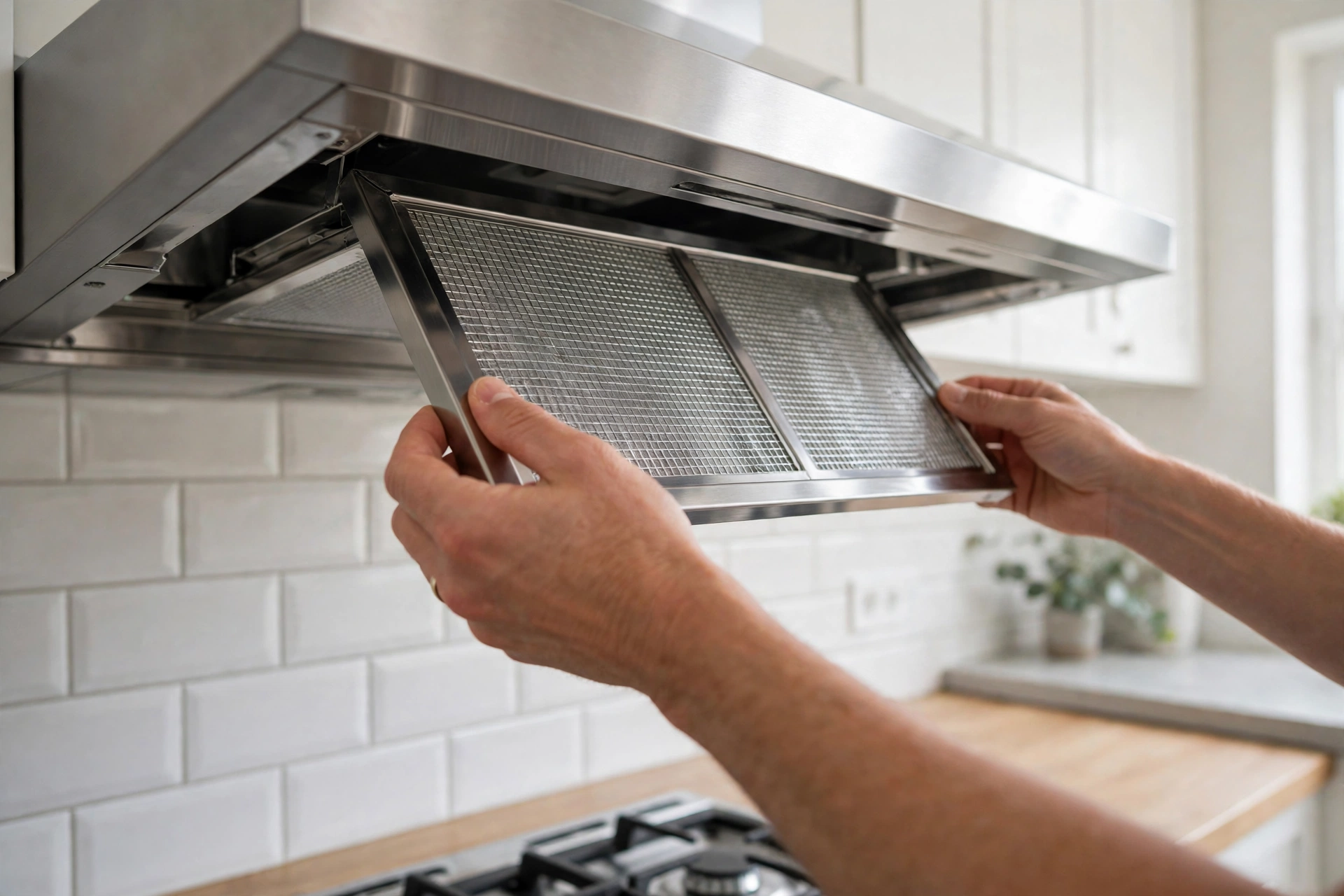
Switch the hood off and let it cool — fan, lights, and hot bulbs. If the filter is dripping grease, slide an old towel underneath first. Support it with one hand as you open the latch, and hold it flat as you lift it out so grease does not drip on the cooktop.
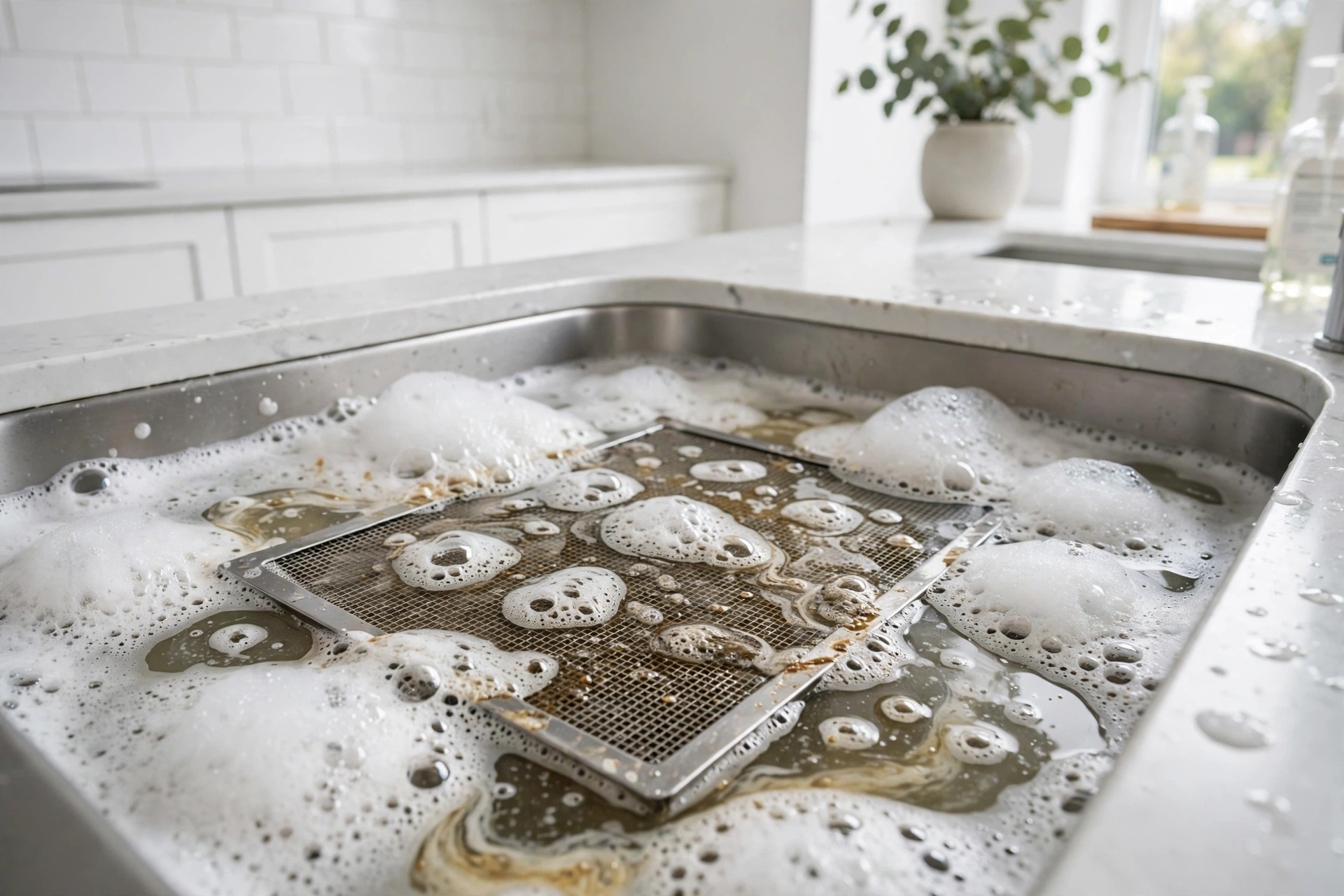
Fill the sink with the hottest tap water you can get, a healthy squirt of grease-cutting dish soap, and half a cup of baking soda. Lay the filter in flat, fully submerged, for 30 to 60 minutes — hot water liquefies the grease, the soap lifts it, and the baking soda helps break the fat down.
After the soak, wash the filter with your sponge in the same soapy water. If a patch of grease holds on, give it a light pass with the nylon brush — but never scrub mesh hard; it tears or warps until the filter no longer sits flat.
Drain the greasy water, rinse the filter under hot water, and set it in a dish rack to air dry. While it dries, wipe the inside of the hood with hot soapy water — the same grease is on those surfaces too. Only refit it once completely dry; a damp filter traps moisture and invites corrosion.
6. Method 2: The Baking Soda Boil
For a filter untouched for months — sticky, dark, almost tacky — a sink soak may not be enough. Bring out a pot.
Fill a large stainless steel or enameled pot with water, add half a cup of baking soda and a squirt of dish soap, and bring it to a gentle simmer — not a rolling boil. Lower the filter in with tongs and simmer for 15 to 20 minutes; the heat plus the alkaline water dissolves grease a sink soak leaves behind.
Lift it out with tongs, rinse under hot water, and wipe with a soft sponge. Too big for the pot? Simmer one half, flip it, and simmer the other. Never boil an aluminum mesh filter for long — prolonged high heat dulls and discolors it.
7. Method 3: The Dishwasher (With Conditions)
Some filters can go in the dishwasher — the laziest option for a regularly cleaned filter. But three conditions matter.
First, it must be stainless steel. Aluminum mesh discolors and corrodes in dishwasher detergent, which attacks the soft metal and leaves it dull grey and pitted. If the manual does not say dishwasher-safe, do not risk it.
Second, it must be a filter you clean often — a dishwasher cycle is a maintenance wash, not a rescue mission.
Third, place it flat on the bottom rack, angled so water drains through the mesh, and run a normal cycle; skip the heated dry if you can. If your dishwasher itself smells, our guide to getting rid of dishwasher smell starts with the filter.
8. Charcoal Filters: Replace, Don’t Wash
If your hood is ductless — no vent outside — it almost certainly has a charcoal filter behind the metal one, absorbing cooking odors as air recirculates back into the kitchen.
Water destroys that: a soaked charcoal filter clumps and never absorbs odors again. Manufacturers are blunt: charcoal filters are not washable — replace them every one to three months. Match the model number exactly when you buy one; a filter that does not fit leaves gaps where unfiltered air slips past.
9. What NOT to Do
| Mistake | Why it hurts |
|---|---|
| Steel wool or scouring pads | Scratches mesh, strips coatings, invites rust |
| Oven cleaner spray | Harsh fumes, residue hides in the mesh |
| Ammonia soak | Corrosive, toxic fumes, damages aluminum |
| Aluminum filter in the dishwasher | Detergent discolors and corrodes the metal |
| Washing a charcoal filter | Destroys the carbon structure for good |
| Scrubbing mesh hard | Tears or warps thin mesh so it no longer sits flat |
| Refitting a wet filter | Traps moisture, starts corrosion inside the hood |
| Vinegar in a baking soda soak | The acid neutralises the baking soda — you cancel both |
Vinegar and baking soda fizz impressively together, but mixed they neutralise into salty water — use one or the other, never both.
10. How Often to Clean Your Filter
| Situation | How often |
|---|---|
| Everyday cooking, frying often | Monthly |
| Light cooking, mostly boiling and baking | Every 2–3 months |
| Heavy frying, wok cooking, lots of oil | Every 2–4 weeks |
| Charcoal filter replacement | Every 1–3 months |
A monthly soak is the sweet spot: one month of grease wipes off in minutes; a year of it needs a pot and a simmer. Add the filter to a deep clean of your kitchen — five minutes of hands-on time.
Frequently Asked Questions
How often should I clean my range hood filter?
Monthly for most kitchens; every two to four weeks if you fry often or cook with a wok. Light cooks can stretch it to two or three months — hold the filter up to the light, and if you cannot see through the mesh, it is overdue.
Can I put my range hood filter in the dishwasher?
Only if it is stainless steel and the manual says dishwasher-safe. Never put an aluminum mesh filter in — the detergent discolors and corrodes the metal. Charcoal filters must never go in either; they cannot be washed.
What is the best way to clean a really greasy range hood filter?
The baking soda boil in Method 2: simmer the filter with half a cup of baking soda and a squirt of dish soap for 15 to 20 minutes, then rinse and wipe. For a filter that is greasy but not ancient, the sink soak in Method 1 is enough.
How do I know if my filter is charcoal or metal?
A metal filter is a rigid panel of mesh or slats. A charcoal filter is a dark, fibrous pad — soft, almost like thick felt — behind the metal filter on ductless hoods. If it bends easily and looks like dark fabric, it is charcoal: replace it, do not wash it.
Why does my kitchen still smell after cleaning the filter?
Because the grease is not only on the filter. Wipe the inside of the hood, the drip tray, and around the fan while the filter dries. If the smell comes from the cooktop, the grease on the stovetop is the culprit; if the fan still seems weak, the duct or fan blades may need a wipe too.
Conclusion
I will be honest: my own range hood filter went untouched for far too long. I wiped the stovetop, I cleaned the oven, I even soaked the racks — and the filter just sat there, quietly getting darker, until the fan started sounding like it was working twice as hard. The first time I dropped it in a sink of hot soapy water, the water turned brown in minutes.
Now it is a monthly five-minute job: filter out, sink soak, rinse, dry, refit. No scrubbing, no harsh chemicals — just hot water, dish soap, and baking soda. Do it tonight while dinner is cooking.


