
Key Takeaways
How to clean a fabric sofa: read the care code on the tag first, vacuum the whole sofa, spot-test your cleaner on a hidden patch, then clean section by section with a barely damp cloth — never soaking the fabric. Water on an S-coded sofa leaves permanent marks.
Table of Contents
- 1. Why Your Sofa Needs More Than a Vacuum
- 2. Read the Cleaning Code First
- 3. What You’ll Need
- 4. The Weekly 5-Minute Reset
- 5. The Monthly Deep Clean, Step by Step
- 6. Cleaning by Fabric Type
- 7. Spot Stains the Right Way
- 8. Deodorising Without Damaging the Fabric
- 9. What NOT to Do
- 10. How Often to Clean Your Sofa
- Frequently Asked Questions
- Conclusion
1. Why Your Sofa Needs More Than a Vacuum
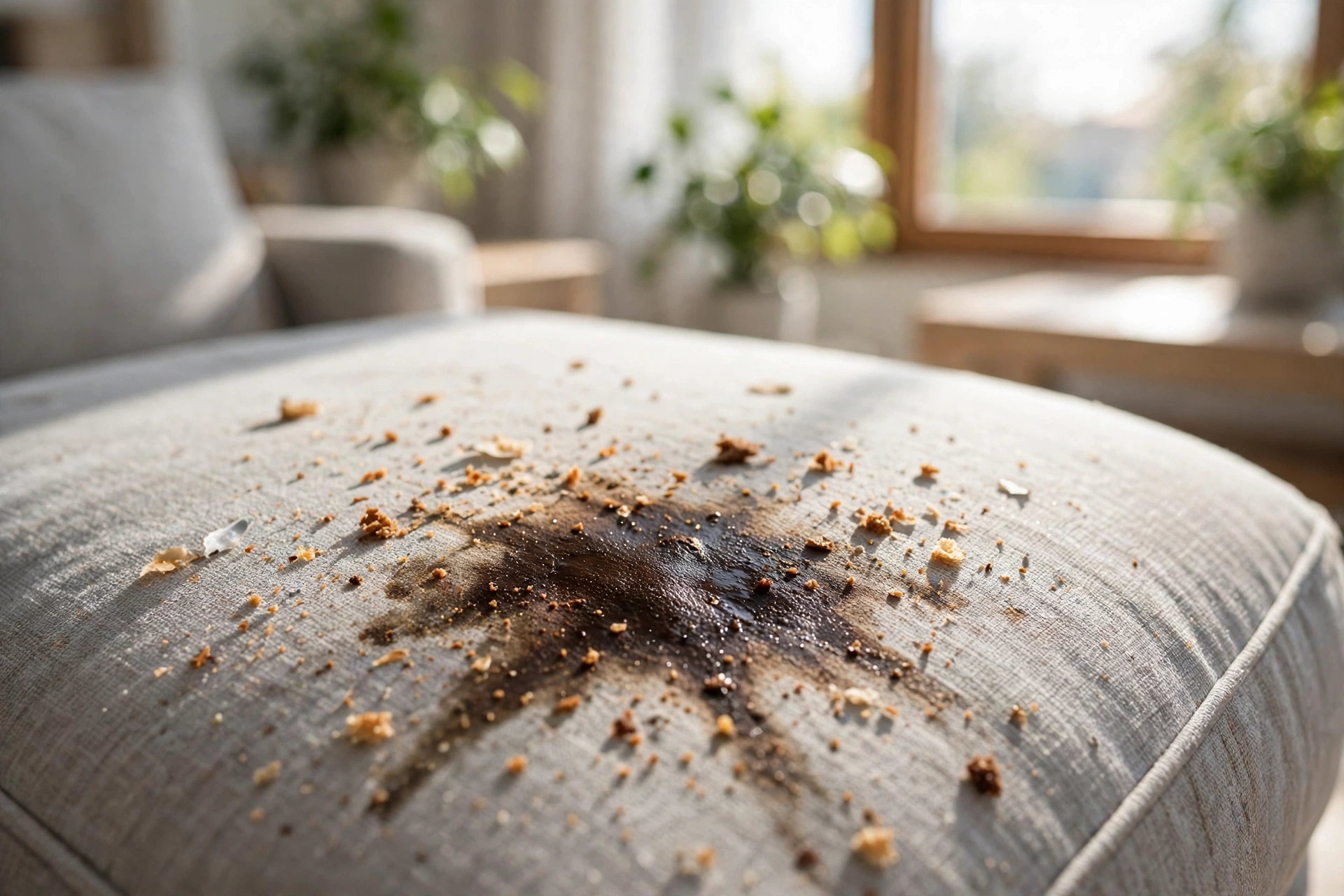
Your sofa takes more daily wear than almost anything else at home. It catches crumbs, pet hair, body oils, spills, and dust — and unlike a hard floor, fabric holds onto all of it. A quick vacuum helps, but never lifts the grime worked into the fibres. Cleaning a fabric sofa is mostly a gentle job: know your fabric, use very little moisture, and work in small sections so you never leave a tide mark.
2. Read the Cleaning Code First
Almost every sofa has a care tag, usually under a seat cushion or along the frame. It carries a cleaning code — one letter that tells you exactly what is safe.
| Code | Meaning | Safe to use |
|---|---|---|
| W | Water-based cleaners only | Water, mild detergent |
| S | Solvent-based cleaner only | Dry-cleaning foam, no water |
| WS or SW | Water or solvent cleaners | Either, with care |
| X | Vacuum only | No liquid at all |
Water on an S-coded sofa leaves permanent marks, and a solvent cleaner on a W-coded sofa can strip the colour. An X-coded sofa should never see a damp cloth. No tag? Treat it as S-coded and clean dry.
3. What You’ll Need
You probably own most of this already: a vacuum with an upholstery attachment and crevice tool, a soft-bristle brush, white microfiber cloths, a spray bottle, mild dish soap, baking soda, and — for S-coded sofas — dry-cleaning foam. Gather it before you start.
Leave out bleach and all-purpose sprays. Most fabric damage is caused by the wrong cleaner, not by too little scrubbing.
4. The Weekly 5-Minute Reset
Five minutes a week beats an hour of rescue cleaning every few months.
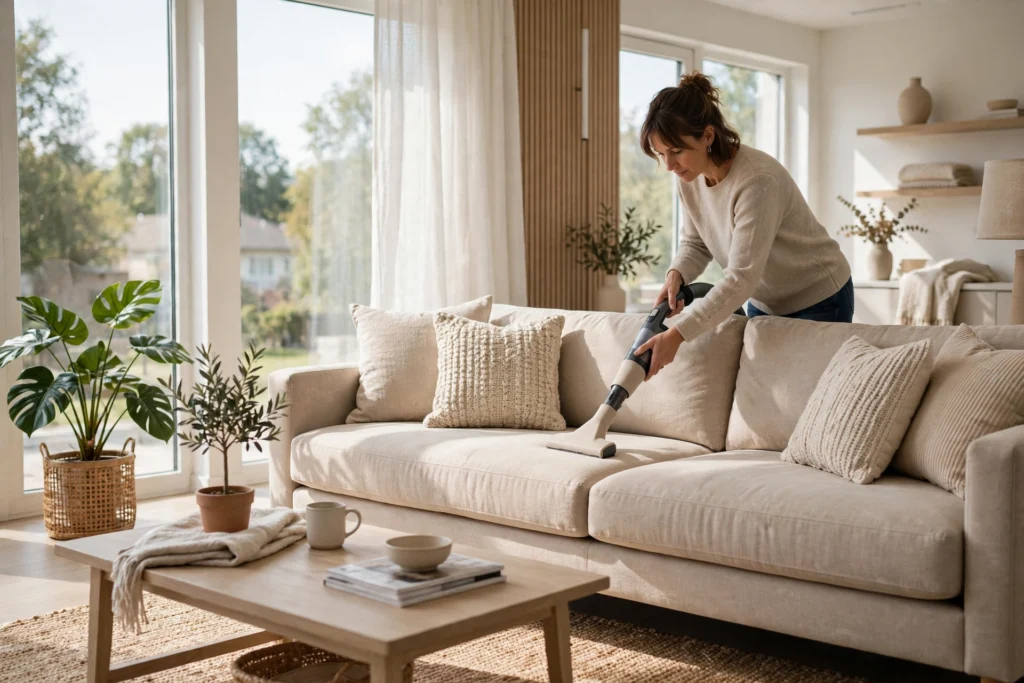
Remove the cushions and vacuum every surface — seats, back, arms, and the crevices where the arms meet the seat. Use the crevice tool along the seams and under the cushions, where crumbs and grit hide. Then brush the whole sofa in overlapping strokes to lift pet hair and dust the vacuum missed.
If the sofa smells lived-in, a light sprinkle of baking soda helps on many W and WS fabrics: scatter a thin layer, leave it for 20 to 60 minutes, then vacuum slowly. Skip it on S or X codes and on velvet.
5. The Monthly Deep Clean, Step by Step
Once a month — or every few weeks if the sofa gets heavy use — give it a proper clean. The method below is for W and WS fabrics; for S-coded sofas, use dry-cleaning foam instead and follow the same pattern.
Step 1: Vacuum thoroughly. Do the full weekly reset first — cleaning over dry dirt makes muddy streaks.
Step 2: Spot-test your cleaner. Mix a few drops of mild dish soap into warm water. Apply a little to a hidden spot — the back lower hem, or under a cushion — and blot with a white cloth. Wait until fully dry and look for darkening, colour loss, or stiffness. If anything looks different, stop.
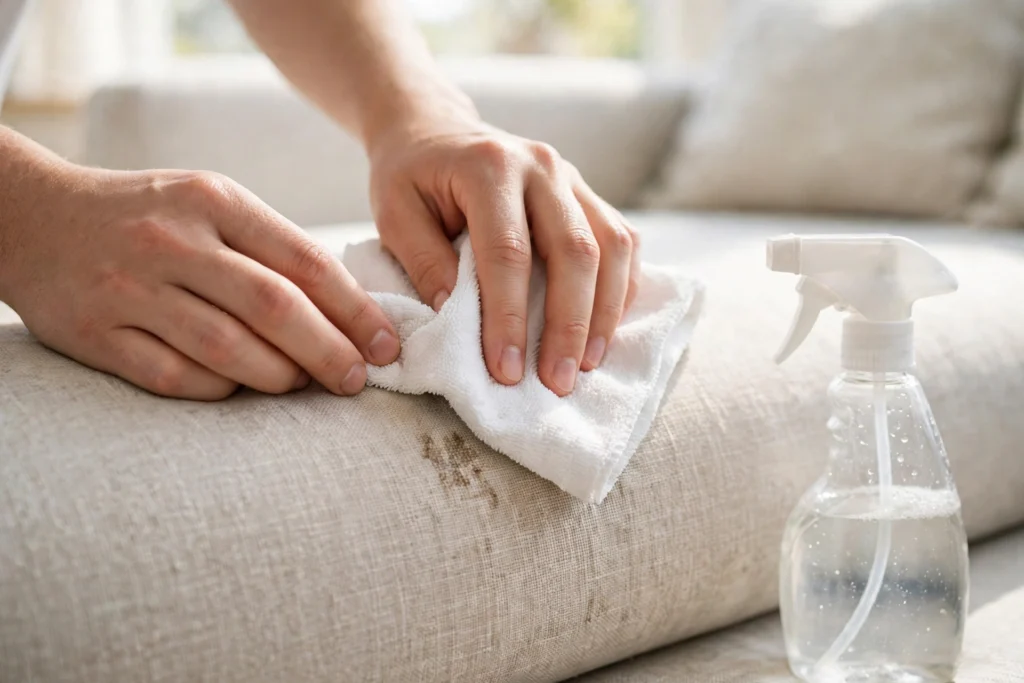
Step 3: Clean in sections. Mist the cloth with your solution, or dip it and wring it out until it is barely damp — if it drips, it is too wet. Wipe one section at a time: one cushion, one arm, one part of the back. Work in the direction of the weave, dabbing rather than scrubbing, and clean whole panels from seam to seam — spot-cleaning one small area is how tide marks happen.
Step 4: Rinse-dab each section. Go over the section again with a cloth dampened in plain water to lift out the soap, then blot dry. Leftover soap attracts dirt.
Step 5: Dry with good airflow. Open windows or aim a fan across the sofa. Stand cushions on edge so air reaches both sides. Do not sit on it until it is fully dry.
6. Cleaning by Fabric Type
Not all fabrics behave the same — match your approach to the material as well.
| Fabric | Best approach | Watch out for |
|---|---|---|
| Cotton | Light, even cleaning over a wide area | Shows rings if soaked |
| Linen | Gentle dabbing, minimal moisture | Water-marks easily |
| Microfiber | Mist lightly, buff dry | Fibres flatten when wet |
| Polyester | Most forgiving | Holds onto oily stains |
| Velvet | Dry brush and vacuum only | Water crushes the pile |
| Wool blends | Barely damp cloth | Shrinks if soaked or scrubbed |
7. Spot Stains the Right Way
Fresh spills are always easier than old ones. The rules are the same for every stain: blot, never rub; work from the outside toward the centre; and use the least moisture that gets the job done.
| Stain | First move | Method |
|---|---|---|
| Coffee or tea | Blot at once with a dry cloth | Mild soap solution, dab and rinse-dab |
| Red wine | Blot, then sprinkle salt | Mild soap once the salt is vacuumed off |
| Grease or body oil | Baking soda, leave 30 minutes | Vacuum, then mild soap on the residue |
| Mud | Let it dry completely first | Vacuum off the dried mud, then spot-clean |
| Pet accident | Blot up as much as possible | Mild soap, then a plain-water rinse-dab |
| Ink | Dab with rubbing alcohol on a cloth | Test first — alcohol can lift dye |
Dried mud is easier than wet mud: scrubbing wet mud pushes it deeper, while dried mud mostly vacuums off. Also, if the stain is a wet mess rather than a spot, the drying matters as much as the cleaning — drying a wet couch properly stops mildew from setting in. The same blot-and-dab approach works for crayon marks and nail polish too, and dog smell needs the odour treated at the source.
8. Deodorising Without Damaging the Fabric
A sofa can look clean and still smell like everything that has happened on it. The fix is gentle, not chemical. Baking soda is the workhorse: a thin sprinkle over W and WS fabrics, left for 30 minutes or overnight, then vacuumed slowly. It absorbs odours rather than covering them. Clean any spill first — deodorising over a dirty patch just locks the smell in.
What does not work: spraying air freshener or fabric spray onto the cushions. It masks the smell for an afternoon and leaves a residue that attracts more dirt. Never steam-clean a fabric sofa unless the care tag and the manufacturer both say it is safe.
9. What NOT to Do
Most ruined sofas were ruined by a well-meaning shortcut. Keep this list in mind until the routine is habit.
- Never soak the fabric. Water in the filling leaves rings and can grow mildew.
- Never use bleach or harsh cleaners. They strip colour and weaken fibres.
- Never use water on S or X fabrics. The code is on the tag for a reason.
- Never scrub in circles with a stiff brush. It pills the fabric.
- Never use coloured cloths. Dye transfers onto damp fabric — white cloths only.
- Never skip the spot test. Every cleaner, every time, including the one that worked last year.
- Never use a hair dryer or heater to speed drying. Heat sets stains. Airflow, not heat.
10. How Often to Clean Your Sofa
The right schedule depends on how the sofa is used, but this is a solid starting point.
| Task | How often | More often if… |
|---|---|---|
| Vacuum and brush | Weekly | Pets or kids at home |
| Baking soda deodorise | Monthly | Pets at home |
| Full deep clean | Every 3–6 months | Daily-use family sofa |
| Spot-clean spills | Immediately | Everyone |
| Professional clean | Once a year | Light sofas, allergies |
A sofa that gets a five-minute vacuum every week and a proper deep clean twice a year will outlast one that gets ignored for a year and then attacked with a rented machine.
Frequently Asked Questions
Can I use a carpet cleaner on a fabric sofa?
Only if the care code is W or WS and the machine has an upholstery attachment with a gentle setting. Use the least water the machine allows and dry the sofa with good airflow. Never use one on S or X coded sofas.
How do I clean a fabric sofa without a machine?
A vacuum, a spray bottle, mild dish soap, and white microfiber cloths are all you need. Vacuum first, spot-test, then clean section by section with a barely damp cloth.
Why did my sofa get water marks after cleaning?
Water marks happen when one area gets wetter than the fabric around it, or when soap is left in the fibres. Clean whole panels from seam to seam, and rinse-dab the soap out. A fan helps it dry evenly.
How do I get pet hair off a fabric sofa?
Vacuum with the upholstery attachment first, then go over the fabric with a slightly damp rubber glove — the hair clumps together and lifts off easily. A weekly vacuum is the real fix.
Is it safe to use vinegar on a fabric sofa?
Only on W or WS fabrics, diluted, and only after a spot test. It can discolour certain dyes, and should never be used on velvet, wool blends, or S-coded fabrics.
Conclusion
Cleaning a fabric sofa is not a big job once you know the rules — read the tag, vacuum first, spot-test, and clean gently in sections with barely any water. Mine gets the five-minute weekly vacuum and a proper deep clean every few months, and it still looks like the day it arrived.
The weekly habit matters most. A sofa vacuumed every week rarely needs rescuing, and when a spill happens, you already know the code, the cleaner, and the cloth to reach for. Start with the tag today.
If this guide helped, you may also like these cleaning guides: How to Dry a Wet Couch Fast (Without Growing Mold) · How to Get Dog Smell Out of Couch · How to Clean a Burnt Pot

