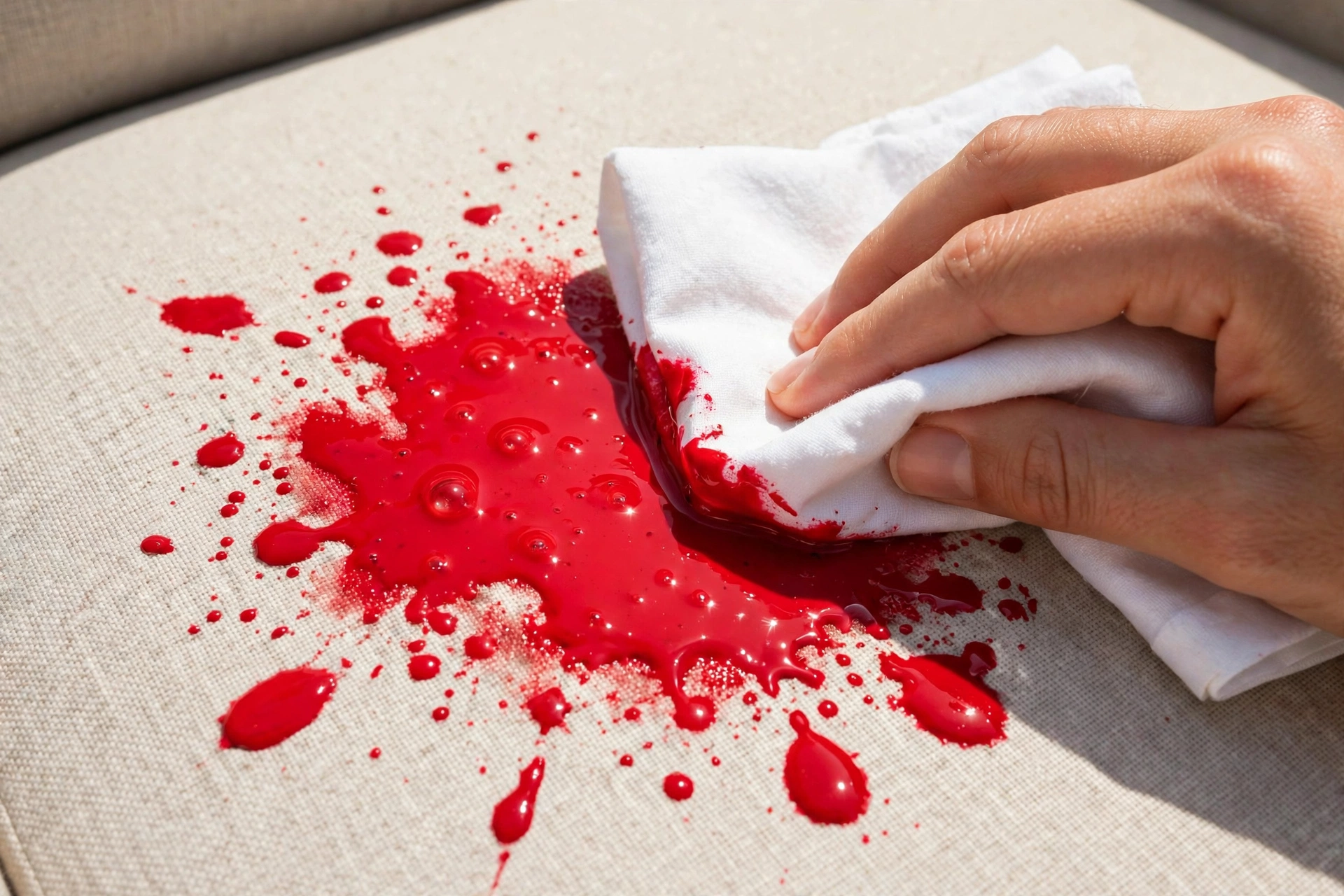

A bottle of nail polish tips over on the couch, and your stomach drops. It’s bright, it’s sticky, and it looks permanent. The good news: most nail polish comes out of upholstery just fine — if you treat it in the right order. The bad news is that the first thing most people grab, nail polish remover, is also the thing most likely to leave a pale bleached ring where the stain used to be.
Key Takeaways
How to get nail polish out of a couch: blot (never rub) the wet polish first, then check the cleaning code on the tag. Lift dried polish gently with a spoon edge, then dab from the outside in with rubbing alcohol on a clean white cloth, switching to a clean part of the cloth as the color transfers. Use acetone-based remover only after a patch test and never on acetate, triacetate, or modacrylic fabrics. Finish with a drop of dish soap in cool water, blot dry, and let the couch air-dry completely.
Table of Contents
- First: Don’t Rub, and Read the Cleaning Code
- What You Need
- Step 1: Remove the Wet or Dried Excess
- Step 2: Patch Test (Don’t Skip This)
- Step 3: Lift the Stain With Rubbing Alcohol
- Step 4: If Alcohol Isn’t Enough, Move Up Carefully
- Step 5: Rinse the Residue Out
- What NOT to Do
- For Further Reading
- FAQ
- The Bottom Line
First: Don’t Rub, and Read the Cleaning Code
Two things decide whether this ends well, and both happen before any cleaner touches the couch.
Don’t rub. Rubbing pushes wet polish deeper into the weave and smears it wider. Everything here is blotting and dabbing — press straight down, lift, repeat. It feels slower, and it’s the reason the stain actually leaves instead of spreading.
Read the cleaning code on the tag under a cushion or on the underside of the couch. The letter tells you what your fabric can handle:
| Code | What it means | What to use |
|---|---|---|
| W | Water-based cleaners are safe | Dish soap solution |
| S | Solvent-based cleaners only | Rubbing alcohol or dry-cleaning solvent — water can leave rings |
| WS (or SW) | Water or solvent both work | Start with alcohol, rinse with soap and water |
| X | Vacuum only | Don’t attempt this yourself — call a professional |
If your couch is X, stop here and call a pro — solvents can leave a watermark or a stiff patch no blotting will fix. If the tag is missing, treat the fabric as delicate and patch test first. And if the fabric contains acetate, triacetate, or modacrylic, never use acetone on it — acetone can dissolve those fibers. If you’re not sure what the fabric is, the patch test in Step 2 is your safety net.
What You Need
You probably own most of this already: several clean white cloths (white so dye can’t transfer, and so you can see the polish lifting), cotton balls or swabs, rubbing alcohol (70% or 90%), non-acetone remover, acetone-based remover (only if the patch test passes), dish soap, a small bowl of cool water, and a spoon, dull butter knife, or old credit card for lifting dried polish.
Work in a ventilated room — open a window. Alcohol and acetone fumes are unpleasant in a closed space, and both are flammable, so keep them away from candles, lighters, and the stove.
Step 1: Remove the Wet or Dried Excess
If the polish is still wet: press a clean white cloth or paper towel straight down on the spill and lift. Don’t wipe side to side. Work from the outside edge toward the center so you don’t push it wider, folding to a clean part of the cloth each time. If there’s a small puddle, sprinkle a little baking soda or cornstarch on top first — it soaks up the liquid — wait about 10 minutes, then lift the powder off with a spoon and vacuum.
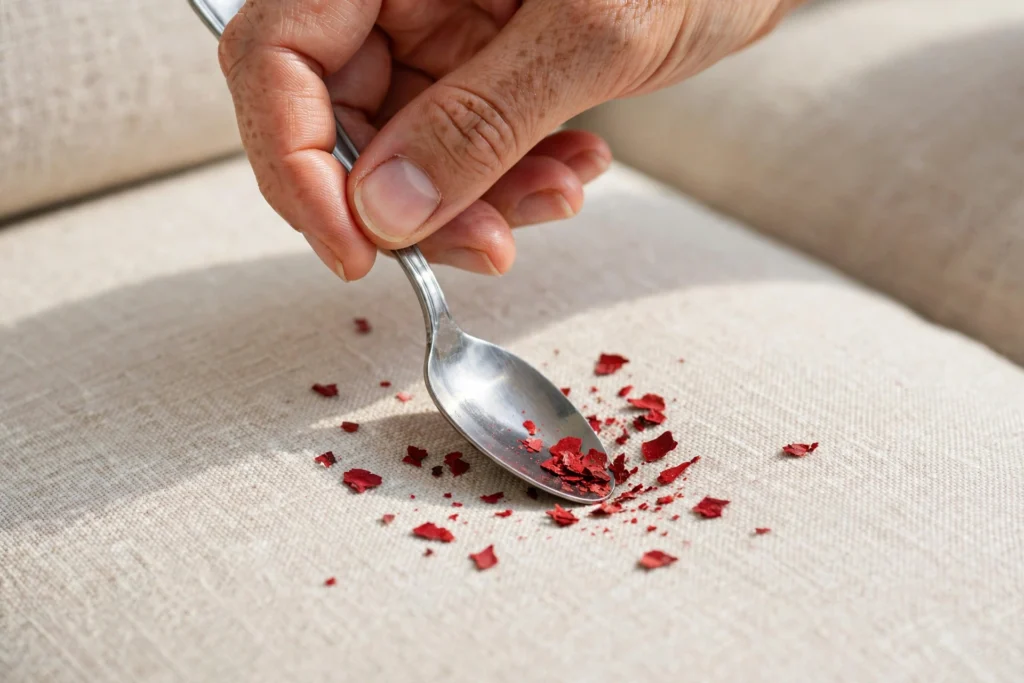
If the polish has already dried: don’t try to scrub it off. Gently scrape the top layer with the edge of a spoon, a dull butter knife, or an old credit card — you’re shaving polish off the surface of the fibers, not digging into them. Vacuum up the flakes as you go. What remains is a thinner stain, and that’s what the solvent steps will handle.
If your couch has removable cushion covers, slip a clean white cloth underneath the stained area before you start dabbing — it catches polish as it transfers through instead of letting it sink into the foam below.
Step 2: Patch Test (Don’t Skip This)
Pick a hidden spot — the back of a cushion, an inside seam, or the underside. Dampen a cotton swab with rubbing alcohol, dab it on the hidden spot, hold it for about 10 seconds, then blot dry with a white cloth.
Check two things: does any color come off onto the swab, and does the fabric look different once it dries? If the swab picks up fabric dye, or the spot looks lighter or stiffer after a minute or two, that solvent is too strong for this couch. A patch test takes two minutes. Fixing a bleached ring takes a reupholsterer.
Step 3: Lift the Stain With Rubbing Alcohol
Rubbing alcohol is the workhorse here — it dissolves nail polish well and is far gentler on upholstery dye than acetone. Remember the rule: use the least aggressive method that lifts the stain. You can always step up; you can’t un-bleach a spot.
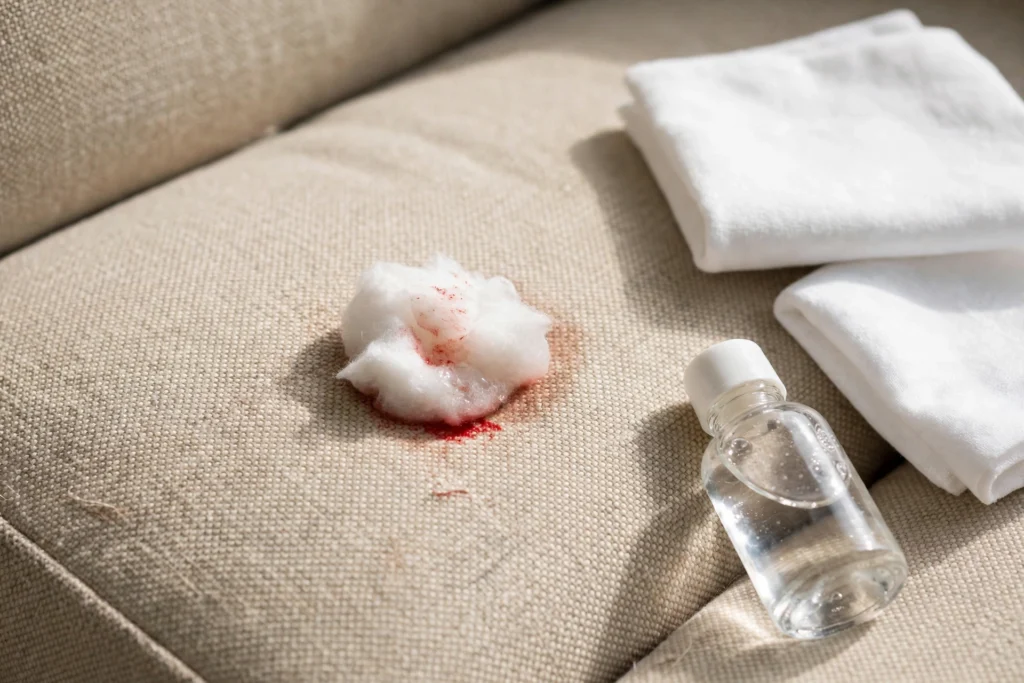
- Dampen a cotton ball or a folded corner of a clean white cloth with rubbing alcohol. Damp, not dripping — the cloth should carry the solvent, not flood the fabric.
- Dab from the outside edge toward the center. Press, hold a second or two, lift, and check the cloth — you should see polish color transferring onto it.
- Rotate to a clean part of the cloth every few dabs. A dirty cloth just puts the polish back.
- Keep going patiently. A small drip might take a few minutes; a bigger spill can take 15 to 20 minutes of steady dabbing. If the stain stops fading, let the area dry for a few minutes and try again.
Don’t pour alcohol directly onto the couch. Applying solvent to the cloth, not the fabric, is what keeps the stain from spreading into a halo around the original spot.
Step 4: If Alcohol Isn’t Enough, Move Up Carefully
If rubbing alcohol has stopped making progress and the stain is still visible, step up one level at a time.
Non-acetone nail polish remover is the next rung. Apply a small amount to a cotton ball, patch test again if you haven’t tested this product yet, then dab the same way — outside in, clean cloth, patience. It’s gentler than acetone and often enough for stubborn or older polish.
Acetone-based remover is the last resort. Only use it if your patch test came back clean and the fabric is definitely not acetate, triacetate, or modacrylic. Use tiny amounts on a cotton swab, dab gently, and stop the moment the stain lifts. Acetone evaporates fast and can leave a pale ring if it pools, so never pour it on. If the stain still won’t move, call a professional — pushing harder risks the fabric itself.
Step 5: Rinse the Residue Out
Once the color is gone, you’re not quite done. Solvent residue left in the fibers can stiffen the fabric or attract dirt later. Mix a drop or two of dish soap into a cup of cool water, dampen a clean cloth with it, and sponge the area gently, working from the outside in. Then blot with a clean cloth dampened with plain cool water to lift the soap out, press a dry towel over the spot to absorb moisture, and let the couch air-dry completely before anyone sits on it. Don’t use a hair dryer — heat can set any trace of dye that’s left and stiffen the fibers. Once dry, if the spot feels slightly stiff, a soft brush or a quick vacuum with the upholstery attachment usually brings the texture back.
What NOT to Do
Some of the most common advice about nail polish on couches is the advice that causes the damage:
- Don’t use a hair dryer or steam cleaner on a fresh stain. Heat hardens polish into the weave and can set the dye permanently.
- Don’t scrub in circles. Scrubbing drives pigment deeper and roughs up fibers, especially velvet, chenille, and bouclé.
- Don’t pour solvent straight onto the couch. It spreads the stain and leaves rings. Cloth first, always.
- Don’t use acetone on acetate, triacetate, modacrylic, silk, or velvet. It can dissolve or distort those fibers.
- Don’t mix products. Use one solvent at a time and rinse between steps if you switch.
For Further Reading
Nail polish is only one of the things that ends up on a couch. These guides use the same blot-first, patch-test-first approach:
- How to Clean a Fabric Headboard (Without Soaking the Foam) — the same gentle, low-moisture method, applied to the fabric behind your pillows.
- How to Get Makeup Out of a Couch — another cosmetic stain, and the same lesson: the solvent matters more than the scrubbing.
- How to Get Crayon Out of a Couch — waxy stains need a different first step, but the patience is the same.
FAQ
Can I use nail polish remover on any couch?
No. Acetone-based remover is safe only on sturdy fabrics that pass a patch test, and never on acetate, triacetate, or modacrylic. Start with rubbing alcohol — it’s effective on most couches and far less likely to damage dye or fibers.
Will rubbing alcohol bleach my couch?
It can lift dye on some fabrics, which is why the patch test matters. Test a hidden spot first and wait a minute or two. If no color transfers and the fabric looks unchanged once dry, it’s safe to proceed.
What if the nail polish has been there for weeks?
Old, dried polish is harder but not hopeless. Scrape the top layer off gently first, then work through the steps — alcohol, then non-acetone remover, then acetone only if safe. Set-in stains may fade rather than vanish completely, and at that point a professional cleaner is the honest next step.
How do I get nail polish out of a leather couch?
Leather is a different job from fabric. Don’t use acetone — it can strip the finish. Dab gently with a cotton swab barely dampened with rubbing alcohol, test in a hidden spot first, and condition the leather afterward. If the finish looks dull or the stain won’t lift, a leather specialist is worth the call.
The Bottom Line
I’ll be honest: the first time I saw nail polish on a couch, my instinct was to grab the remover and scrub. That’s the instinct that turns a small stain into a pale ring you’ll notice every time you sit down. The method that actually works is almost boring — blot, check the tag, patch test, dab with alcohol, step up only if you have to, rinse, and let it dry.
Most couches survive a polish spill with nothing worse than a story. Give yourself the twenty minutes of patient dabbing, respect the fabric’s limits, and know when to hand it to a professional.


