

Key Takeaways
How to clean oven racks without scrubbing: soak them overnight in hot water with baking soda or dishwasher pods, then wipe the softened grease away with a soft cloth. Time does the work — the soak loosens baked-on grime so you never need steel wool or harsh oven cleaner.
Table of Contents
1. Why Scrubbing Is the Worst Way
Oven racks are the kitchen job everyone puts off: grease and food drips baked on at high heat, layer after layer, into a hard, dark crust. Standing over a tub with a scouring pad, trying to muscle that crust off, is miserable work — and the wrong approach.
Steel wool strips the protective layer on chrome and stainless steel racks; once it is gone, the bare metal rusts faster and grabs grease harder. A long soak does the opposite: it softens the bond between the baked-on layer and the metal, so most of it wipes off with a soft cloth.
2. What You’ll Need
Pick your method first, then gather only what it needs: a bathtub, large plastic storage bin, or deep sink (or a heavy-duty trash bag for Method 3), old bath towels to protect the tub from metal edges, baking soda, dishwasher pods, or washing soda, liquid dish soap, a soft sponge or microfiber cloth, and rubber gloves.
Check your oven manual first — some racks have coatings that rule out soaking. And never put standard chrome racks through a self-clean cycle: the extreme heat warps the steel.
3. The 4 Methods at a Glance
| Method | Best for | Soak time | Effort after soaking |
|---|---|---|---|
| Baking soda soak | Regular buildup, most racks | 4–6 hours or overnight | Light wipe |
| Dishwasher pods | Months of baked-on grease | 4–6 hours or overnight | Light wipe |
| Trash bag method | No bathtub available | Overnight | Light wipe |
| Washing soda soak | The worst, years-old racks | 3–4 hours | Light wipe + paste on spots |
The longer the soak, the less wiping. An overnight soak beats a two-hour soak every time.
4. Method 1: Baking Soda Soak
My first choice: baking soda is cheap, non-toxic, and safe for chrome and stainless steel.
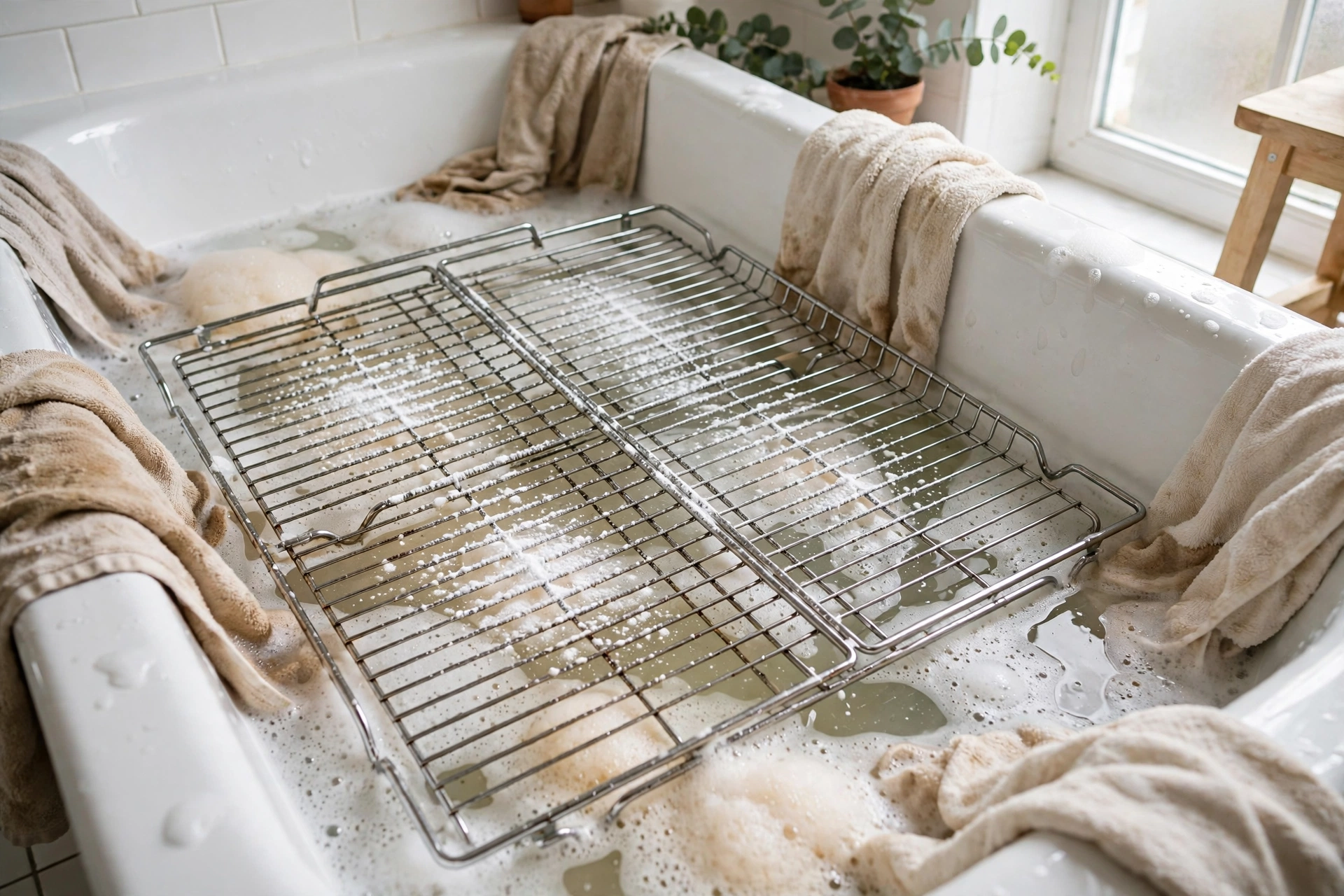
Let the oven cool completely first — at least two hours after its last use. Pull the racks out gently, tilting the front edge up at the stop notch, and lay old towels across the bottom of the bathtub so the metal edges cannot scratch the finish.
Fill the tub with the hottest tap water you can get, enough to fully submerge the racks, and sprinkle a generous layer of baking soda over them. Baking soda is a mild alkali: in warm water it turns sticky fats into compounds that rinse away.
Soak for at least 4 to 6 hours, or ideally overnight. In the morning, drain the tub and wipe the racks with a soft sponge; most of the grime will slide off. For a stubborn spot, spread on a thick paste of baking soda and water, wait 15 minutes, and wipe. Rinse and dry with a towel before sliding the racks back in — a rack that goes back wet can rust at the weld joints.
5. Method 2: Dishwasher Pods
If your racks have months of baked-on spills, dishwasher pods are the heavy hitter: concentrated enzymes that break down cooked-on protein and fat — the same chemistry that cleans your dishes.
Protect the tub with old towels, lay the racks flat, and fill with hot water until every wire is underwater. Drop in two to three dishwasher tablets or pods and stir until they dissolve. Soak for 4 to 6 hours or overnight — the enzymes need hours of contact time, so do not rush this one.
When you come back, drain the tub and wipe the racks with a soft sponge — the grease that used to need a scouring pad should come off with a cloth. Rinse well.
6. Method 3: The Trash Bag Method
No bathtub, or no tub you want to fill with greasy water? The trash bag method works anywhere you have a flat surface — a garage floor, a patio, or the kitchen floor with towels underneath.
Slide each rack into a large, thick trash bag. Add about a cup of white vinegar or a few tablespoons of dish soap, plus enough hot water to cover the bottom of the bag. Tie the bag shut, lay it flat, and leave it overnight — the sealed bag keeps the water hot longer and the solution concentrated against the metal.
In the morning, open the bag over a sink or outside, lift the rack out, and wipe it with a soft sponge. Rinse well and dry.

7. Method 4: Washing Soda
Some racks are beyond a normal soak — years of baked-on drips and blackened corners. For those, washing soda (sodium carbonate, from the laundry aisle) is the strongest safe option: a more alkaline bath that softens tough sugar and fat deposits faster.
Fill a large plastic storage tote or lined tub with hot water, stir in half a cup of washing soda and two tablespoons of liquid dish soap until dissolved, then submerge the racks and soak for 3 to 4 hours. Wipe with a soft sponge, rinse, and dry.
Two rules: use it only on steel and chrome racks, never on bare aluminum pans or oven trim — it darkens aluminum. And wear gloves: it is strong enough to dry out your skin.
8. What NOT to Do
| Mistake | Why it hurts |
|---|---|
| Steel wool or metal brushes | Scratches chrome, strips the protective layer, invites rust |
| Self-clean cycle with racks inside | Extreme heat warps steel and dulls the finish |
| Oven cleaner spray on the racks | Harsh fumes, and residue is hard to rinse off wire racks |
| Vinegar in a baking soda soak | The acid neutralises the baking soda — you cancel both |
| Bleach | Weakens metal, leaves residue near food, never dissolves grease |
| Putting racks back wet | Water sits in the weld joints and starts rust |
One surprise: vinegar and baking soda cancel each other out — mixed, they neutralise into salty water, so use one or the other, never both in the same soak.
9. How Often to Clean Racks
| Situation | How often |
|---|---|
| Light use, mostly baking | Every 3–6 months |
| Heavy roasting, frequent spills | Every 1–2 months |
| After a big spill or boil-over | As soon as the oven cools |
| Quick wipe-down | Monthly, with hot soapy water |
The spill rule saves the most work: a drip wiped up after the oven cools takes thirty seconds; baked on through ten more roasts, it takes an overnight soak. If you are already doing a deep clean of your kitchen, add the racks to the list.
10. Mistakes That Bring the Grime Back
- Waiting until they are black. A rack soaked every couple of months never needs a rescue mission.
- Scrubbing the worst spots dry. Only touch a rack with a sponge after a soak has softened the grime.
- Skipping the dry step. Racks put back damp rust at the welds first.
- Using the self-clean cycle as a shortcut. It damages racks and does not clean them well — the grease just bakes harder.
- Cleaning only the oven cavity. The racks hold just as much grease, and it drips back onto the oven floor every time you cook — the same goes for the grease on your oven door.
Frequently Asked Questions
Can I clean oven racks in the dishwasher?
No — standard racks do not fit, and the dishwasher’s heat and detergent can damage their finish. A bathtub or storage-bin soak is the right tool. If your dishwasher itself smells, our guide to getting rid of dishwasher smell covers the filter-first fix.
How long should oven racks soak?
At least 4 to 6 hours for a baking soda or dishwasher-pod soak, overnight for heavy buildup. Washing soda needs only 3 to 4 hours because it is stronger. A 30-minute soak will not loosen baked-on grease — time is the ingredient that replaces scrubbing.
Will baking soda damage my oven racks?
No. Baking soda is a mild alkali and safe for chrome, stainless steel, and porcelain-coated racks. Avoid it only on racks with a non-stick coating, which any abrasive can wear down.
What is the fastest way to clean really dirty oven racks?
The washing soda soak in Method 4 — 3 to 4 hours, then a wipe, plus a baking soda paste on the worst spots. There is no honest zero-scrub method for years-old carbonized grease; a short soak plus a light wipe is the realistic best case.
Can I use oven cleaner spray on the racks instead?
You can, but it is the worst option here: commercial oven cleaners contain harsh chemicals that need thorough rinsing, and wire racks have dozens of joints where residue hides. A soak is cheaper, safer, and easier to rinse clean. If your stovetop needs the same treatment, our guide to cleaning a glass stovetop without scratching it uses the same soak-first logic.
Conclusion
I used to dread oven racks too — the job I saved for “someday” until someday meant blackened wire and an afternoon of scrubbing. The overnight soak changed that: now I pull the racks out in the evening, drop them in the tub with baking soda or dishwasher pods, and wipe them clean over my morning coffee. Ten minutes, no scrubbing, no fumes.
Start with the baking soda soak tonight. If your racks are worse than average, go straight to the dishwasher pods — and set a reminder for two months from now, because the second soak is always easier than the first. While the racks soak, the rest of the kitchen is right there: a burnt pot or a sticky cabinet takes the same soak-first approach.


